Last updated: December 22nd, 2025 at 08:20 UTC+01:00
SamMobile has affiliate and sponsored partnerships, we may earn a commission.
Apple could dual-source OLED panels from LG and Samsung for its next-generation 24-inch iMac.
Reading time: 2 minutes

After equipping iPhones, iPad Pros, and Apple Watches with OLED displays, Apple is preparing to replace LCD panels on its desktop PCs and laptops with OLED panels. The first Mac to feature an OLED screen is expected to be the next-generation MacBook Pro, and the next in line to get the display upgrade will reportedly be the iMac.
According to a report from The Elec, Apple has requested LG Display and Samsung Display send information about 24-inch OLED panels. They are expected to be used in future iMac computers. The current-generation iMac has a 24-inch LCD screen with 4.5K resolution (4,480 x 2,520 pixels), 500 nits brightness, a pixel density of 218ppi, and a capability to reproduce a billion colors.
Apple's next-generation iMac is reportedly set to feature OLED panels capable of reaching a peak brightness of up to 600 nits. While the display resolution and pixel density will remain unchanged, OLED panels bring deeper blacks, an infinite contrast ratio, HDR capabilities, and enhanced power efficiency. Apple aims to complete OLED iMac development by 2027-2028, with a launch expected sometime in 2029.
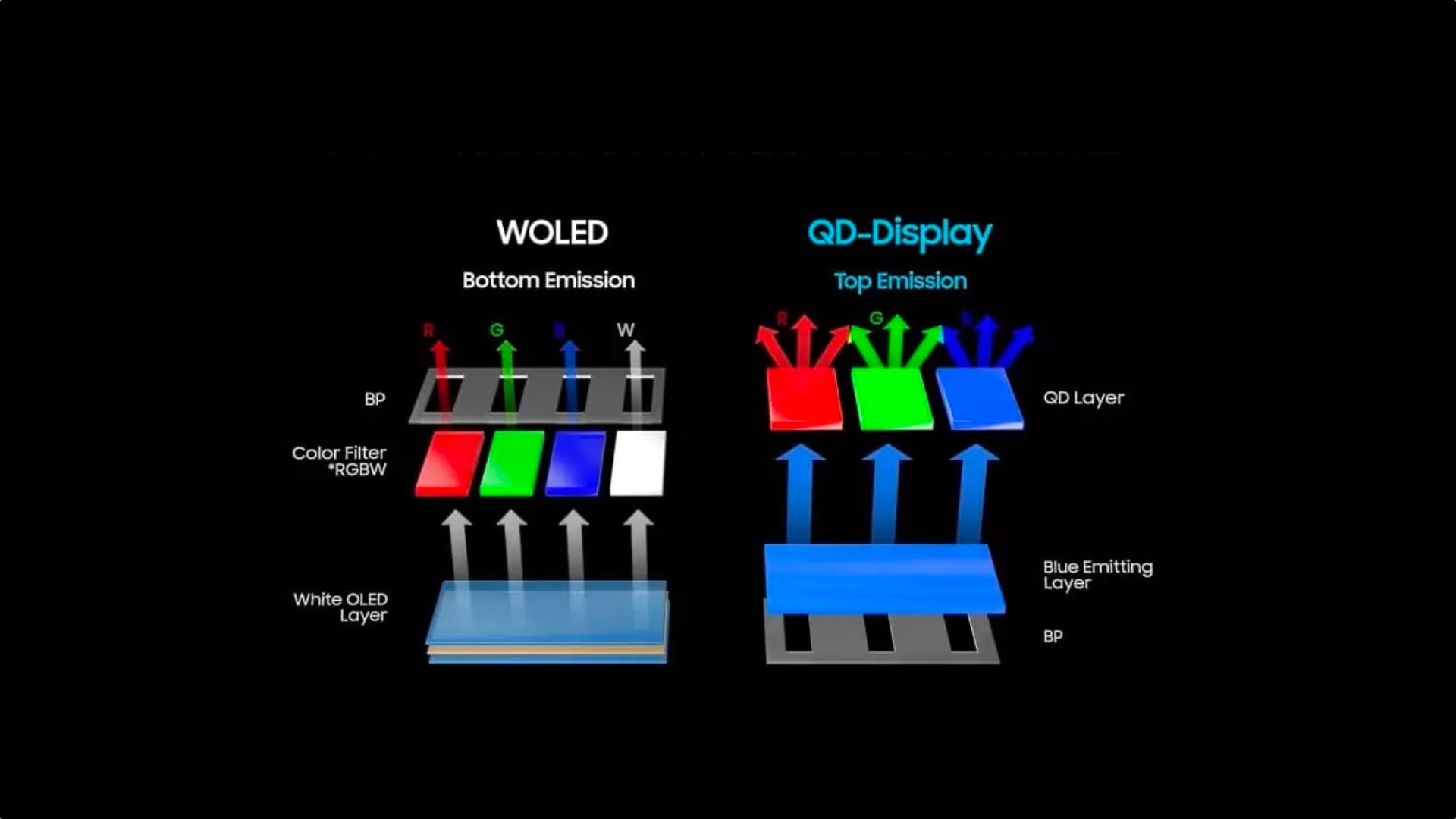
While LG Display is expected to propose a W-OLED panel, Samsung Display could propose a QD-OLED panel. Both display makers are reportedly developing panels that have a five-layer structure, featuring an additional green layer to improve the brightness compared to their current-generation OLED panels. Samsung's QD-OLED panels tend to offer better colors (purer whites and deeper colors) compared to LG's W-OLED panels.
Apple prefers an RGB OLED panel where red, green, and blue sub-pixels create light and color at the pixel level, but this technology hasn't matured yet in the mid-sized OLED panel segment (20 to 30 inches), and it will take time for that technology to fully mature and reach the required performance and reliability. Both LG Display and Samsung Display are working on the technology as a long-term option.

Asif is a computer engineer turned technology journalist. He has been using Samsung phones since 2004, and his current smartphone is the Galaxy S23 Ultra. He loves headphones, mechanical keyboards, and PC hardware. When not writing about technology, he likes watching crime and science fiction movies and TV shows.