
Last updated: October 25th, 2026 at 15:11 UTC+01:00


iPhone Duo Nano Texture is getting roasted and Samsung brought the matches

Maybe Apple's idea wasn't such a great one after all.

Mihai Matei

Reading time: 4 minutes

Samsung Galaxy Z Fold 8

Abhijeet Mishra / SamMobile

Phone

Samsung Galaxy Z Fold 8

TL;DR

  • Apple’s iPhone Duo uses a Nano Texture display finish to reduce reflections, but side-by-side comparisons show Samsung’s Galaxy Z Fold 8 still looks better.
  • Social media criticism of the iPhone Duo’s screen helped Samsung poke fun at Apple with a cheeky post on X.
  • The Nano Texture layer can make the display look blurrier, is harder to maintain, and may have been a poor trade-off for the iPhone Duo.

It wasn't easy for Apple to enter the foldable market eight years late and prove it had good reasons to avoid it all this time. Apple went above and beyond to make the iPhone Duo stand out because it had to.

However, some are starting to wonder if Apple went too far just to make a point. Samsung took notice of these complaints on social media and jumped on the opportunity to enhance its brand's visibility among iPhone fans.

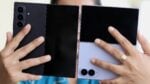
A recent TechDroider post compared the anti-reflection properties of the iPhone Duo and the Samsung Galaxy Z Fold 8 side by side. The Fold 8 was the clear anti-reflection winner despite Apple's efforts, and Samsung Mobile U.S. cheekily replied on X: Thanks for shedding some light on this 😎.

Why does the iPhone Duo screen look worse than the Fold 8?

Upon releasing the iPhone Duo eight years after Samsung's first Fold, Apple really tried to come in strong and make a statement. In an interview with TIME, the new CEO, John Ternus, even described existing foldable phones as feeling “kind of cheap and crappy.“

By the way, those words seem to have already aged like milk after the iPhone Duo utterly failed the same independent durability tests that the Fold 8 had passed.

But back to the topic, one way Apple tried to make the iPhone Duo stand out was by disguising the notorious crease better than its competitors. To this end, the iPhone Duo became the first iPhone to use Apple's Nano Texture display finish.

What is Apple's Nano Texture?

It's the name Apple gave to its display etching technology. Nano Texture panels have microscopic ridges that scatter light rather than reflect it. Instead of seeing crisp reflections on the iPhone Duo's screen, Nano Texture softens and scatters them across a larger area in a softer gradient.

At least, that's the theory. The idea seems sound, especially because Nano Texture already has fans among Apple MacBook and monitor users. It can be useful in an office environment where you might not be able to move your PC or adjust your workspace when the sun starts shining into your monitor.

However, there may be a good reason why Apple has never used Nano Texture on an iPhone, or why MacBook, iPad, and Apple monitor users are always given a choice between a glossy display finish and Nano Texture. iPhone Duo users don't have that choice. It's either Nano Texture or a different phone.

That's starting to be a problem. As seen recently on social media, more and more early iPhone Duo adopters are now finding out that the Nano Texture layer can do more harm than good. When hit with a powerful light source, the iPhone Duo's Nano Texture arguably scatters too much light, leading to a blurry, low-contrast look that can't match the Fold 8 screen's crispness and deep contrast.

A couple of other unpleasant byproducts inherent to the iPhone Duo's Nano Texture are:

  • A display that always look blurrier and washed out no matter the lighting conditions. There certainly is a trade-off, and some are wondering if it was even worth it.

  • Nano Texture is also known to be harder to maintain and keep clean than glossy glass. Exactly how that will affect the iPhone Duo long term remains to be determined. But it's worth knowing that Apple charges more than Samsung for a foldable film replacement.

Samsung's expertise is contrasted Apple's amateurish mistakes

All in all, the Galaxy Z Fold 8's inner screen looks better, and iPhone Duo users who were brave enough to peel the Nano Texture layer off also found that the Fold 8's screen looks flatter.

Samsung is clearly in a winning position here, especially considering the mismanaged, delayed iPhone Duo launch in most markets.

As for Nano Texture, maybe there is a good reason Apple has never applied this finish to an iPhone screen before the Duo. And given Samsung's experience in display and foldable phone manufacturing, the Korean tech giant may have known about these shortcomings long before Apple.

Keep in mind that Samsung Display manufactures the iPhone Duo's foldable panel. However, the Nano Texture idea that doesn't seem to be working too well for the iPhone Duo was Apple's.

Browse the latest Galaxy Z Fold 8 offers

Samsung Shop