







Published: September 8th, 2026 at 08:00 UTC+02:00
SamMobile has affiliate and sponsored partnerships, we may earn a commission.
Reading time: 9 minutes
Abhijeet Mishra / SamMobile
On a Samsung phone, you can find Privacy settings by opening the Settings app, scrolling down, and tapping Privacy. It appears as its own dedicated menu, usually between “Location” and “Safety and emergency” depending on your One UI version. From there, you get a full overview of app permissions, data controls, and security options in one place. This guide walks through everything you can do inside that menu and answers the most common questions Samsung users have about it.
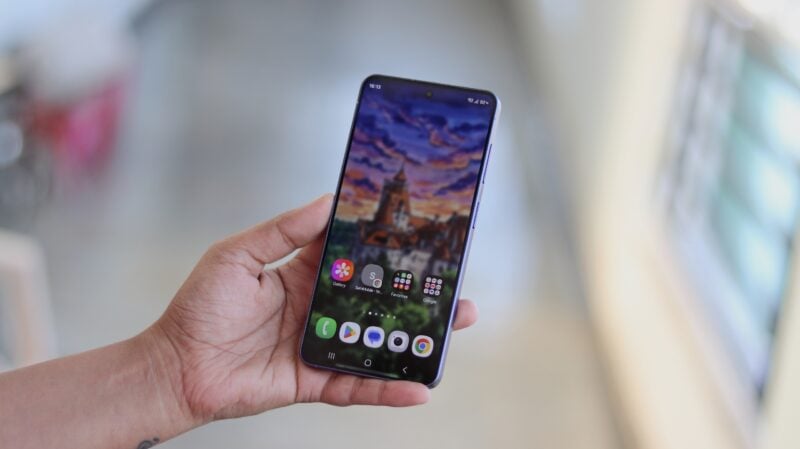
The Privacy menu on a Samsung phone lives inside the Settings app. Open Settings, scroll down past Location, and you will see Privacy listed as a standalone option. Tap it and you are in. On most Samsung phones running One UI 6 or later, it sits roughly two-thirds of the way down the main Settings list.
If you are having trouble finding it by scrolling, use the search bar at the top of Settings and type “Privacy.” The result will take you straight there. This is especially handy if your phone has a slightly different layout due to your carrier or region.
Once inside the Privacy menu, you will notice it is divided into clear sections covering permission management, data sharing preferences, and security-related toggles. Everything is labeled in plain language, so you do not need a technical background to understand what each option does.
Samsung's Privacy settings give you control over which apps can access sensitive features on your phone, how your data is handled, and what information your device shares. The main areas include Permission Manager, Samsung Privacy, diagnostic data sharing, and controls for the camera and microphone indicators.
Here is a breakdown of what you will find inside:
These controls put a meaningful amount of power in your hands without requiring you to dig through individual app settings one by one. It is worth spending five minutes here to make sure your preferences match how you actually want your phone to behave.
To check which apps can access your camera or microphone, go to Settings, then Privacy, then Permission Manager. Tap either “Camera” or “Microphone” and you will see a full list of every app on your phone, grouped by whether it has been granted access always, only while in use, or never.
This list can be eye-opening. You may find apps that have camera or microphone access that you never intentionally granted. To change any permission, simply tap the app name and select your preferred option. For most apps, “Only while using the app” is the safest and most practical choice, since it means the app can only access your camera or microphone when you have it open and are actively using it.
You can also reach this same screen through the Privacy Dashboard, which shows a 24-hour history of permission use. This is a great way to spot any app that accessed your microphone or camera at an unexpected time.
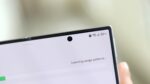
The green dot that appears at the top right corner of your Samsung phone's screen is a privacy indicator. It lights up whenever an app is actively using your camera or microphone. This feature was introduced to give you a real-time, visible signal that something is recording or listening, even if you are not looking at that app directly.
If you see the green dot and are not sure which app triggered it, swipe down from the top of your screen to open the notification panel. You will see a small notification identifying which app is currently using the camera or microphone. Tapping that notification takes you directly to the app or to its permission settings.
The green dot is not a warning that something is wrong. It is simply a transparency tool. That said, if you see it appear when you are not actively using any camera or voice-related app, it is worth checking which app is responsible and reviewing its permissions inside the Privacy menu.
Turning off “Send diagnostic data” is a reasonable choice if you prefer to limit what information your phone shares with Samsung. This setting, found inside Settings, then Privacy, controls whether your device automatically sends error reports and usage data to Samsung to help improve its products. Turning it off does not affect how your phone performs day to day.
What does Samsung do with this data? According to Samsung, diagnostic data is used to identify bugs, improve software stability, and refine future One UI updates. It is not linked to your personal identity in a way that would expose your messages or photos. However, if you are uncomfortable with any data leaving your device, switching this off is a simple and consequence-free decision.
To turn it off, go to Settings, then Privacy, then Send diagnostic data, and toggle it off. You can turn it back on at any time if you change your mind. For most everyday users, the choice comes down to personal comfort rather than any meaningful security risk either way.
Yes. Inside Settings u003e Privacy, Samsung includes a master toggle for both camera access and microphone access. Turning either of these off blocks every app on your phone from using that feature until you turn it back on. This is useful if you want a quick, temporary lockdown without having to adjust permissions for individual apps one by one.
Go to Settings u003e Privacy u003e Ads to find the option to reset your advertising ID. Your advertising ID is a unique code that ad networks use to build a profile of your interests over time based on your app usage and behavior. Resetting it essentially starts that profile from scratch, which can reduce how targeted the ads you see feel. It does not eliminate ads, but it does break the continuity of the data collected about you.
The Permission Manager shows you the current state of every app's permissions — what each app is allowed to access right now. The Privacy Dashboard, on the other hand, shows you a 24-hour timeline of which apps actually used sensitive permissions like your camera, microphone, or location, and when they did so. Think of Permission Manager as a snapshot and Privacy Dashboard as a history log. Using both together gives you the clearest picture of how your data is being accessed.
In most cases, restricting a permission will simply prevent an app from using that specific feature rather than causing it to crash or stop working entirely. For example, removing microphone access from a music streaming app will not stop it from playing songs — it just means it cannot listen to you. The exception is when a permission is core to the app's function, such as a QR code scanner needing the camera. In those cases, the app will typically prompt you to re-enable the permission the next time you try to use that feature.
A good rule of thumb is to do a quick review every time you install a batch of new apps or after a major One UI software update, since updates can sometimes reset or introduce new privacy-related options. Beyond that, a monthly check of the Privacy Dashboard takes less than a minute and can alert you to any apps that have been quietly accessing your microphone or location in the background. Setting a recurring reminder on your calendar is an easy way to make this a habit.
Start by swiping down to open your notification panel, which should display a banner identifying the responsible app. If that notification has already disappeared, open Settings u003e Privacy u003e Privacy Dashboard and look at the most recent activity in the 24-hour log — it will show you exactly which app accessed your camera or microphone and at what time. Once you identify the app, tap it directly from the Dashboard to review and adjust its permissions on the spot.
Samsung's Privacy menu primarily handles device-level permissions — meaning what hardware and data your apps are allowed to access on your phone itself. It does not control what an app does with your data once it has it, such as whether a social media app shares your information with advertisers on its own servers. For that layer of privacy, you would need to review each app's individual in-app privacy settings or account preferences, and check the app's own privacy policy linked through the Samsung Privacy section.
This content was generated with the help of AI — it may contain mistakes