Last updated: October 26th, 2026 at 12:15 UTC+01:00


Was Samsung right? The iPhone Duo’s hidden camera gives off 2016 vibes

Hiding the camera beneath the folding screen gives Apple’s foldable a cleaner look, but its picture quality has drawn criticism.

Abhijeet Mishra

Reading time: 3 minutes

Watching videos on iPhone Duo vs Galaxy Z Fold 8

Daniel Scuteri

Opinion

iPhone Duo and Galaxy Z Fold 8

The iPhone Duo has brought under-display cameras back into the spotlight. Hiding the camera beneath the folding screen gives Apple’s foldable a cleaner look, but its picture quality has drawn criticism in reviews.

For Samsung fans, that sounds familiar. Samsung tried the same idea years ago before eventually giving up on it. Looking at Apple’s implementation, that decision is easier to understand.

Samsung gave under-display cameras several chances

Samsung introduced its first under-display camera with the Galaxy Z Fold 3 in 2021. It was clever, almost futuristic technology, but the pictures from that 4MP camera were poor.

The Galaxy Z Fold 4, Fold 5, and Fold 6 kept the feature, but image quality never improved enough to make the inner camera something you would regularly use.

Samsung changed course with the Galaxy Z Fold Special Edition. It kept the 4MP resolution but put the camera in a regular punch hole instead of hiding it beneath the display.

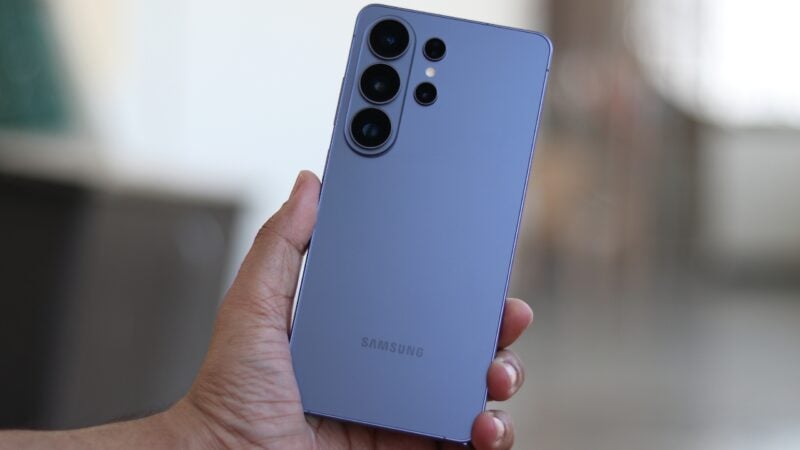
The Galaxy Z Fold 7 then switched to a 10MP camera with a wider, 100-degree field of view. That setup continues on the Fold 8 and Fold 8 Ultra, with the cover screen camera featuring an 85-degree field of view.

That wider view lets you fit more people into selfies and video calls, giving the inner camera a reason to exist instead of just doing the same job as the camera outside.

A better camera still leaves a hole in your screen

Of course, the appeal of an under-display camera hasn’t disappeared. A big folding screen looks better without an obvious camera hole, even if the benefit isn’t equally noticeable everywhere.

Widescreen videos usually have black bars above and below the picture, where the camera hole can stay out of the way. Unless you zoom in to fill the screen, it may not interrupt anything you’re watching.

The difference is more noticeable in games, photos, and apps that use the full display. That’s where the iPhone Duo’s hidden camera gives it a cleaner look.

If you rarely make video calls, accepting weaker pictures for an uninterrupted screen is a perfectly reasonable choice. You already have a selfie camera outside, and both phones let you use their rear cameras for selfies, too.

Samsung also weakened its own argument with the Galaxy Z Fold 8, Apple’s direct competitor. It has the wider inner camera, but it lacks Flex Mode.

You can’t simply leave it half-open on a table for hands-free video calls or group selfies. You need a stand or something to hold it up. Only the Fold 8 Ultra supports Flex Mode.

Still, Apple’s foldable has arrived five years after Samsung first introduced a UDC, and picture quality remains a compromise. That suggests Samsung had a good reason to move on, even if some users will always prefer the uninterrupted viewing experience.