Published: September 27th, 2026 at 08:00 UTC+02:00


Where do I find battery settings?

Daniel van Dorp

Reading time: 10 minutes

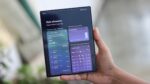
Samsung Galaxy smartphone held in hand displaying the Settings menu with battery icon, soft natural window light, white desk background.

Abhijeet Mishra / SamMobile

Knowledge Base

Samsung Galaxy smartphone held in hand displaying the Settings menu with battery icon, soft natural window light, white desk background.

TL;DR

  • Open Settings on your Samsung phone, then tap Battery; on some models you can also reach it faster from the notification shade or by long-pressing the battery icon.
  • From Battery settings you can check battery usage and adjust options like Power saving mode, background usage limits, battery protection, wireless power sharing, and battery percentage.
  • If battery drain is high, review battery usage to find power-hungry apps and consider tools like adaptive brightness, background limits, and battery protection.

Battery settings on a Samsung phone live in the Settings app, under Battery. Open Settings, scroll down until you see Battery, and tap it. That single menu gives you access to everything from battery usage breakdowns to power saving options and charging controls. The exact layout may vary slightly depending on your Samsung model and which version of One UI it is running, but the path is the same across the board. Below, we cover the most common questions people have once they get there.

Where exactly are battery settings on a Samsung phone?

To find battery settings on a Samsung phone, open the Settings app (the gear icon), then scroll down and tap Battery. This section is your central hub for everything related to how your phone uses and manages power. From here you can check usage stats, turn on power saving, and adjust charging behavior.

If you want to get there even faster, swipe down from the top of your screen to open the notification shade, then tap the gear icon to open Settings. Some Samsung phones also let you long-press the battery icon in the status bar to jump straight to battery settings. Once inside the Battery menu, you will see a usage graph at the top showing how much charge you have used over the past day or so, which is a handy starting point for spotting any unusual drain.

What battery settings can you actually change on a Samsung?

Inside the Battery menu on a Samsung phone, you can change Power saving mode, Background usage limits, Battery protection (on supported models), and Wireless power sharing. You can also see a detailed breakdown of which apps are draining your battery the most, which makes it easier to take action.

Here is a quick overview of the main options you are likely to see:

  • Power saving mode: Reduces background activity, limits performance slightly, and dims the screen to extend battery life.
  • Background usage limits: Lets you put specific apps to sleep so they stop running when you are not using them.
  • Battery protection: Caps charging at 80 or 85 percent to reduce long-term wear on the battery.
  • Wireless power sharing: Turns the back of your phone into a wireless charger for other devices like Galaxy earbuds or a smartwatch.
  • Show battery percentage: Displays the exact battery level in the status bar instead of just an icon.

Not every Samsung model will show all of these options, and some settings appear only on newer devices running recent versions of One UI. If you do not see a particular option, it may not be available on your specific phone.

What does Power saving mode do on a Samsung phone?

Power saving mode on a Samsung phone reduces battery consumption by limiting background app activity, lowering screen brightness and resolution, restricting the CPU speed, and turning off features like Always On Display. The goal is to make your remaining charge last as long as possible when you need it most.

When you switch Power saving mode on, you might notice your phone feels slightly less snappy than usual. That is intentional. Samsung throttles the processor a little to cut down on power use. Most everyday tasks like texting, browsing, and calling still work perfectly fine, but demanding apps like games or video streaming may feel a bit slower.

You can turn Power saving mode on manually at any time from the Battery menu, or you can set it to switch on automatically when your battery drops below a certain percentage, for example 20 or 15 percent. This automatic option is worth enabling if you often find yourself running low before the end of the day. To set it up, tap Power saving mode, then look for the option to turn it on automatically based on a battery level threshold.

Why is my Samsung battery draining so fast?

Fast battery drain on a Samsung phone is most commonly caused by background apps running constantly, a high screen brightness, mobile data or Wi-Fi searching for a signal, or an aging battery. Identifying which factor applies to your situation is the first step toward fixing it.

Start inside the Battery menu by tapping Battery usage. This shows you exactly which apps have been consuming the most power over the past 24 hours. If you see an app near the top of the list that you rarely use, that is a sign it is running in the background more than it should. You can restrict it by going to Background usage limits and adding it to the sleeping apps list.

A few other common culprits worth checking:

  • Screen brightness: A very bright screen is one of the biggest battery drains. Try turning on Adaptive brightness so the phone adjusts automatically.
  • Location services: Apps that constantly track your location use a significant amount of power. Go to Settings, then Location, and check which apps have access.
  • Weak signal areas: When your phone is constantly searching for a mobile signal, it works much harder and drains faster. If you are in a low-signal area, switching to Wi-Fi calling or enabling Airplane mode temporarily can help.
  • Old battery: Batteries naturally lose capacity over time. If your phone is a few years old and the drain has gotten noticeably worse, the battery itself may simply need replacing.

Should I turn on Battery protection on my Samsung?

Yes, turning on Battery protection on a Samsung phone is a good idea if you regularly charge your phone overnight or leave it plugged in for long periods. This feature limits charging to around 80 or 85 percent, which reduces the stress on the battery over time and helps it retain its capacity for longer.

Lithium-ion batteries, which are what Samsung phones use, tend to degrade faster when they spend a lot of time at 100 percent charge. Battery protection works around this by stopping the charge before it reaches full, which is gentler on the battery chemistry in the long run.

The trade-off is straightforward: you get slightly less charge per cycle, but your battery should stay healthier over the years you own the phone. For most people who charge overnight, this is a worthwhile swap. If you know you need a full charge for a big day out, you can temporarily disable Battery protection and charge to 100 percent, then switch it back on afterward.

To enable it, go to Settings, tap Battery, then look for Battery protection or Charging settings depending on your model. Select your preferred limit and you are done. It is one of the simplest things you can do to keep your Samsung phone's battery in good shape for the long term.

Frequently Asked Questions

How do I find out which app is draining my Samsung battery the most?

Go to Settings, tap Battery, then select Battery usage. This screen lists every app and system process ranked by how much power they have consumed over the past 24 hours, so you can immediately see the biggest offenders. If a specific app is consistently near the top and you do not use it often, head to Background usage limits and add it to the sleeping or deep sleeping apps list to stop it from running unchecked in the background.

What is the difference between sleeping apps and deep sleeping apps on Samsung?

Sleeping apps are restricted from running in the background when you are not actively using them, but they can still send you notifications. Deep sleeping apps are cut off almost entirely — they cannot run in the background and will not send notifications unless you open them manually. Use sleeping apps for things you still want to hear from occasionally, and reserve deep sleep for apps you rarely open but do not want to delete entirely.

Will turning on Power saving mode affect my calls, texts, or notifications?

No, core functions like phone calls, SMS, and app notifications continue to work normally in Power saving mode. What changes is performance-related: the processor runs at a reduced speed, screen brightness and resolution may be lowered, and features like Always On Display are turned off. You will notice a difference if you try to play a graphically intensive game or stream high-quality video, but for everyday communication and browsing the experience is essentially the same.

Can I check my Samsung battery's overall health, not just its current charge level?

Samsung does not expose a detailed battery health percentage in the standard Settings menu the way some other platforms do, but you can get a basic health status by dialing *#0228# or using Samsung's built-in diagnostic tool through the Samsung Members app. Inside Samsung Members, go to Get help, then Interactive checks or Diagnostics, and run the battery test. For a more detailed breakdown — including charge cycle count and capacity — third-party apps like AccuBattery can give you that information without needing root access.

Does wireless power sharing drain my Samsung battery quickly?

Yes, wireless power sharing is relatively power-hungry because your phone is actively converting its battery into wireless energy for another device, which is an inherently inefficient process. It is best used for quick top-ups — for example, giving your Galaxy earbuds or smartwatch a short charge when you have no other option — rather than as a regular charging method. Make sure your own phone has a reasonable charge level (50 percent or above is a sensible threshold) before using it, and turn the feature off as soon as you are done since it can continue drawing power if left on.

How do I stop my Samsung phone from charging to 100% automatically without using Battery protection?

Battery protection is the built-in way Samsung handles this, and it is the most reliable option available. If your device does not support Battery protection, a practical workaround is to use a smart plug with a scheduling app to cut power to your charger at a set time overnight, preventing the phone from sitting at 100 percent for hours. Some third-party apps also claim to manage charge limits, but these typically require advanced permissions and are less reliable than Samsung's native feature.

My Samsung battery drains fast even after restricting background apps — what else can I try?

If background app restrictions have not made a noticeable difference, the next things to investigate are Always On Display (which runs continuously and has a measurable impact), 5G connectivity (switching to LTE in areas with weak 5G coverage can significantly reduce drain), and screen refresh rate (if your phone supports 120Hz, dropping to 60Hz in Display settings saves meaningful power). If none of these help and your phone is more than two or three years old, the battery itself has likely lost enough capacity that a replacement is the most effective fix — Samsung service centres and many third-party repair shops offer this at a reasonable cost.