





Last updated: May 31st, 2026 at 13:14 UTC+02:00


The best thing about Samsung is the thing it never talks about

Whatever your technology stack, a Galaxy device belongs inside it.

Adnan Farooqui

Reading time: 4 minutes

samsung galaxy z fold 7 foldable display

Abhijeet Mishra / SamMobile

Opinion

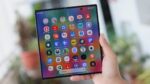
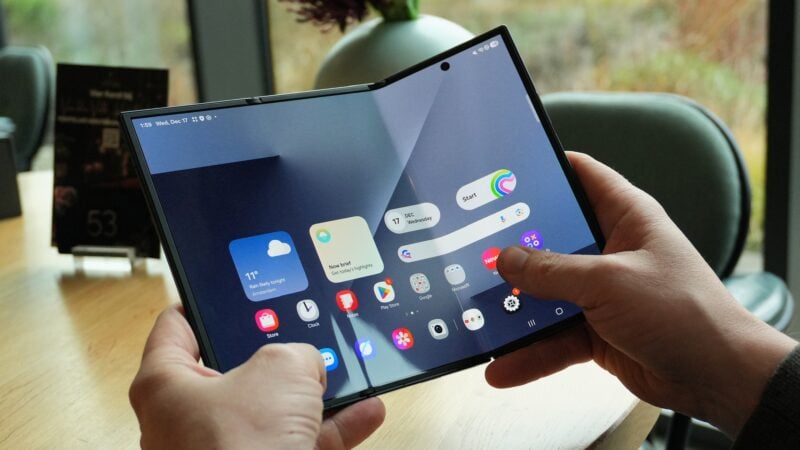
Samsung Galaxy Z Fold 7 - Source: Abhijeet Mishra / SamMobile

For more than a decade now, the smartphone industry has existed between two platforms and the resulting ecosystem ideology. There's the walled garden approach that Apple prefers, which many believe is the gold standard, and one that every company should be pursuing to make its products work so seamlessly together that leaving becomes unthinkable.

Android is the only alternative and the ecosystem approach there, best executed by Samsung, is one that's more open and collaborative. The idea being that companies shouldn't be so restrictive in what they offer customers and if collaborations can deliver better services, then they should be embraced.

Apple's approach has worked very well for the company. Its devices work magnificently well together. An iPhone owner can get more value out of all their devices if they also buy a Mac, an Apple Watch, AirPods, and use iCloud.

This also works in part due to Apple's control over both the hardware and software, so it can deliver these experiences better than Samsung can, which licenses the core operating system for its mobile devices from Google. This doesn't mean the alternative Android delivers and Samsung embodies is inherently flawed. On the contrary, it might be the most underrated advantage, and Samsung almost never leads with it.

The tech stack for most average users isn't a single-brand story. They might have to use a Windows PC at work even if they have a personal Mac, or like a smartwatch from a fashion brand even if they own an iPhone. Samsung's Galaxy devices operate gracefully in that environment in a way that Apple's simply cannot, by design.

It delivers seamless continuity for Galaxy device owners on Windows PCs, for example, one that doesn't require them buy any other Samsung product. The company also embraced this philosophy when mobile AI was just getting off the ground.

The early adoption of Gemini delivered far better AI experiences on Galaxy devices than Apple could manage trying to go at it alone. Apple ultimately had to lean on Google as well, simply realizing what Samsung knew to be true from day one.

Rather than building proprietary bridges that only span the distance between Samsung devices, Samsung has chosen to integrate with the platforms its users already inhabit. The Korean giant's idea is to consolidate around solutions that already work for more people even if that means not every single piece of hardware they use will have a Samsung logo on it.

We now see Samsung taking the same approach with extended reality devices, particularly smart glasses.

Its first attempt involves a collaboration with Google and Qualcomm alongside eyewear brands like Warby Parker and Gentle Monster. These smart glasses will work with iPhones as well, even if the Galaxy-branded ones that Samsung is also working on don't.

Apple's smart glasses, if and when they arrive, will almost certainly be anchored to the Apple ecosystem. The intelligent eyewear Samsung is building with its partners can sit on the face of an iPhone user and deliver an experience that might convince those users to try a Galaxy product. That is a radical concession of ecosystem exclusivity in service of a reach that no closed model can match.

It's not like Samsung shuns Apple's way of doing things entirely. It has many services like Samsung Health, Galaxy AI, SmartThings, Samsung Wallet, etc that are understandably optimized for Galaxy devices and deliver the best user experience when used alongside other Samsung products.

The openness is real, but it is not absolute, and Samsung has been known to use it selectively when the commercial incentive pointed elsewhere.

What it doesn't do is make it progressively difficult for customers to live outside a Samsung-only world. It leverages the openness of Android as a platform and amplifies it as an excellent hardware manufacturer that choses to extend that openness instead of restricting it. The message it wants to deliver is quite simple. Whatever your technology stack, a Galaxy device belongs inside it.

This message makes a lot of sense to the majority of customers across the globe who may never own a Mac or an iPhone. It's also the most compelling pitch that Samsung can make to customers in core Apple markets like the United States.

The frustrating part is that Samsung almost never makes it directly. Perhaps its marketing efforts should be focused on making consumers realize that they can structure their technological life however they want it and that a Galaxy device would fit in it rather than replace it.