




Last updated: May 20th, 2026 at 18:53 UTC+02:00
SamMobile has affiliate and sponsored partnerships, we may earn a commission.
This could become Samsung's backdoor into Apple's ecosystem.
Reading time: 4 minutes
Google, Gentle Monster, Samsung, Warby Parker
Samsung very much likes to keep its users within its ecosystem, as it should, which is why you won't find many of its wearable devices offering full support for the iPhone. It has poured considerable resources into making it easier for people to switch from iPhones to a Galaxy device. This is a mission that it's unlikely to give up on any time soon.
Google takes a different approach, largely because it runs a different business model. Its online services, like search, are what generate the bulk of its revenues. It already pays Apple billions to have Google be the default search engine on Safari, because that's premium ad inventory that it can sell for billions more to advertisers.
That's why Google isn't shying away from embracing Apple with its latest hardware moves. The new $99 Fitbit Air, for example, works just as well on iOS devices as it does on Android. Google is taking a similarly liberal view with smart glasses, or intelligent eyewear, as it likes to call them.
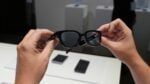
Google isn't making the hardware itself right now, it's merely providing the operating system and the Gemini AI integration. It has opted for a collaborative effort with Qualcomm that provides the chipset, Samsung that handles the engineering side of things, while Gentle Monster and Warby Parker handle design and branding.
In a way, this collaborative effort is Samsung's most interesting attempt at reaching those elusive iPhone users without asking them to switch a single thing. It represents a structural shift in how Samsung is thinking about the problem of reaching people it has never been able to reach.
The glasses are designed to give users quick help through Gemini without constantly needing to look at a phone screen. It works through voice activation, hands-free controls, and the ability to tap into apps and services, like Uber, directly through the frame.
None of that requires a Galaxy phone. An iPhone user can thus buy a pair of Gentle Monster smart glasses, for example, pair them to a phone they never want to switch from, and spend their day inside a Samsung-built, Gemini-powered experience without having modified a single other part of their digital life.
The question to be asked, though, is what does Samsung gain from this collaboration? It's already making Galaxy-branded smart glasses and it certainly doesn't need design advice from eyewear brands.
Google will provide it with the software anyway just like Google will give it to any partner making smart glasses. Like other Samsung products, it's hard to imagine that Samsung will have its smart glasses embrace iOS the way Google has.
The honest counterweight to all of this is one Samsung can't fully escape. An iPhone user who buys these glasses and uses Gemini daily has become a Samsung customer in the most transactional sense.
They've just bought a piece of hardware that Samsung had something to do with, much in the same way like the iPhone they use probably has a display sold to Apple by Samsung. But the relationship that user is building, the intelligence that's learning their habits, the assistant they're talking to every morning on the way to work, that belongs to Google.
Samsung gets the margin on the device. Google gets the user. That dynamic should be familiar by now. It is the same dynamic that has defined Samsung's smartphone business for years, now extended into a new form factor.
The point here isn't that these intelligent eyewear pieces diminish Samsung's value as a player in this segment. What Samsung is getting here is something else entirely, and perhaps much more valuable in the long run.
It's getting access, a foot in the door with a demographic it still has trouble reaching, on terms that the demographic can accept. For a company that has spent years watching the iPhone ecosystem compound against it, access on any terms is worth something.
Whether or not this combination is enough to convert an iPhone user who currently has no Samsung mobile products in their life is genuinely anybody's guess right now.
It will be worth seeing if Samsung can convert this access into a pipeline where an iPhone user who buys these glasses eventually considers buying Samsung's smart glasses and a flagship Galaxy phone to go with it, it's a longer game, but it's one worth playing.