Last updated: May 13th, 2021 at 10:17 UTC+02:00
SamMobile has affiliate and sponsored partnerships, we may earn a commission.
Reading time: 2 minutes
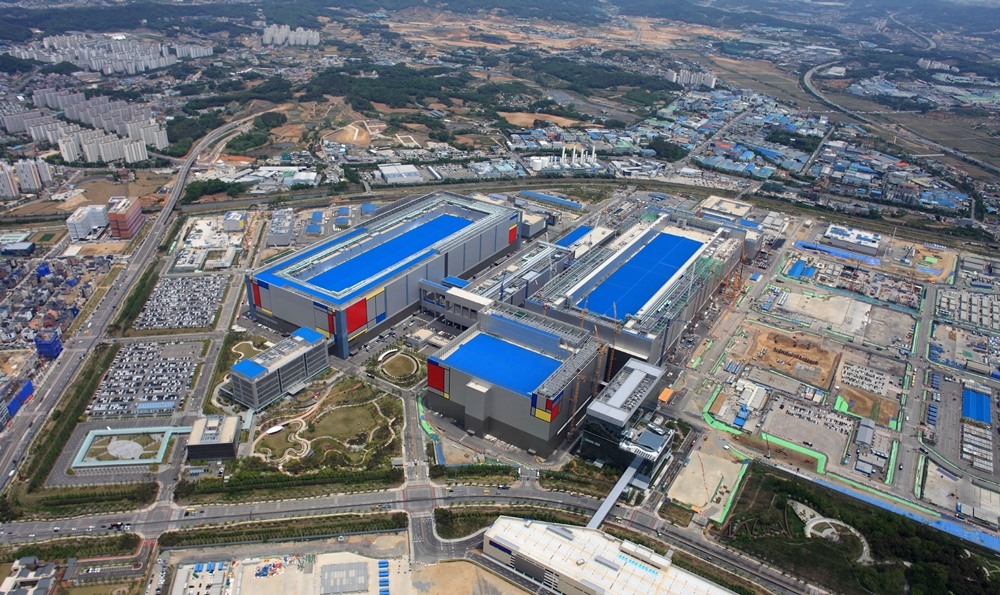
The company announced earlier today that it has decided to invest an additional KRW 38 trillion (around $33.5 billion) into its logic chip businesses, increasing its target to KRW 171 trillion (around $151). This capital will be used in the development of advanced technologies and the expansion of its chip production capacity. The company has two logic chip businesses: Samsung Foundry (designs logic chips) and System LSI (contract manufactures chips for other brands). Samsung is investing in System LSI to accelerate its growth in new-age technologies like 5G, AI, and autonomous driving.
It also announced that it has started the construction of a new chip plant called P3 in Pyeongtaek, South Korea. The new plant will start the mass production of 14nm DRAM chips and 5nm EUV-based processors by the second half of 2022. It is being reported that the P3 plant will open six months ahead of the original schedule, which means that the company will be flexible in terms of what it will fabricate at the facility.
Dr. Kinam Kim, Vice Chairman and Head of Device Solutions Division at Samsung Electronics, said, “The entire semiconductor industry is facing a watershed moment and now is the time to chart out a plan for long-term strategy and investment. For the memory business, where Samsung has maintained its undisputed leadership position, the Company will continue to make preemptive investments to lead the industry.”
Samsung is the world's largest memory chip maker by revenue and market share, and it often launches the industry's best and newest technologies. A few days ago, it unveiled the industry's first CXL-based DRAM units that will be used in AI and cloud servers by various brands. However, in the foundry segment, it is the second-biggest brand after TSMC. TSMC usually beats Samsung in launching more advanced chip fabrication processes and the South Korean firm's target is to defeat TSMC by the end of 2030.

Asif is a computer engineer turned technology journalist. He has been using Samsung phones since 2004, and his current smartphone is the Galaxy S23 Ultra. He loves headphones, mechanical keyboards, and PC hardware. When not writing about technology, he likes watching crime and science fiction movies and TV shows.