

Last updated: June 30th, 2026 at 14:44 UTC+02:00
SamMobile has affiliate and sponsored partnerships, we may earn a commission.
It could be bundled with the Eclipsa Audio format to rival the combination of Dolby Atmos and Dolby Vision.
Reading time: 3 minutes
Asif Iqbal Shaik / SamMobile
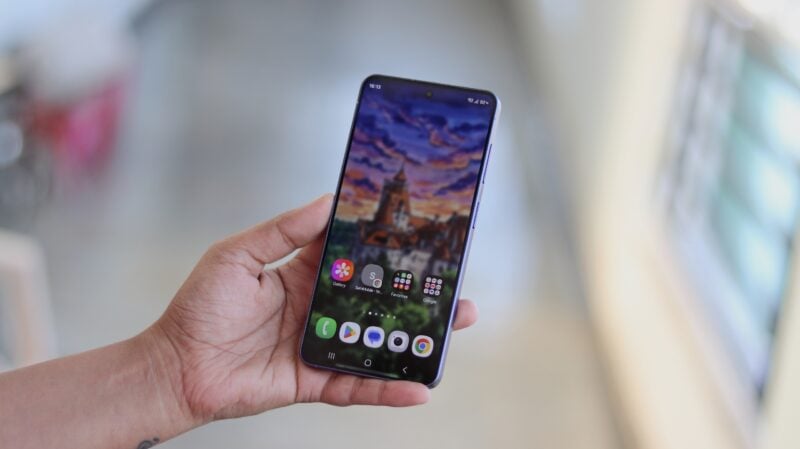
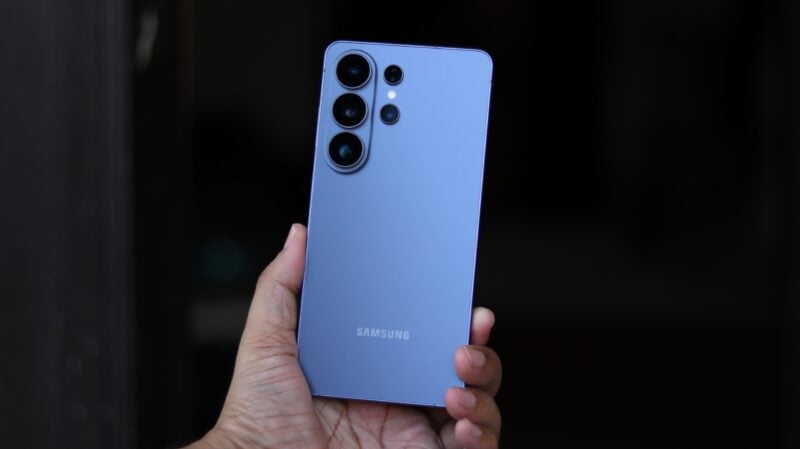
Galaxy S26 Ultra's display - Source: Asif Iqbal Shaik / SamMobile
Samsung’s Galaxy phones are already compatible with several HDR video formats, including HDR10, HDR10+, and HLG. They could soon gain support for another HDR format: Eclipsa Video. Google has added native support for the new format in Android 17, and it could make its way to Galaxy phones and tablets with One UI 9.0.
Google released the stable version of Android 17 earlier this month for Pixel devices. It introduces several new features, including support for Eclipsa Video. It is a new and open HDR format optimized for mobile devices such as phones and tablets. You can think of it as an extension of Samsung’s HDR10+ Adaptive, as it takes ambient lighting and display hardware into account to adjust HDR brightness instead of relying solely on the video’s dynamic metadata.
Eclipsa Video
Logo of the Eclipsa Video HDR format – Source: Eclipsa Video
Samsung’s HDR10+ Adaptive format is based on the SMPTE ST 2094-40 specification, while Eclipsa Video is based on the open SMPTE ST 2094-50 specification, which was co-developed by Google, Apple, and NBCUniversal.
Eclipsa Video is designed to prevent sudden, eye-blinding brightness when scrolling through feeds, such as Instagram, in dim lighting conditions. It also aims to fix the flat and washed-out colors that are sometimes seen when viewing mobile content on TVs.
Instead of leaving brightness interpretation to a device’s display capabilities, Eclipsa Video uses precise dynamic metadata and ambient lighting conditions to optimize brightness and colors. It also uses an HDR Reference White benchmark to ensure that standard UI elements, text, and SDR colors remain readable while HDR content is displayed on the screen.
The format also scales highlights based on the screen’s physical brightness limits. If HDR content is displayed on a TV, it increases the display’s brightness accordingly. Like Dolby Vision and HDR10+, Eclipsa Video uses frame-by-frame dynamic metadata to deliver accurate colors and contrast across phones, tablets, laptops, and TVs.
Google and Samsung co-developed Eclipsa Audio, which is already supported on select Samsung soundbars and TVs launched in 2025 or later. It is being reported that Eclipsa Audio and Eclipsa Video will be bundled together for mobile devices and TVs, similar to how Dolby Atmos and Dolby Vision are marketed together. HDR10+ Technologies LLC, an industry consortium with more than 180 companies, including Samsung, will administer the program for Eclipsa Video.
We could see wider adoption of both Eclipsa Audio and Eclipsa Video starting next year as more compatible hardware becomes available. Some Galaxy phones and tablets could get support for Eclipsa Video with the upcoming One UI 9.0 update.
Asif is a computer engineer turned technology journalist. He has been using Samsung phones since 2004, and his current smartphone is the Galaxy S23 Ultra. He loves headphones, mechanical keyboards, and PC hardware. When not writing about technology, he likes watching crime and science fiction movies and TV shows.