


Last updated: September 10th, 2026 at 06:29 UTC+02:00
SamMobile has affiliate and sponsored partnerships, we may earn a commission.
Apple appears to be focusing on giving users control over a photo's depth of field with the variable aperture on the iPhone 18 Pro camera.
Reading time: 3 minutes
Abhijeet Mishra / SamMobile
Apple has brought variable camera aperture back to smartphones with the iPhone 18 Pro and iPhone 18 Pro Max.
The new 48MP main camera can switch between f/1.48, f/1.8, f/2.8, and f/4.0. It can choose the aperture automatically or let the user select one manually through the Pro controls.
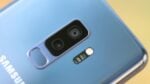
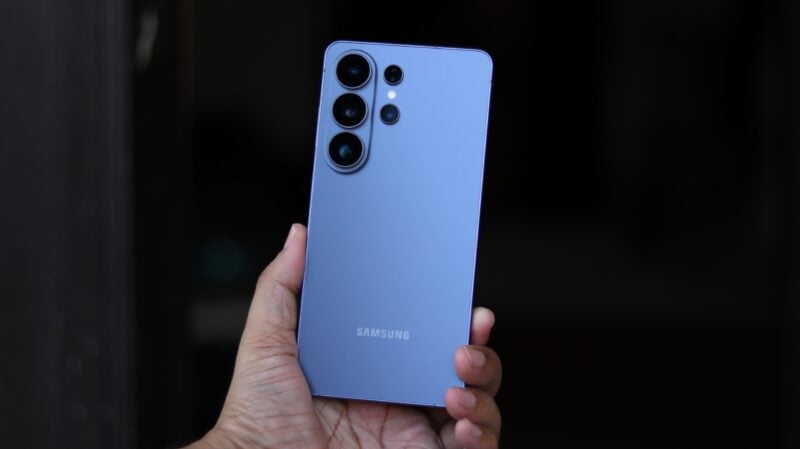
Galaxy fans will remember Samsung offering something similar on the Galaxy S9 and S9+. However, Apple’s implementation interests me for a somewhat different reason.
The Galaxy S9 could switch between f/1.5 and f/2.4. It used f/1.5 in the dark and switched to f/2.4 under bright lighting.
Back in 2018, f/1.5 was the widest aperture available on a smartphone. It allowed the camera to capture more light and use a lower ISO or faster shutter speed, resulting in cleaner night photos with less noise or motion blur.
Apple hasn’t ignored low-light photography. It says the iPhone 18 Pro’s f/1.48 setting provides around 50% better low-light performance than its predecessor.
However, an aperture that wide is no longer unusual. The Galaxy S26 Ultra has a fixed f/1.4 aperture for the main camera.
Sensor size, lens quality, and image processing will still affect the final results, but variable aperture doesn’t give the iPhone an obvious light-gathering advantage over Samsung’s latest Ultra phone.
Modern smartphone cameras use larger sensors, and their wide fixed apertures can produce a very shallow depth of field when shooting something up close.
Focus on one part of a flower, plate of food, or document, and other parts may look blurry even when they aren’t much farther away. This is natural optical blur, not the artificial background blur added by Portrait mode.
By setting the aperture to f/2.8 or f/4, the iPhone 18 Pro can increase the depth of field and keep more of the subject in focus. It won’t reduce the camera’s minimum focusing distance, but it should make close-up shots easier to capture without leaving important details blurry.
The trade-off is that a smaller aperture lets in less light, so f/4 will be most useful under bright lighting. Apple also suggests using it for creating “artful effects manually, like a luminous starburst from bright light.”
Samsung’s Dual Aperture system made sense in 2018 because f/1.5 gave the Galaxy S9 a notable low-light advantage. Apple’s system goes in the opposite direction, potentially addressing the shallow depth of field produced by modern smartphone cameras.
I’m interested to see how well it works in practice. And if it proves useful, I hope Samsung brings variable aperture back. Not to make night shots brighter, but to give us greater control over how much of a scene remains in focus when shooting up close.