








Cyber week deals! Galaxy Watch8 Classic, Fold 7, S25 Ultra. Follow us on YouTube, TikTok, or Instagram
Last updated: July 31st, 2025 at 09:05 UTC+02:00
SamMobile has affiliate and sponsored partnerships, we may earn a commission.
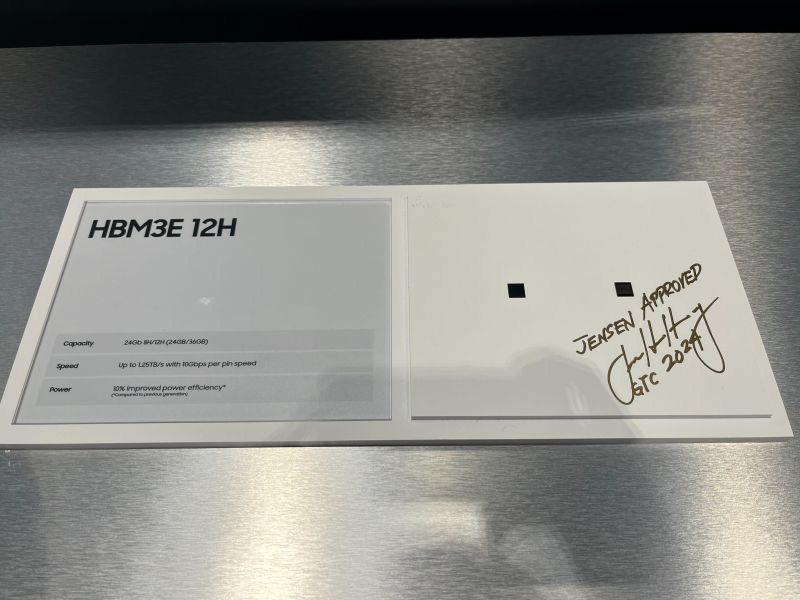
The company struggled to ride the AI boom as sales of its high bandwidth memory (HBM) chips faltered.
Reading time: 3 minutes
Samsung has announced its earnings for the second quarter (Q2) of this year. The company's smartphone business performed quite well and helped it stay afloat during testing times. The South Korean firm's semiconductor chip business struggled to keep pace with its competitors in the AI semiconductor chip race, so its profits in Q2 2025 more than halved compared to last year.
Even though the company's revenue rose slightly to KRW 74.56 trillion (~$53.5 billion) in Q2 2025 compared to the same quarter last year, its operating profit was just KRW 4.7 trillion (~$3.4 billion), a massive drop from KRW 10.4 trillion (~$7.5 billion) that it reported last year.
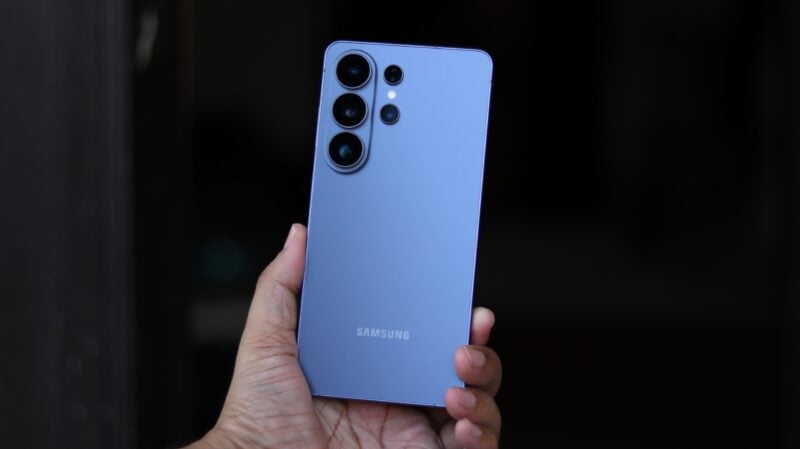
Of that profit, KRW 3.1 trillion (~$2.23 billion) was contributed by it smartphone business (Samsung MX) alone. This is a nearly 40% improvement compared to last year's profit of KRW 2.23 trillion (~$1.6 billion). It speaks volumes about the performance of its smartphones and other mobile devices such as laptops, smart rings, smartwatches, wireless earbuds, and tablets.
The company said sales of its Galaxy A and Galaxy S series phones and tablets was robust during the quarter. In the second half of this year, the company said it will focus on selling more high-end devices, including the Galaxy S25 series, Galaxy Z Flip 7, and Galaxy Z Fold 7, and bringing more AI features to Galaxy A series phones.
The sales of its Neo QLED and OLED TVs improved, but the overall revenue declined compared to last year due to hightened competition in the TV segment. The TV and home appliances division posted a revenue of KRW 14.1 trillion (~$10.16 billion) and a profit of KRW 200 billion (~$144 million) during Q2 2025.
The company's semiconductor chip division used to be its cash cow, usually accounting for 2/3rd of its total profit. However, as it is struggling with the sales of its HBM chips, its in-house Exynos chips, and semiconductor chip fabrication (foundry), the operating profit of the chip division fell by a massive 93.8% compared to last year.
The profit from Samsung's semiconductor chip business was KRW 400 billion (~$288 million) in the second quarter, a nosedive from Q2 2024's KRW 6.45 trillion (~$4.65 billion). The division's revenue fell from KRW 28.56 trillion (~$20.58 billion) to KRW 27.9 trillion (~$20.11 billion).
Samsung blamed bad performance of its chip business to low utilization rates of its foundry business, inventory value adjustments, and US export controls on sales of advanced AI chips to Chinese firms. The company had warned investors about its low performance earlier this month via its earnings estimates.
The company recently announced a $16.5 billion deal with Tesla to fabricate 2nm AI chips in the USA by 2027. This deal is expected to boost the company's chip business and help it bring more customers for its advanced nodes.
In the second half of the year, the company plans to improve its competitiveness in the advanced semiconductor chip segment and meet growing demand for high-bandwidth memory chips used in AI servers.
It also plans to increase the competitiveness of Exynos chips to equip its upcoming model (Exynos 2600), based on the 2nm GAA process, in the Galaxy S26 series early next year. The South Korean firm is also focusing on improving the sales of ultra-high resolution and nano-prism camera sensors.