






Published: September 21st, 2026 at 08:00 UTC+02:00


What is the privacy button on my Samsung Phone?

Daniel van Dorp

Reading time: 8 minutes

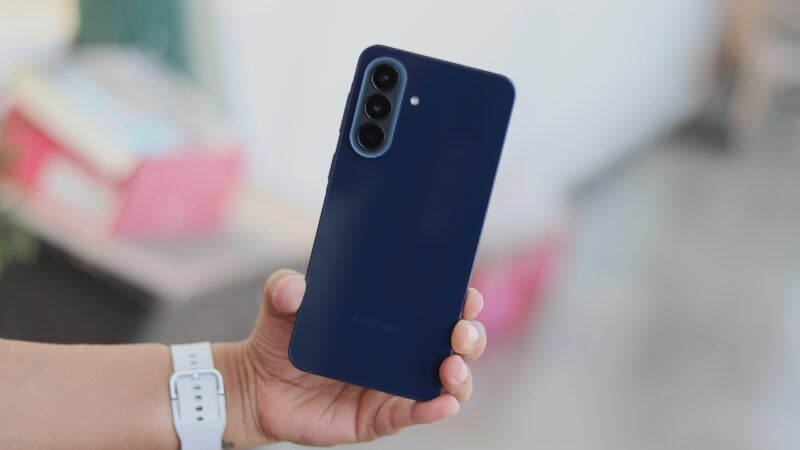
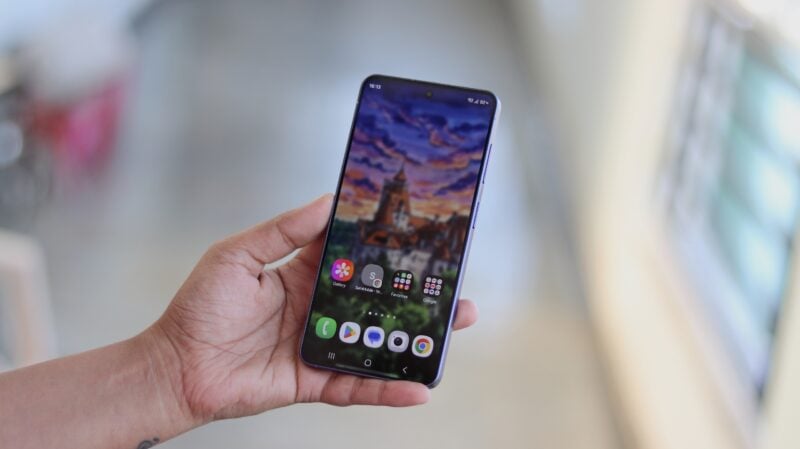
Samsung Galaxy smartphone held in hand with finger near side-mounted privacy button, soft natural window light, shallow depth of field.

Abhijeet Mishra / SamMobile

Knowledge Base

Samsung Galaxy smartphone held in hand with finger near side-mounted privacy button, soft natural window light, shallow depth of field.

TL;DR

  • Samsung phones running One UI 4+ include Quick Settings tiles for Mic access and Camera access that act as a privacy master switch.
  • Turning either toggle off blocks every app from using that hardware until you turn it back on, even if the app already has permission.
  • You can use it for sensitive conversations, when lending your phone, or anytime you want instant hardware-level privacy.
The privacy button on your Samsung phone is a quick-access toggle found in the notification shade that lets you instantly cut off all apps from using your microphone and camera at the same time. It is part of Samsung's built-in privacy controls, available on devices running One UI 4 and later. Below, we walk through exactly where to find it, what it does, and when it makes sense to use it.

Where is the privacy button on a Samsung phone?

The privacy button on a Samsung phone sits inside the Quick Settings panel, which you open by swiping down from the top of your screen with two fingers. You will see a row of icon tiles for things like Wi-Fi, Bluetooth, and Do Not Disturb. The privacy controls, labeled Mic access and Camera access, appear as separate tiles in that same panel.

If you cannot see them straight away, swipe left across the Quick Settings tiles or tap the pencil icon to edit the panel. From there, you can drag the Mic access and Camera access tiles into your visible row so they are always one swipe away. Once they are in place, a single tap is all it takes to turn either one on or off.

What does the privacy button actually do?

The privacy button blocks every app on your phone from accessing your microphone or camera until you turn access back on. When you tap the Camera access tile to turn it off, no app, regardless of what permissions it has been granted, can activate your camera. The same applies to the Mic access tile and your microphone.

Think of it as a master switch that sits above individual app permissions. Even if a social media app or a voice assistant has been given permission to use your mic, that permission is effectively paused the moment you disable Mic access from Quick Settings. Your phone will also show a small icon in the status bar so you always know when either toggle is switched off, which means there is no guessing about whether something is listening or watching.

When should you use the Samsung privacy button?

You should use the Samsung privacy button any time you want a quick guarantee that no app can pick up audio or video without you actively choosing to allow it. Common situations include sensitive conversations at home or at work, moments when you hand your phone to someone else, or simply when you want peace of mind during a long stretch of downtime.

It is also worth switching on during video calls on platforms you are less familiar with. If you join a meeting and want to stay muted at the hardware level rather than just the software level, disabling Mic access from Quick Settings gives you that extra layer of confidence. When you are ready to speak or use the camera again, one tap restores access instantly.

Does turning off the privacy button affect all apps?

Yes, turning off the privacy button affects every app on your Samsung phone without exception. It does not matter whether an app is running in the foreground, sitting open in the background, or launching for the first time. If Camera access or Mic access is toggled off in Quick Settings, that app will be blocked from using the relevant hardware until you switch it back on.

When an app tries to use a blocked feature, it will typically receive an error or show a prompt telling you that access has been restricted. Some apps will display a message asking you to check your privacy settings. This behavior is intentional. Samsung designed the feature so that the Quick Settings toggle always takes priority, giving you a reliable way to cut off access without needing to dig through each app's individual settings. Once you re-enable the toggle, all apps that previously had permission will regain access automatically.

Is the Samsung privacy button the same as app permissions?

No, the Samsung privacy button is not the same as app permissions. App permissions are settings you configure individually for each app, controlling whether a specific app is allowed to use your camera, microphone, location, and so on. The privacy button in Quick Settings is a system-level override that sits on top of all those individual permissions at once.

Here is a simple way to picture the difference:

  • App permissions are like locks on individual doors. You decide which apps get a key to the camera room or the microphone room.
  • The privacy button is like a master lock on the entire building. Even if an app has a key, the building is sealed until you lift the master lock.

Both tools are worth using together. You can manage your privacy settings at the app level to make sure only trusted apps have permission in the first place, and then use the Quick Settings toggle as a fast override whenever you want an immediate, no-fuss block on all camera or microphone activity. Using both layers gives you the most control over what your phone can and cannot do at any given moment.

Frequently Asked Questions

What happens to my app permissions after I re-enable the privacy toggle?

When you re-enable Mic access or Camera access from Quick Settings, all apps that previously had permission will automatically regain access — nothing is permanently changed. Think of the toggle as a temporary pause rather than a reset. You do not need to go back into each app's settings and re-grant permissions every time you turn the toggle back on.

Is the Samsung privacy button available on all Samsung Galaxy models?

The Mic access and Camera access Quick Settings tiles are available on Samsung devices running One UI 4 or later, which covers most Galaxy phones and tablets released from late 2021 onward. If you are on an older version of One UI, you may not see these tiles in your Quick Settings panel. To check your One UI version, go to Settings u003e About phone u003e Software information.

Can I use the privacy button during an active phone call without dropping the call?

Disabling Mic access during an active phone call will mute your microphone at the hardware level, meaning the other person will no longer be able to hear you — but the call itself will not be disconnected. This is actually a stronger mute than the in-call software mute button, since it operates at the system level. Just remember to re-enable Mic access before you want to speak again, as the in-call mute button alone will not restore hardware-level access.

Does the Samsung privacy button also block the front and rear cameras, or just one of them?

The Camera access toggle in Quick Settings blocks both the front-facing and rear-facing cameras simultaneously. It is a single system-wide block on all camera hardware on the device, so there is no need to disable each camera separately. Any app attempting to access either camera while the toggle is off will be denied access regardless of which lens it is trying to use.

Will disabling Mic access break my voice assistant, like Bixby or Google Assistant?

Yes, disabling Mic access will prevent Bixby, Google Assistant, and any other voice-activated feature from hearing you, since they all rely on microphone access to function. Wake-word detection and voice commands will stop working until you re-enable the toggle. This is actually a useful side effect if you want to ensure your voice assistant is completely inactive during a sensitive conversation.

Are there any apps or system processes that can bypass the Samsung privacy toggle?

Samsung designed the Quick Settings privacy toggles to function as a system-level override, meaning standard third-party apps cannot bypass them. However, certain core system functions — such as emergency calls — may retain access to ensure the phone remains functional in critical situations. In everyday use, no regular app, including pre-installed ones, can circumvent the toggle once it is switched off.

How is this different from simply putting my phone face-down or covering the camera?

Physically covering the camera or placing the phone face-down only addresses visual privacy from people in your immediate environment — it does nothing to prevent apps from activating the camera or microphone in the background. The Samsung privacy button, by contrast, enforces a software and hardware-level block that stops apps from accessing those sensors entirely. For genuine digital privacy, the Quick Settings toggle is a far more reliable solution than any physical workaround.