Last updated: February 8th, 2023 at 06:26 UTC+01:00
SamMobile has affiliate and sponsored partnerships, we may earn a commission.
Reading time: 2 minutes
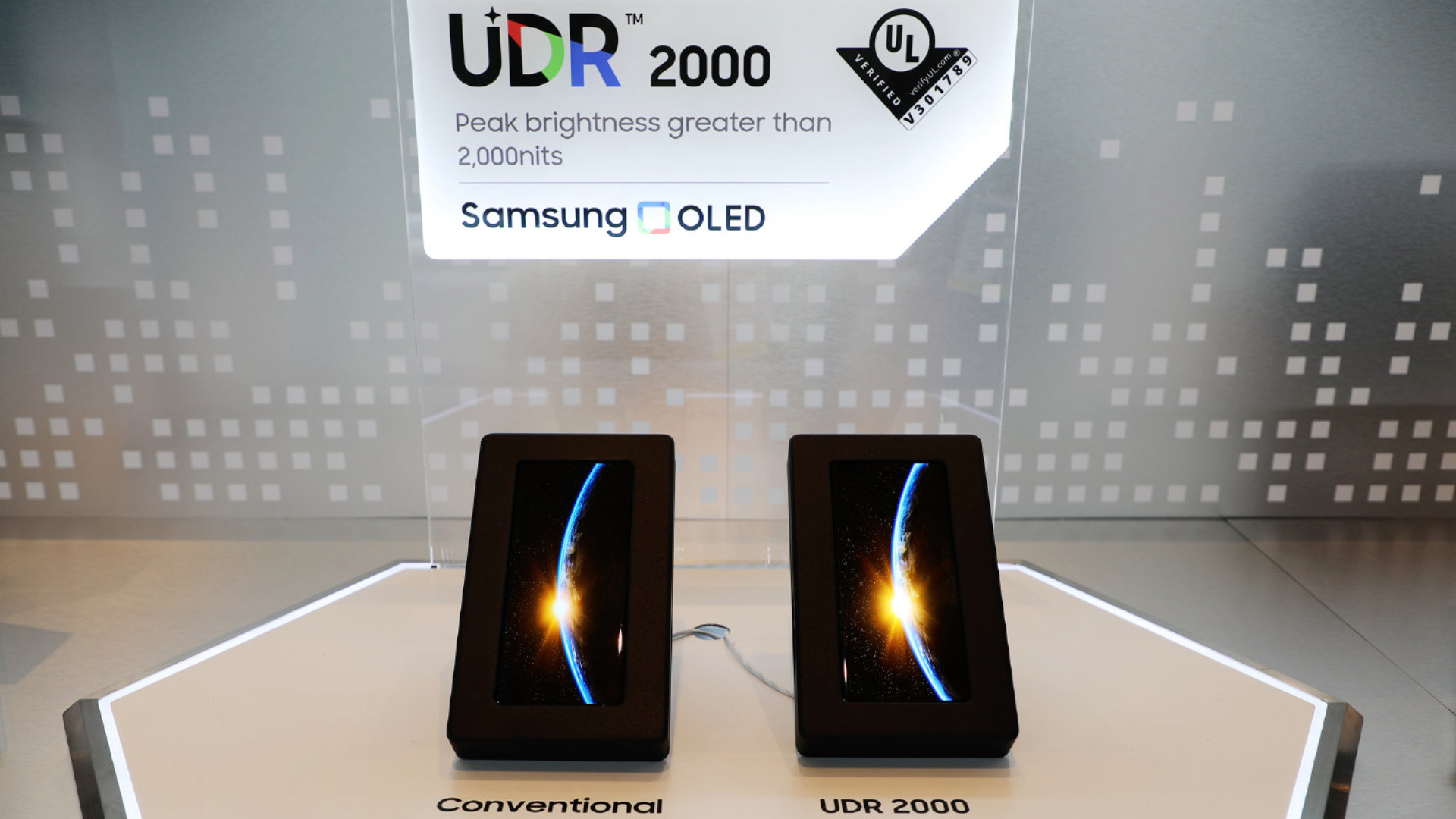
According to tipster Connor (@OreXda), Samsung Display's next-gen smartphone OLED panel can reach a peak brightness of a whopping 2,500 nits. Reliable Apple tipster ShrimpApplePro (@VNchocoTaco) said that this new OLED panel could be used in the iPhone 15 Pro Max that will be launched later this year. That would significantly improve the outdoor visibility and realism in HDR content. However, you need to understand that screen brightness, measured in nits, has a logarithmic scale. It means 2,500 nits won't be visibly 25% brighter than 2,000 nits. So, the actual perceived brightness difference will be lower than the number suggests.
Usually, Samsung Display's flagship OLED screens debuted with Galaxy S or Galaxy Note series smartphones. However, Apple was the first to use Samsung Display's 2,000 nits OLED screen last year. And Samsung MX (which makes phones) didn't use the same panel in its latest smartphone lineup, the Galaxy S23. So, it is possible that we won't see a 2,500 nits screen in the Galaxy S24 Ultra next year.
Still, from the technical perspective, Samsung Display is leaving its competitors—CSOT (Chinese) and LG Display (Korean)—in the dust with consistent improvements with its new OLED panels each generation. The company also seems to be developing MicroLED displays that could be used in the next-generation Apple Watch Ultra.

Asif is a computer engineer turned technology journalist. He has been using Samsung phones since 2004, and his current smartphone is the Galaxy S23 Ultra. He loves headphones, mechanical keyboards, and PC hardware. When not writing about technology, he likes watching crime and science fiction movies and TV shows.