



Last updated: November 24th, 2026 at 08:41 UTC+01:00


Samsung could be iPhone Duo's lone OLED supplier for forseeable future

It shows how far ahead Samsung's OLED technology is compared to rivals.

Asif Iqbal Shaik

Reading time: 2 minutes

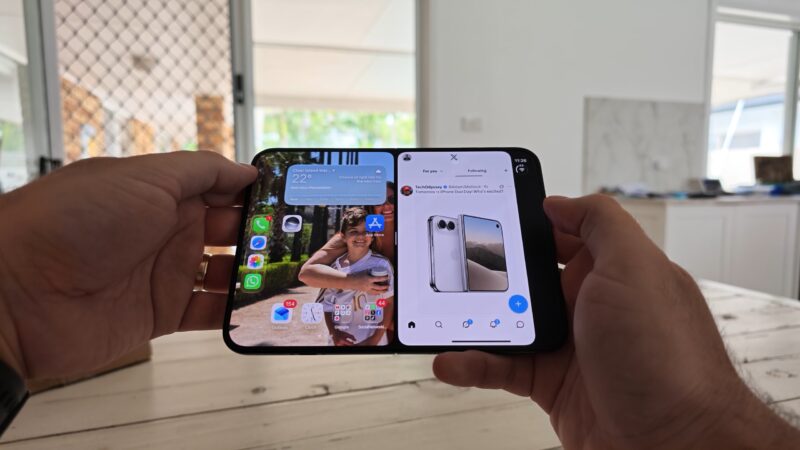
Apple iPhone Duo Split-Screen Multitasking

Abhijeet Mishra / SamMobile

Display

Split-screen multitasking on the Apple iPhone Duo

TL;DR

  • Samsung Display currently has the strongest mass-production lead in foldable OLED panels for Apple's iPhone Duo, according to a tipster.
  • Its panels are said to have better crease control and reliability, making Samsung the only viable supplier for now.
  • LG Display is not ready to supply foldables to Apple, while BOE has not met Apple's quality standards; Apple may add more suppliers later.

Samsung Display has been supplying OLED panels for iPhones since the launch of the iPhone X. Even the recently launched iPhone Duo exclusively uses the South Korean firm's foldable OLED panel, and that arrangement could continue for the foreseeable future.

Chinese tipster Instant Digital claims that Samsung Display currently holds a strong advantage in the mass production of foldable OLED panels for the iPhone Duo. The South Korean firm's panels reportedly offer better crease control and reliability than those of its rivals, making it the only viable manufacturer for Apple's foldable iPhones.

As a result, Samsung Display could dominate foldable OLED panel supply for the iPhone Duo for at least five more years. For the first-generation iPhone Duo, each foldable OLED panel reportedly costs $250.

While LG Display was involved in the early development of foldable panels, it does not currently manufacture folding displays and is unlikely to supply them to Apple anytime soon. Meanwhile, Samsung Display's Chinese rival, BOE, supplies foldable screens to Huawei, though it has fallen short of Apple's strict quality control metrics.

In a few years, once foldable screens become more mainstream and BOE and LG Display gain enough expertise in manufacturing them, Apple could bring both suppliers on board, similar to how it diversified OLED panel sourcing for standard iPhones.