
Last updated: November 9th, 2026 at 21:53 UTC+01:00
SamMobile has affiliate and sponsored partnerships, we may earn a commission.
Samsung's decision may have been more reasonable than people gave it credit for.
Reading time: 3 minutes
Abhijeet Mishra / SamMobile
I was a little disappointed to learn that the Galaxy Z Fold 8 didn't have Flex Mode. After all, the Galaxy Z Fold 8 is my first daily foldable, and I wanted to experience Samsung's hyped Flex Mode feature for myself in daily use.
But after a couple of months with the Fold 8 and no Flex Mode, I'm beginning to think Samsung made the right call omitting this feature from its passport-style foldable.
Why would I be okay with a missing feature? Well, I always say that sometimes less is more. And in this case, Flex Mode was omitted for a reason. I initially thought the reason was fickle, but the Fold 8 continues to prove me wrong.
In case you missed that nugget of information earlier this summer, Samsung said it left Flex Mode out of the Fold 8 package because the feature would't work with the redesigned hinge.
Samsung redesigned the hinge for the Galaxy Z Fold 8 to feel springier and make unfolding and folding feel easy and rewarding. However, this meant that the Fold 8 couldn't have a hinge that “locks” the phone into place at different angles.
In other words, Samsung couldn't offer both on the Galaxy Z Fold 8. It had to decide between Flex Mode and making the Fold 8 easier to fold and unfold. It chose the latter, and I'm starting to see why.
In my experience with the Galaxy Z Fold 8 over the past three months, I realized I never think twice before switching between the cover and main screens.
Dare I say, that's possibly one of the most important and slept-on aspects of a foldable phone: to never make you doubt whether you should fold or unfold it. And in my experience, the Galaxy Z Fold 8's hinge seeds no such doubts. I just fold/unfold it without a second thought whenever I need to.
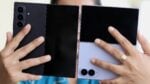
The Galaxy Z Fold 8 Ultra, on the other hand, has Flex Mode, and its hinge is noticeably more resistive. For Fold 8 Ultra users who value multitasking, it a trade-off rather than a deal-breaker. But is it a trade-off I'd be willing to accept? Not anymore.
The Ultra model's hinge is resistive enough that you might find yourself wondering — maybe too often — whether you should switch screens during regular use. There's just enough friction in the Fold 8 Ultra's hinge, literally and figuratively, to turn the simple folding-unfolding action into a question you might have to answer multiple times every day.
That never happens in my Galaxy Z Fold 8 experience, and it feels liberating. If I suddenly think that an app I'm using might look and feel better on the main screen, I'll unfold my phone and continue my task without skipping a beat.
All things considered, the lack of Flex Mode was a little disheartening at first. But after using the phone for a few months, it all makes sense. I wish I had both a smooth hinge and Flex Mode, and who knows?! Maybe Samsung will be able to combine those traits in a single package for the upcoming Galaxy Z Fold 9.
But if I had to choose between the two, I'd keep Flex Mode out of the equation, at least for the non-Ultra Fold series.