






Last updated: July 30th, 2026 at 08:01 UTC+02:00


Samsung’s profit rises by over 1,800% compared to last year

The company earned a lot of money by selling memory chips.

Asif Iqbal Shaik

Reading time: 4 minutes

Samsung Logo CES 2026

Abhijeet Mishra / SamMobile

Business

Samsung logo - Source: Abhijeet Mishra / SamMobile

TL;DR

  • Samsung Electronics posted record Q2 2026 revenue of KRW 171.5 trillion and profit of KRW 89.5 trillion, with memory chips driving most of the gains.
  • The semiconductor division delivered record results on strong DRAM, HBM, and NAND demand, while the mobile, TV, and appliance businesses posted losses.
  • Samsung Display and Harman also reported solid results, and Samsung plans to grow through advanced chip nodes and new OLED production.

After revealing its earnings estimates earlier this month, Samsung Electronics announced its final earnings figures for the second quarter (Q2) of 2026 today. The company reported record-high revenue of KRW 171.5 trillion (~$116.6 billion) and a record-breaking profit of KRW 89.5 trillion (~$60.9 billion) during the quarter.

Samsung's revenue rose 28% compared to Q1 2026 and around 130% compared to Q2 2025. Its profit increased by over 1,800% from KRW 4.7 trillion (~$3.2 billion) in Q2 2025. These record-breaking figures were largely driven by sales of memory chips, including DRAM, HBM, and NAND flash.

Earnings per share reached KRW 10,849, a 52% increase that is among the highest reported by global technology companies.

Semiconductor chips

Samsung HBM4 Memory Chips

Samsung

Samsung HBM4 memory chips – Source: Samsung

Revenue at the company's Device Solutions (DS) division, which designs and manufuactures semiconductor chips, increased by 56% compared to Q1 2026. The division posted revenue of KRW 127.5 trillion (~$86.7 billion) and a profit of KRW 89.2 trillion (~$60.7 billion).

  • Revenue: KRW 127.5 trillion (~$86.7 billion)
  • Profit: KRW 89.2 trillion (~$60.7 billion)

Its Memory Business division, which sells DRAM, HBM, and NAND flash chips, reported record-high revenue and profits due to extremely high demand and higher memory chip prices.

Samsung Exynos 2600 Processor

Samsung

Samsung Exynos 2600 Processor – Source: Samsung

The System LSI division, which is part of Samsung's Device Solutions business, reported record-high revenue in the first half of this year, thanks to increased sales of Exynos chips and ISOCELL camera sensors. The company achieved this despite challenging conditions in the smartphone market and weak demand in China.

Samsung Foundry, which manufactures chips, benefited from sales of HBM base dies to Samsung's Memory Business division. It also secured orders from Samsung's smartphone division for next-generation flagship Exynos chips and is preparing to manufacture second-generation 2nm chips.

The company is targeting double-digit revenue growth by making chips on advanced process nodes, including 2nm and 4nm, for customers in China and the US.

Home appliance, mobile phone, network, and TV businesses

Samsung Bespoke AI Washer Dryer AI Wash Plus CES 2026

Abhijeet Mishra / SamMobile

Samsung Bespoke AI Washer Dryer at CES 2026 – Source: Abhijeet Mishra / SamMobile

Unfortunately, the DX (Device eXperience) division, which sells mobile phones, TVs, and home appliances, posted a loss of around KRW 800 billion (~$544 million).

  • Loss: KRW 800 billion (~$544 million)

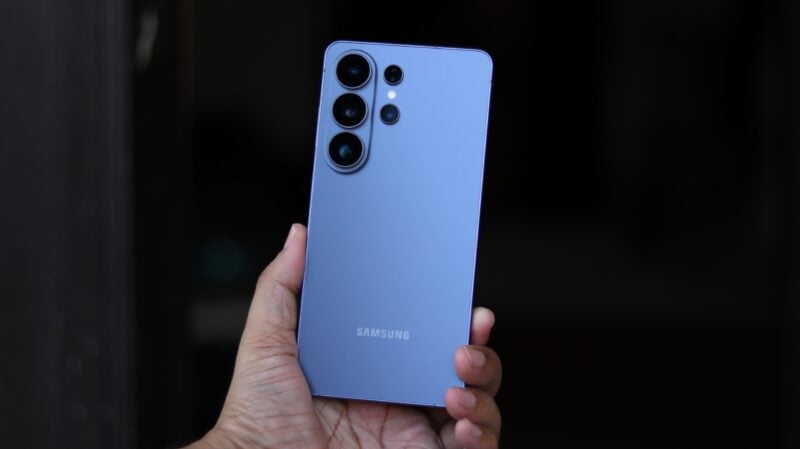
Samsung MX, the company's mobile division, accounted for around KRW 700 billion (~$476 million) of Samsung DX's loss. It is the first time the division has reported a loss in its history. Its revenue reached KRW 33.2 trillion (~$22.6 billion), up from Q1 2026 due to solid sales of the Galaxy S26 series. However, astronomically high memory chip prices increased manufacturing costs, resulting in an overall loss for the mobile division.

  • Revenue: KRW 33.2 trillion (~$22.6 billion)
  • Loss: KRW 700 billion (~$476 million)

Samsung said it will improve business efficiency to mitigate the impact of higher memory chip prices.

Galaxy S26 hands-on 6

Abhijeet Mishra / SamMobile

Galaxy S26 hands on 6 – Source: Abhijeet Mishra / SamMobile

Samsung Networks, which is also part of Samsung DX and sells network equipment to cellular operators, posted improved revenue compared to Q2 2025 and Q1 2026.

The Visual Display (VD) division, which sells TVs and monitors, and the Digital Appliances (DA) division, which sells home appliances, reported consolidated revenue of KRW 14.5 trillion (~$9.9 billion) and a loss of KRW 0.01 trillion (~$6.8 million).

  • Revenue: KRW 14.5 trillion (~$9.9 billion)
  • Loss: KRW 0.01 trillion (~$6.8 million)

Samsung's TV sales increased in Q2 2026 due to the FIFA World Cup, but profit margins declined because of higher manufacturing costs.

Samsung TV AI Picture CES 2026

Abhijeet Mishra / SamMobile

Samsung TVs with AI Picture features at CES 2026 – Source: Abhijeet Mishra / SamMobile

Revenue from home appliance sales increased due to solid demand for air conditioners. The Digital Appliances division plans to improve profitability by selling more high-end appliances with smart wireless connectivity and AI-powered features.

Harman International, which is owned by Samsung Electronics, sells digital cockpit solutions for modern vehicles, including electric cars. It also sells earbuds, headphones, speakers, and soundbars under brands such as AKG, Harman Kardon, Infinity, and JBL. The division posted revenue of KRW 4.6 trillion (~$3.1 billion) and a profit of KRW 400 billion (~$272 million).

  • Revenue: KRW 4.6 trillion (~$3.1 billion)
  • Profit: KRW 400 billion (~$272 million)

OLED display panels

Samsung Display OLED Panels Laptop Smartphone TV

Abhijeet Mishra / SamMobile

Samsung Display OLED Panels Laptop Smartphone TV – Source: Abhijeet Mishra / SamMobile

Samsung Display, which makes OLED panels for devices ranging from phones and laptops to monitors and TVs, posted revenue of KRW 7.5 trillion (~$5.1 billion) and a profit of KRW 0.7 trillion (~$476 million).

  • Revenue: KRW 7.5 trillion (~$5.1 billion)
  • Profit: KRW 0.7 trillion (~$476 million)

Sales of OLED panels for smartphones and tablets increased due to strong demand, while monitor OLED panel sales improved alongside higher sales of gaming monitors.

The company plans to increase revenue by starting mass production at its 8.6G IT OLED production line. Samsung Display could use this facility to make advanced OLED panels for Apple's upcoming MacBook Ultra models.