Last updated: February 25th, 2026 at 19:07 UTC+01:00
SamMobile has affiliate and sponsored partnerships, we may earn a commission.
The Galaxy S26 Ultra refines Samsung’s flagship with smarter AI, brighter cameras, and a new Privacy Display built for modern life.
Reading time: 7 minutes
Today, Samsung officially introduced the all-new Galaxy S26 series, with the Ultra model clearly positioned as the centerpiece. Not only does it carry the strongest marketing focus, it is also the model where most of the meaningful improvements and technical advancements have taken place.
The Galaxy S26 Ultra represents Samsung’s most premium flagship for 2026, combining top-tier performance, the most advanced camera system in the lineup, a large battery, and the full feature set the company currently has to offer.
https://youtu.be/h76H0bcdHIw
From a design perspective, the Galaxy S26 Ultra is not a revolution but a refinement. Samsung builds on the established design language of its predecessor, the Galaxy S25 Ultra, and improves it in subtle but noticeable ways.
One of the most significant changes is the frame. It is now visibly rounder and feels more in line with the rest of the Galaxy S26 lineup, including the Galaxy S26 and Galaxy S26+. The previously sharper edges have been softened, which makes the device more comfortable to hold over longer periods.
Materials have also been switched. While the Galaxy S25 Ultra used an all-titanium frame, the new Galaxy S26 Ultra switches back to Armor Aluminum.
The defining feature of the Ultra model remains the integrated S Pen. Samsung has slightly redesigned it, mainly to improve the mechanism and make it easier to remove from the device. In everyday use, however, it remains functionally very similar to previous generations.
The S Pen can be used for handwritten notes, sketches, annotations, or precise input directly on the display. Especially for users who frequently sign documents, edit images, or take quick notes during meetings, it continues to be a practical productivity tool that clearly differentiates the Ultra from the rest of the Galaxy S26 lineup.
However, one limitation remains: the S Pen still does not support Bluetooth functionality. That means it cannot be used as a remote for the camera, to control slides in a presentation, or to navigate through the gallery with gestures. Samsung removed Bluetooth support after the Galaxy S24 Ultra, and that decision carries over into this generation.
While many users may not rely on those remote features, it is still worth noting for those who appreciated the additional flexibility in earlier models.
Another visual adjustment concerns the rear camera design. Similar to the Galaxy Z Fold 7, the Galaxy S26 Ultra no longer features individual camera lenses protruding directly from the back panel.
Instead, the lenses now sit on a subtle glass camera bump. This creates a more unified and premium appearance, especially since both the camera bump and the back panel are made from the same Gorilla Glass material.
In terms of colors, Samsung has shifted its approach. While the Galaxy S25 Ultra leaned heavily into silver-based tones, the Galaxy S26 Ultra is offered in more elegant and slightly more expressive finishes: Black, White, Sky Blue, and Cobalt Violet.
Additionally, Samsung offers two online-exclusive colors, Silver Shadow and Pink Gold. The overall palette feels more refined and less industrial than last year’s options.
The Galaxy S26 Ultra features a large 6.9-inch Dynamic AMOLED 2X display with a QHD+ resolution of 3,120 x 1,440 pixels and an adaptive refresh rate ranging from 1 to 120 Hz. As expected, the panel delivers sharp visuals, deep blacks, and vibrant colors.
Protection comes in the form of Gorilla Glass Armor 2, which promises improved resistance against scratches and drops. However, what truly sets the Galaxy S26 Ultra apart from the base Galaxy S26 and Galaxy S26+ is its new display technology.
Samsung has officially unveiled its new Privacy Display feature. As the name suggests, it functions similarly to a physical privacy screen protector by limiting viewing angles. When activated, the display becomes nearly impossible to read from the side, making it especially useful in public environments where sensitive information such as banking details, messages, or personal photos might otherwise be visible to others.
Unlike a traditional screen protector, this feature is fully customizable within the software. Users can choose to enable full-time angle restriction for the entire display, limit visibility only for pop-up notifications, or activate it for specific apps such as messengers, banking applications, or the gallery.
The technology behind it is impressive and genuinely practical. However, it does have limitations. When set to maximum functionality and always active, you may occasionally notice slight visual inconsistencies during everyday use. Since you do not always hold your phone perfectly straight in front of your eyes, the viewing experience can feel slightly restricted in certain situations.
In my first hands-on impression, I would personally prefer using the Privacy Display selectively, for example for notifications, password fields, or specific sensitive apps rather than enabling it permanently.
The Galaxy S26 Ultra is powered by the Qualcomm Snapdragon 8 Elite Gen 5 for Galaxy, a customized and slightly more powerful variant tailored specifically for Samsung devices. It delivers flagship-level performance across the board, whether in daily multitasking or demanding gaming scenarios.
Compared to the Galaxy S25 Ultra, Samsung claims a 19 percent improvement in CPU performance, a 24 percent boost in GPU performance, and a 39 percent increase in NPU performance, the latter being particularly important for AI-driven tasks and on-device processing.
To ensure sustained performance and improved efficiency, Samsung has integrated a newly designed and larger vapor chamber cooling system. This allows heat to dissipate more evenly across the device, helping maintain performance under extended load.
Depending on the market, the Galaxy S26 Ultra is available with either 12 or 16 gigabytes of LPDDR5X RAM and storage options of 256 GB, 512 GB, or 1 TB. There is no microSD card slot, but given the available configurations, most users are unlikely to feel limited.
The device is powered by a 5,000 mAh battery, which, in combination with the more efficient chipset, should comfortably deliver all-day battery life.
Wired charging supports up to 60 watts via Super Fast Charging 3.0, allowing the battery to reach up to 75 percent in approximately 30 minutes. Wireless charging is supported at up to 25 watts, and Samsung has launched a compatible charger for it.
Although earlier leaks suggested that the Galaxy S26 series would integrate magnets for full Qi2.2 magnetic alignment, Samsung ultimately decided against embedding magnets directly into the rear panel. Magnetic charging works only when using compatible accessories. Including built-in magnets would have been a welcome upgrade.
On the back, the Galaxy S26 Ultra features a quad-camera system consisting of a 200-megapixel main camera, a 50-megapixel ultra-wide camera, a 10-megapixel telephoto camera with 3x optical zoom, and a 50-megapixel periscope camera with 10x optical-quality zoom.
The key improvements are found in processing and aperture enhancements. The main camera now features a brighter f/1.4 aperture, capturing up to 47 percent more light. The periscope camera benefits from a brighter f/2.9 aperture, up to 37 percent brighter compared to the previous generation.
On the front, there is a 12-megapixel selfie camera for photos, videos, and video calls. Samsung says its AI ISP now works on selfies and should make for more realistic skin tones, but we'll have to test that later to see if the claims hold up.
The new Super Steady Video mode introduces horizontal lock stabilization, allowing the device to counteract hand movements more effectively using built-in gyroscope and acceleration sensors. Additionally, Samsung introduces automated frame alignment.
During 8K recording with real-time AI processing, the device can automatically zoom into areas of interest and output a 4K crop without noticeable quality loss. AI enhancements have also been applied to the selfie camera, including improved portrait blur and the new Object Aware Engine.
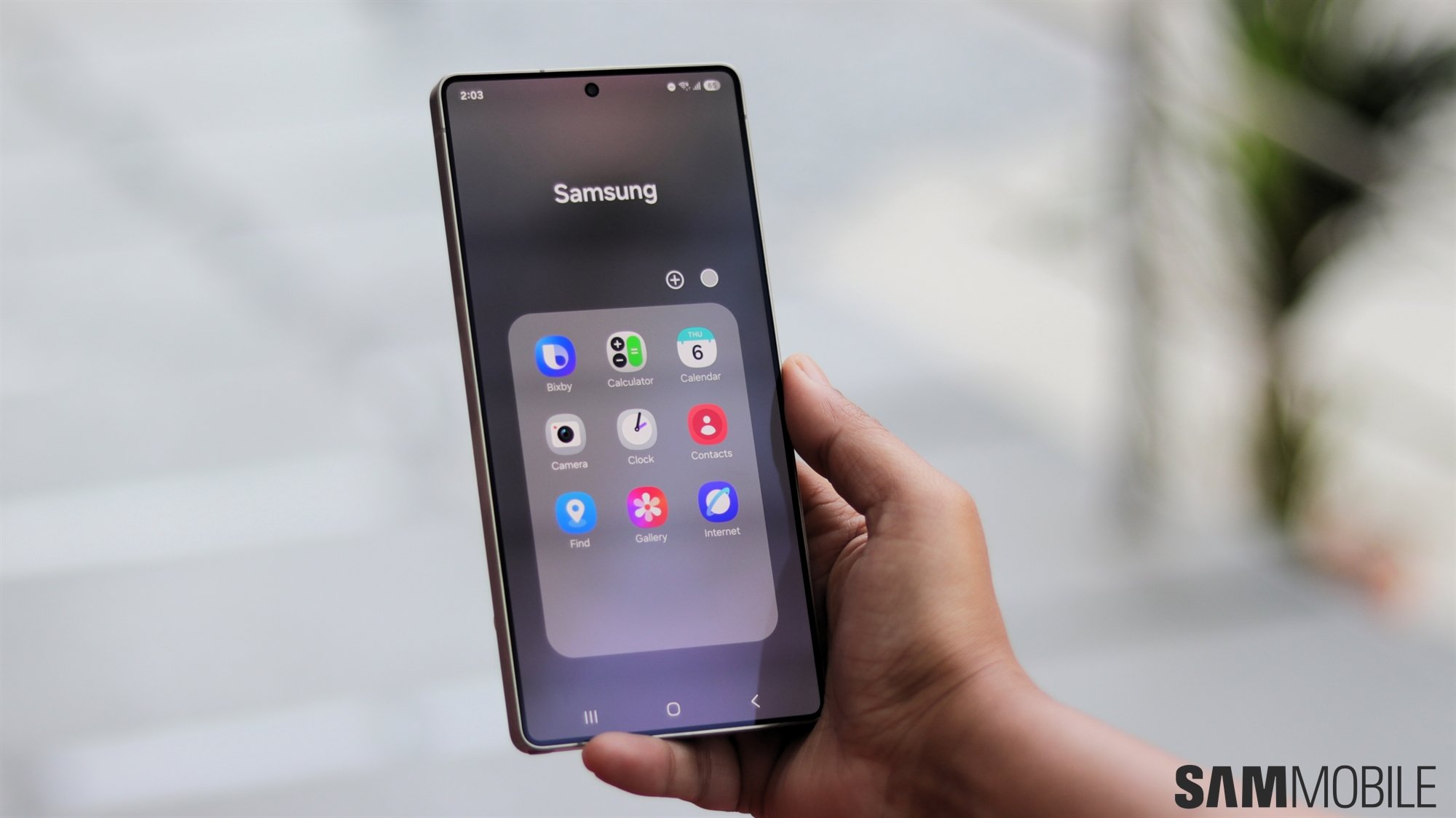
The Galaxy S26 Ultra ships with One UI 8.5 based on Android 16. It remains visually similar to One UI 8 but introduces meaningful refinements, including an updated Now Bar with Now Nudge, an enhanced Now Brief, and deeper AI integration.
Bixby with Perplexity enables more natural and context-aware interactions, while Google Gemini and Circle to Search remain available. Like the rest of the Galaxy S26 family, the Ultra model is guaranteed to receive seven years of Android updates and security patches.
The Galaxy S26 Ultra is available for pre-order starting today at 1,449 euros or $1,299. Official sales begin on March 11. Depending on the region, Samsung is offering pre-order incentives such as free storage upgrades, trade-in bonuses, and additional promotional bundles.