



Last updated: July 20th, 2026 at 19:58 UTC+02:00
SamMobile has affiliate and sponsored partnerships, we may earn a commission.
It has depth that many of its rivals simply do not.
Reading time: 4 minutes
Asif Shaik - SamMobile
The global smartphone market is in a spot of bother. Shipments are trending down overall, with a significant yearly decline being projected, largely due to cost pressures imposed by rising memory chip prices.
Samsung MX, the company's mobile division, is feeling the brunt of these conditions despite its own semiconductor division making money hand over fist from the memory super cycle. MX is now expected to post an annual loss and may lose more than $16 billion over the next couple of years.
Yet, the company is still in a far better place to weather this storm compared to its rivals. See what's happened with OnePlus. The company that was once a disruptive force in the market has now retreated from some of the most important markets.
OnePlus has announced that it's withdrawing completely from North America and from markets across Europe. The brand isn't going away entirely, though, with efforts now being focused on China and India.
OnePlus built its identity on flagship specs at a discount, a proposition that only worked as long as the components underneath were cheap. They stopped being cheap roughly a year ago, once memory chip prices began climbing under pressure from AI data centers buying up DRAM and NAND faster than anyone could produce it.
The company's shipments in the US were already down and the current market dynamics meant it was no longer worth it to keep funding the fight. It would be reasonable to assume Samsung is watching this with some discomfort of its own, because the same memory crisis gutting OnePlus's business model is currently gutting Samsung's.
Samsung is, in the same earnings cycle, one of the biggest victims of the memory shortage and also one of its largest beneficiaries.
The company's mobile division doesn't really get any favorable pricing on memory chips from its semiconductor division. It's as fully exposed to the current market dynamics as everybody else. Its corporate parent would have had to consider the same decision as OnePlus's if it didn't have the same cushion that Samsung does.
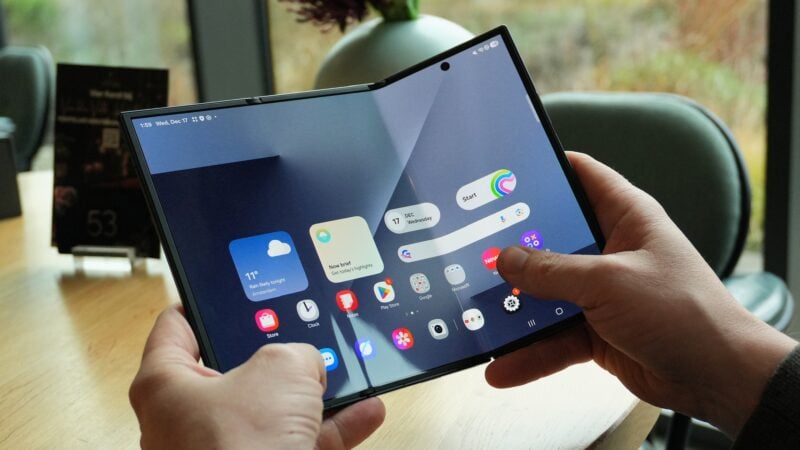
Things will get worse before they get better. The division already faces the difficult task of raising prices across its entire 2026 foldable lineup. Rumors also suggest that next year's Galaxy S series might end up being more expensive.
This will likely cause demand destruction, because these price hikes come at a time where global inflation fears are once again a part of the conversation. Constrained purchasing power will reflect in its overall sales figures and won't just be limited to some of its more expensive models.
A standalone phone company with MX's projected numbers would likely be fielding credit downgrades and board pressure, maybe considering a retreat of the kind OnePlus just carried out. Samsung Electronics as a whole is doing none of that, because the worse MX's quarter looks, the better the consolidated numbers look almost in spite of it.
Calling this a subsidy would overstate it. Samsung's chip and phone divisions reportedly don't offer each other internal discounts, partly to avoid the kind of favoritism questions that would invite regulatory scrutiny.
Whatever the number of Samsung MX's annual loss turns out to be this year, it will barely affect the company's overall financial picture, and that's why it's not facing the difficult decision that OnePlus has made.
Samsung doesn't need to rescue its phone business from the memory crises. It just needs to chug along for a couple of years while the other half of the building makes billions on memory chips, while its losses don't even make the faintest dent in the consolidated balance sheet.
That's not to say that there's no pain to be felt. MX division employees aren't happy that their bonuses are practically non existent compared to the roughly $340,000 average bonus every employee of the chip division has received. Their salaries, bonuses, and perks will remain under pressure because all of that is tied to the division's individual performance, not to the wider organization.
Perhaps they can find solace in the fact that their division will live to fight another day, while some of its rivals will face the impossible choice of either setting money on fire or exiting the race altogether. OnePlus's cautionary tale will not be forgotten any time soon.