
Epic deals Galaxy Z Fold7 and Galaxy S25 Ultra
Last updated: February 6th, 2026 at 12:00 UTC+01:00
SamMobile has affiliate and sponsored partnerships, we may earn a commission.
Be careful what you wish for. It might cost more than it's worth.
Reading time: 3 minutes
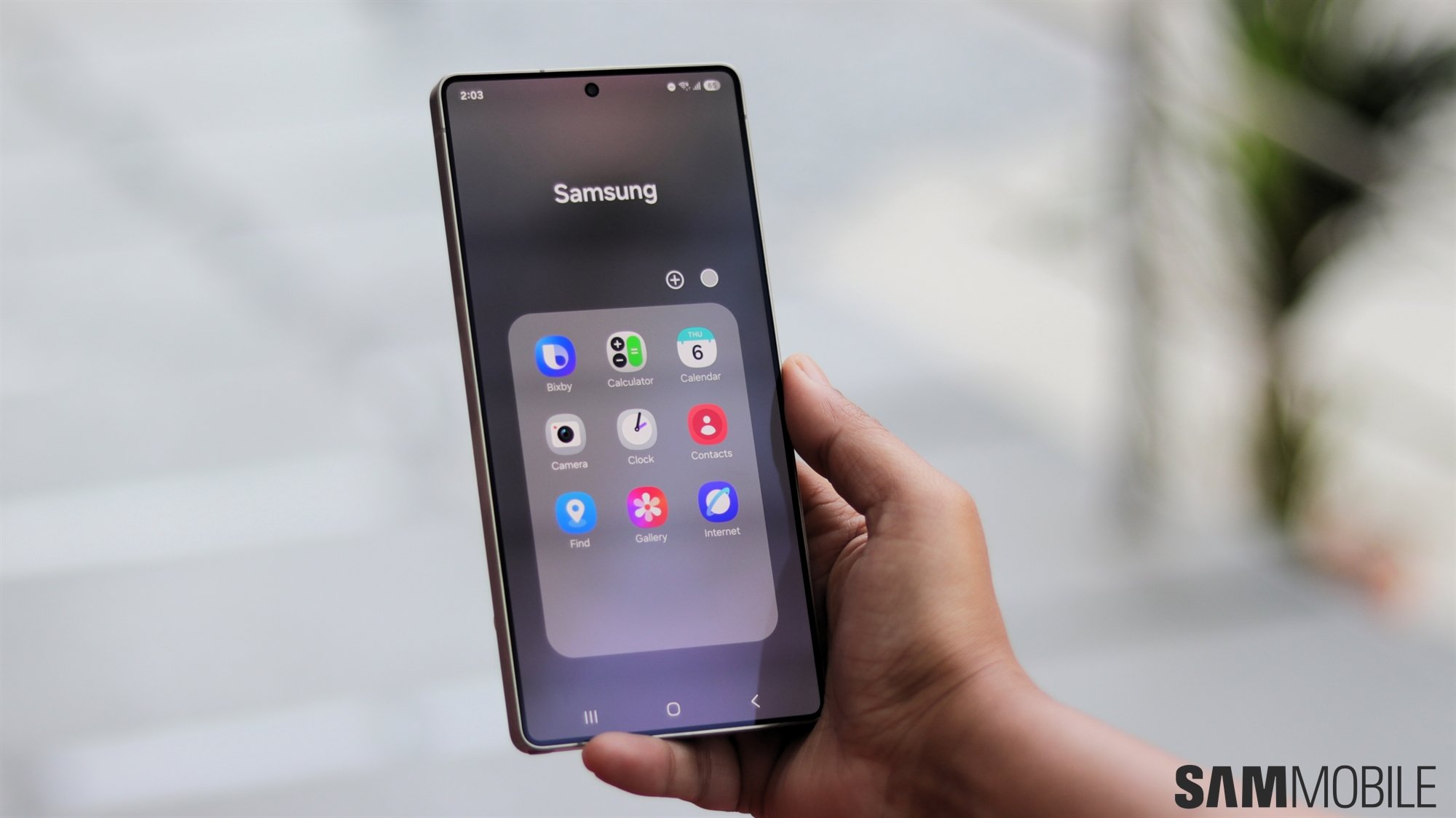
Have you ever wondered why Galaxy smartphone display bezels become less uniform the further down the price ladder you go? Is it an intentional design choice meant to widen the gap between cheap and premium phones? Or some kind of quiet conspiracy to nudge buyers toward pricier models?
Well, no. There are a couple of solid, very real reasons this design distinction exists. According to manufacturers and industry experts, it’s not an artificial limitation but the result of genuine technical and financial constraints.
It mostly comes down to the type of display a phone uses. Smartphone panels have connectors at the bottom that link the display to the motherboard.
Those connectors need extra space, which is why cheaper Galaxy phones tend to have a thicker lower display bezel. There’s simply nowhere else for that hardware to go.
More expensive Galaxy models get around this limitation by using flexible OLED panels instead of rigid LCD or OLED displays.
Not to be confused with foldable screens, flexible OLED panels are subtly bent inward at the bottom. This bend allows the connectors to reach the motherboard without forcing Samsung to hide them behind a thicker bezel.
You never actually see these bends. They’re tucked away inside the phone’s chassis. The visible result, however, is the clean, uniform bezel design people associate with premium phones.
So back to the original question. If a solution exists, why don’t more or all phones use it? Is Samsung deliberately gatekeeping uniform bezels?
Once again, it’s not that simple or that sinister. It mostly comes down to cost. Flexible OLED panels can be anywhere from 30% to 100% more expensive to manufacture than rigid OLED panels of comparable quality.
Over time, flexible OLED could become more viable for cheaper phones. Manufacturing costs appear to have gradually declined as the adoption rate increased. But so far, Samsung hasn't done much to bring uniform bezels to the Galaxy A series, and the upcoming Galaxy A57 likely won't change anything.
As it stands, the high cost of flexible OLED panels could mean uniform bezels just aren’t a sensible priority for Galaxy phones designed to stay affordable.
It’s a classic case of being careful what you wish for. Thick display chins aren’t exactly beloved, but if eliminating them pushes prices up too far, cheap phones stop being cheap.
You could argue that some of Samsung’s rivals have already brought uniform bezels to lower-cost phones, and that Samsung could do the same. Then again, Samsung prioritizes other traits, such as prolonged firmware support and long-term durability. The math isn’t the same. Still, we hope Samsung can strike a better balance.
Mihai is a blogger and column writer at SamMobile. His first Samsung phone was an A800 which took a lot of beating, and a part of him still misses the novelty of the clamshell design. In his free time, he enjoys watching shows, documentaries, and stand-up comedy; listening to music, taking walks, and occasionally playing old(er) video games.