





Last updated: May 31st, 2026 at 12:16 UTC+02:00


Why a rethink of Samsung's Galaxy S flagship strategy is now needed

Something's got to give.

Adnan Farooqui

Reading time: 4 minutes

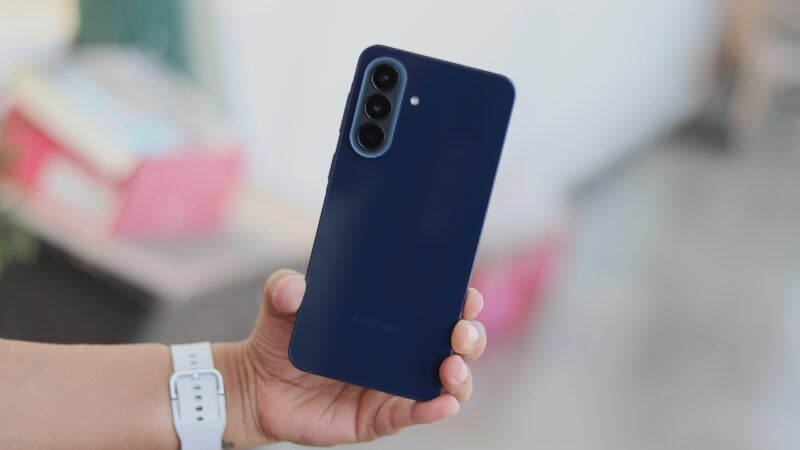
galaxy s26 plus camera

Abhijeet Mishra / SamMobile

Latest Samsung news

Galaxy S26+ - Source: Abhijeet Mishra / SamMobile

A clear trend has been established over the past few years where the most expensive Ultra model of Samsung's flagship Galaxy S series tends to sell better than the more affordable variants. Customers are voting with their wallets, they want the best of the best and they're willing to pay for it.

Where does this leave the case for three separate variants every year? Is the market telling Samsung that the base Galaxy S and its Plus sibling occupy a position in the lineup that consumers, given a real choice, consistently decline?

It's actually the affordable devices that drive the bulk of Samsung's shipment volumes across the globe. These include the entry-level Galaxy A0 devices as well as the Galaxy A3x and Galaxy A5x mid-rangers. Sales in the premium segment are largely dominated by the Galaxy S Ultra and Galaxy Z Fold models.

Samsung's sales are, in practice, an Ultra story at the top and an A series story at the bottom. Everything in the middle is quietly carried along by momentum rather than earned demand. This isn't a new situation, rather, we've seen a slow march towards exactly this for several years now.

This has to do partly with just how capable Samsung's mid-range devices have become. The Galaxy A series of 2026 is not the mid-range device it was three years ago. These devices have respectable specs, chunky batteries, and even six years of OS upgrades. The latest Galaxy A series also comes with several Galaxy AI features, further reducing the gap between the actual daily experience of a real user in both segments.

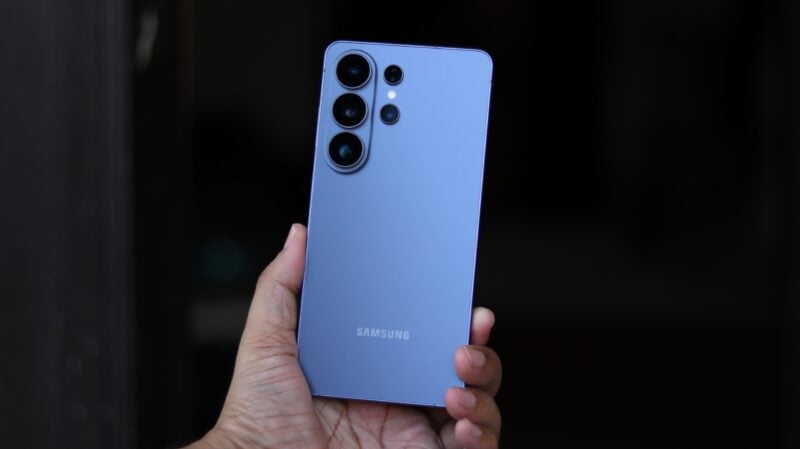
This is precisely the squeeze from below, while the squeeze from up top is deliberate. It needs the Ultra model to be the best absolute best in part to justify its high price tag. That's why you get the best camera, software, battery, and Galaxy AI experience on the Ultra. The Galaxy S26 Ultra even gets the Snapdragon 8 Elite Gen 5 Qualcomm chip over the Exynos 2600 used in the Galaxy S26/S26+.

A customer choosing between a Galaxy S26+ at $1,099 and a Galaxy S26 Ultra at $1,299 is being asked to pay an extra $200 for a lot more phone. They get S Pen, better zoom, a larger display, the best AI features, and more.

The $200 gap is not insignificant, but it is small enough that the models below it exist as an alternative for people who already decided they weren't going to buy the Ultra. It doesn't do much to give those models enough of an identity that they step out from the Ultra's shadow.

That may be one of the reasons why Samsung was toying with the idea of removing the Plus variant altogether. It tried to test the waters with the Galaxy S25 Edge last year but that idea didn't work. It was rumored at one point that perhaps the Galaxy S26+ would be replaced in favor of the Galaxy S26 Edge.

When the super slim version ended up selling fewer units than the model it was supposed to replace, Samsung felt it was better just to go back to the way things were. The market was just indifferent to what the company was trying to do.

The question then becomes whether there's enough daylight between the different Galaxy S models? Apple does a better job of at least giving some measure of differentiation between the four different iPhone models it offers every year.

For Samsung customers, it seems that the base Galaxy S26 is just a smaller version of the Galaxy S26+ which in turn is a worse version of the Galaxy S26 Ultra.

Given that phones are getting more expensive every year, an interesting dynamic is emerging. Customers are being pushed to two extremes. They either pay top dollar for the best model or spend carefully on the what offers the most value even if that means missing out on some features.

It's not just a Samsung problem. The middle is thinning everywhere in consumer electronics, but Samsung has uniquely made the middle thinner by raising prices there while simultaneously making the bottom more capable and the top more attractive. Perhaps a rethink is in order.