Your phone’s battery display shows two different but related pieces of information that many Samsung users find confusing. While both relate to your phone’s battery performance, they measure completely different aspects of your device’s power system and serve distinct purposes in helping you manage your daily usage.
Understanding the difference between these two battery measurements helps you make better decisions about charging habits, device usage, and when it might be time to consider battery maintenance or replacement.
What is battery percentage, and how does it work?
Battery percentage shows how much charge remains in your Samsung phone’s battery right now, displayed as a number from 0% to 100%. This real-time measurement tells you how much power you have available for immediate use before needing to plug in your charger.
Your Samsung device calculates this percentage by measuring the current voltage and comparing it to the battery’s known capacity. When you see 50% on your screen, your phone estimates that you have roughly half of your battery’s current charge remaining. This measurement changes constantly as you use apps, make calls, or even when your phone sits idle with background processes running.
The percentage reading depends on several factors, including screen brightness, active apps, cellular signal strength, and enabled features like Bluetooth or GPS. Your phone’s software continuously monitors power consumption and updates this percentage to give you the most accurate reading possible for planning your day.
What is battery health, and why does it matter?
Battery health measures your Samsung phone’s battery capacity compared to when it was brand new, typically shown as a percentage of its original performance. A healthy battery maintains close to 100% of its original capacity, while an aging battery might drop to 80% or lower over time.
This measurement matters because lithium-ion batteries naturally degrade through chemical processes that occur with each charge cycle. Every time you charge and discharge your battery, tiny changes happen at the molecular level that gradually reduce the total amount of energy the battery can store. Think of it like a gas tank that slowly gets smaller over months and years of use.
Battery health directly impacts your daily experience with your Samsung device. A battery with 80% health means it can hold only 80% of the charge it could when new, leading to shorter usage time between charges even when showing 100% charged. This explains why older phones often need more frequent charging despite appearing fully charged.
What’s the difference between battery percentage and battery health?
Battery percentage shows your current charge level right now, while battery health indicates your battery’s maximum capacity compared to when it was new. These measurements serve completely different purposes in understanding your phone’s battery performance.
Battery percentage changes throughout the day as you use your phone, dropping from 100% when fully charged to 0% when completely drained. It’s like a fuel gauge showing how much gas remains in your tank for your current trip. This reading resets to 100% every time you fully charge your device.
Battery health, however, changes very slowly over months and years, gradually declining as your battery ages through normal use. It’s more like measuring the actual size of your fuel tank, which might shrink from 15 gallons when new to 12 gallons after several years. A battery with 80% health will charge to only 80% of its original capacity, even when your percentage display shows 100%.
This difference explains why your phone might show 100% charged but still run out of power faster than it used to. The percentage reading is based on your battery’s current maximum capacity, not its original capacity when new.
How do you check battery health on Samsung phones?
Samsung phones don’t display battery health directly in Settings, but you can check it using the Samsung Members app or by dialing a special code. The most reliable method is to open Samsung Members, tap “Get help,” then “Interactive checks,” and select “Battery” to run a diagnostic test.
You can also dial *#0228# in the Phone app to access battery information, though this method works better on older Samsung models. Some newer Galaxy devices require different codes or may not support this feature at all, depending on your carrier and software version.
Third-party apps from the Google Play Store can also estimate battery health, but these apps use indirect methods and may not be as accurate as Samsung’s own diagnostic tools. They typically monitor charging patterns and voltage readings to estimate capacity degradation over time.
For the most accurate battery health assessment, Samsung service centers can perform comprehensive battery tests using specialized equipment. This option makes sense if you’re experiencing significant battery life issues and considering a professional battery replacement.
Why does my battery percentage drop quickly even with good battery health?
Fast battery percentage drops with good battery health usually indicate high power consumption from apps, settings, or usage patterns rather than battery degradation. Your battery might be healthy but working harder due to demanding tasks or inefficient settings.
Several factors can cause rapid battery drain regardless of battery health. Background app refresh allows apps to update content even when you’re not using them, consuming power throughout the day. High screen brightness, especially on Samsung’s vibrant AMOLED displays, draws significant power. Location services, mobile data, and weak cellular signals also force your phone to work harder, draining the battery faster.
Heavy usage patterns like gaming, video streaming, or video calls naturally consume more power than basic tasks like texting or checking email. Even with perfect battery health, intensive activities will drain your percentage quickly because they require more processing power and keep your screen active longer.
Software issues can also cause unexpected battery drain. Apps with bugs, outdated software, or corrupted files might run inefficiently in the background. Restarting your phone or updating apps often resolves these temporary issues that cause faster-than-normal battery percentage drops.
When should you worry about your Samsung battery health?
You should consider battery replacement when your Samsung phone’s battery health drops below 80% or when you notice significantly shorter usage time between charges. Most Samsung batteries maintain good performance for two to three years with normal use before reaching this threshold.
Warning signs include needing to charge your phone multiple times per day with normal usage, rapid percentage drops during light use, or your phone shutting down unexpectedly even when showing charge remaining. These symptoms often indicate that battery health has declined enough to affect daily functionality.
Samsung batteries typically last 300 to 500 full charge cycles before showing noticeable degradation. If you charge your phone daily, this translates to roughly one to two years of use. Heavy users who charge multiple times per day may see battery health decline faster, while light users might maintain good battery health for three to four years.
Professional battery replacement becomes worthwhile when battery health drops below 70% to 75%, especially if you plan to keep your Samsung device for another year or more. At this point, the improved daily experience usually justifies the replacement cost compared to constantly managing a degraded battery.
Understanding your phone’s battery helps you make informed decisions about charging habits, usage patterns, and device maintenance. At SamMobile, we provide ongoing coverage of Samsung battery technology, optimization tips, and device care guidance to help you get the most from your Samsung experience.


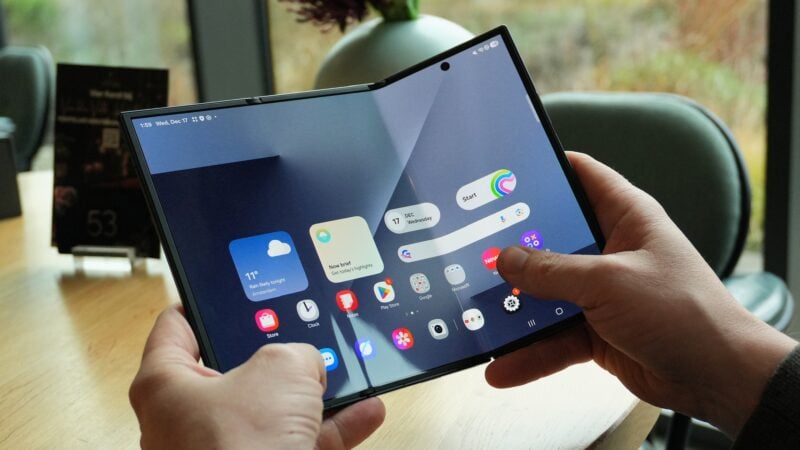





 I'm going on holiday, and my Galaxy Z Fold 8 isn't coming with me
 Apple's Siri AI troubles prove Samsung's messy multi-AI strategy was right
 Apple just showed Samsung what foldable buyers care about
 7 years of foldables and my Galaxy Z Fold 8 still can't count screen usage properly
 The Galaxy Z Fold 8 may hold the answer to the only viable compact phone formula
 Apple named its foldable the iPhone Duo, there's a lesson in there for Samsung
 Apple surprised Samsung on its own home turf
 iPhone Duo's Apple Pencil support makes Z Fold 8’s missing S Pen harder to excuse
 The iPhone Duo didn’t make me jealous as a Samsung fan, the iOS 27 release date did



