
Last updated: October 12th, 2025 at 15:45 UTC+02:00


What is 5G and do I need it?

Daniel van Dorp

Reading time: 5 minutes

smartphone displaying glowing 5g connectivity bars with holographic network nodes and light rays on blue tech background
Knowledge Base

5G technology is the fifth generation of mobile network technology that offers significantly faster speeds, lower latency, and greater capacity than previous networks. It uses higher frequency radio waves and advanced antenna systems to deliver improved performance. Whether you need 5G depends on your usage patterns, device compatibility, and local coverage availability.

What exactly is 5G and how does it work?

5G technology represents the fifth generation of mobile network standards, designed to deliver faster data speeds, reduced latency, and increased network capacity compared to 4G networks. It operates using a combination of low, mid, and high-frequency radio spectrum bands to transmit data more efficiently.

The technology works through several key components:

  • Smaller cell towers placed closer together, creating a denser network infrastructure
  • Massive MIMO (Multiple Input, Multiple Output) antenna arrays that handle multiple data streams simultaneously
  • Higher frequency millimetre waves that enable faster data transmission but require more towers due to shorter range
  • Beamforming technology that directs signals precisely where needed, reducing interference

Unlike previous generations that primarily focused on connecting people, 5G network technology is designed to connect virtually everything – from smartphones to smart city infrastructure.

How much faster is 5G compared to 4G networks?

5G networks deliver download speeds that are typically 10-20 times faster than 4G in real-world conditions. Here's a detailed comparison:

Metric 4G Performance 5G Performance Improvement
Download Speed 20-50 Mbps 100-300 Mbps 10-20x faster
Upload Speed 5-15 Mbps 20-50 Mbps 3-4x faster
Latency 30-50 milliseconds 1-10 milliseconds Up to 50x reduction
HD Film Download 10 minutes 1-2 minutes 5-10x faster

These speed improvements translate to practical benefits in video calls, online gaming, and file downloads. Keep in mind that actual speeds depend on network congestion, distance from cell towers, and your specific location.

What are the actual benefits of 5G for everyday phone users?

5G benefits for daily smartphone use include several key improvements:

Streaming and Media

  • Smoother video streaming with less buffering
  • 4K content streaming without interruption in crowded areas
  • Near-instant social media uploads
  • Faster app downloads and updates

Communication and Productivity

  • Improved video calling quality with clearer audio
  • Fewer connection drops during video conferences
  • More responsive cloud-based applications
  • Enhanced mobile productivity tools performance

Gaming and Connected Devices

  • Reduced lag during online gaming
  • Better performance in busy locations like stadiums and airports
  • Smoother multiple device connections (smartwatches, wireless earbuds)

Do you need a new phone to use 5G networks?

You need a 5G-compatible device to access 5G networks, as older phones lack the necessary radio components and antenna systems. Most smartphones released after 2020 include 5G capability, but earlier models cannot be upgraded to support the technology.

Popular Samsung 5G phones include:

  • Galaxy S Series: S20 series and newer models
  • Galaxy Note Series: Note 20 series
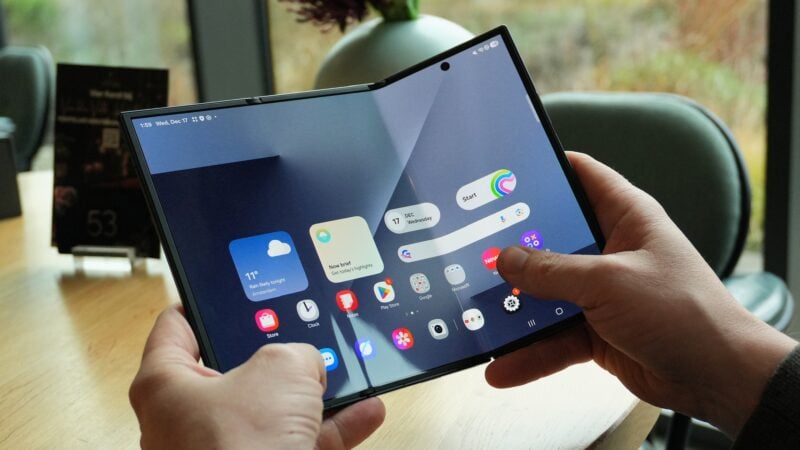
  • Galaxy Z Series: Z Fold and Z Flip models
  • Galaxy A Series: Many mid-range A series devices

When shopping for a 5G phone, consider these 5G types:

5G Type Speed Coverage Best For
Sub-6GHz Moderate Wide coverage General use, suburban areas
Millimetre Wave Very fast Limited range Dense urban areas, high-speed needs

Is 5G coverage actually available where you live?

5G coverage varies significantly by location, with major cities and urban areas having the most comprehensive networks. Rural and suburban areas often have limited or no 5G coverage, relying primarily on 4G connections.

To check 5G availability:

  1. Visit your mobile carrier's website or mobile app
  2. Use their coverage maps to check your specific address
  3. Look for different 5G coverage types in your area
  4. Compare coverage between different carriers

Coverage differences between carriers are substantial. Some networks focus on broad 5G deployment using lower frequencies, whilst others prioritise high-speed coverage in dense urban areas. Even with 5G coverage shown on maps, actual performance varies based on building materials, weather conditions, and network congestion throughout the day.

Should you upgrade to 5G right now or wait?

Whether to upgrade to 5G depends on several factors. Use this decision framework:

Upgrade Now If You:

  • Live in an area with strong 5G coverage
  • Frequently stream videos or work remotely using mobile data
  • Are a heavy data user experiencing slow 4G speeds
  • Regularly engage in online gaming or video calling
  • Need a new phone anyway due to age or performance issues

Consider Waiting If You:

  • Primarily use your phone for calls, messaging, and light browsing
  • Live in an area with limited 5G coverage
  • Have a well-functioning current phone
  • Want to benefit from falling 5G phone prices
  • Prefer to wait for more comprehensive network coverage

Cost Considerations

Factor 4G Option 5G Option
Phone Cost Lower Higher (but decreasing)
Plan Pricing Standard Often premium pricing
Future-proofing Limited Better long-term value

Mobile network technology continues evolving rapidly, and 5G infrastructure expands monthly. At SamMobile, we help you stay informed about the latest Samsung 5G devices and network developments to make the best decision for your specific situation and requirements.