Last updated: March 31st, 2026 at 18:06 UTC+02:00
SamMobile has affiliate and sponsored partnerships, we may earn a commission.
Don't let the headset be a stranger.
Reading time: 4 minutes

Abhijeet Mishra / SamMobile
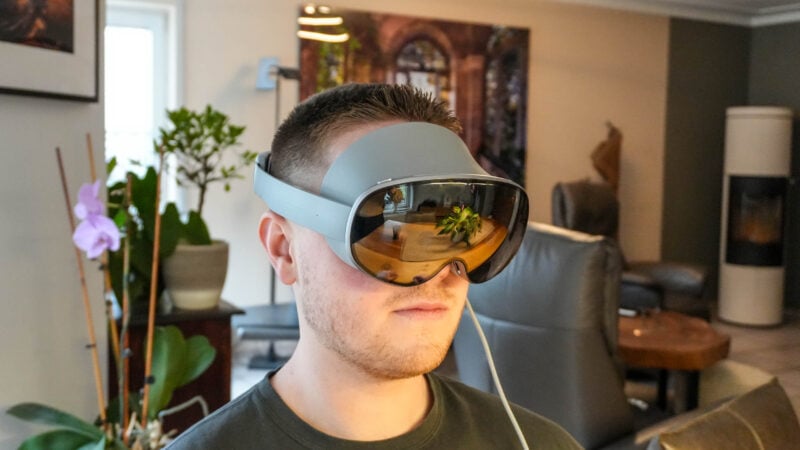
Samsung launched its first extended reality headset, the Galaxy XR, with much fanfare last year. It wasn't just another device launch. Galaxy XR helped introduce an entirely new platform, Android XR, in collaboration with Google and Qualcomm.
This collaborative effort ensured that XR wasn't something that Samsung was going at all by itself, rather, it was bringing on stakeholders that would help push the platform to new heights.
On paper, though, this approach should have guaranteed momentum but several months after launch an evident question is arising, that what exactly is Samsung's vision for the Galaxy XR? The truth is that the platform feels technically alive but strategically quiet right now as crucial first-party experiences continue to be elusive.
There's plenty of evidence to show that Samsung tends to succeed with it leads with software experiences and not just hardware. One UI is the perfect example of this as it has helped Samsung maintain its dominant position in the Android mobile device segment.
We haven't had much in the way of new first-party software experiences being introduced for the Galaxy XR after its initial launch. It's all been a bit too quiet on this front.
Samsung has only added limited app expansion since the headset was launched. One would have expected XR iterations of more native Samsung apps and software experiences but none have been forthcoming. Given Samsung's considerable focus on Galaxy AI, it's surprising to see that we haven't had any meaningful fusion of Samsung's AI and XR capabilities yet. This absence creates a perception problem.
When Samsung itself appears cautious about investing deeply in XR software, buyers naturally wonder why should they commit to a platform its creator hasn’t fully committed to yet? The gaming vacuum is even more concerning as every successful XR ecosystem so far followed the same playbook. Meta, Apple and Sony all secured media and immersive partnerships. Samsung has done neither.
There just isn't enough exclusive content designed to sell the hardware and not enough has been made available since the Galaxy XR headset was released. This leaves the platform at the mercy of developer goodwill rather than strategic investment.
Developers will build where users are, users will go where the content is. Right now, neither loop is accelerating fast enough. There's no visibility on any new premium media partnerships, any major app launches, or any push to enhance the cultural legitimacy of this product.
Right now, potential buyers may reasonably interpret the situation as Samsung rushing to get the hardware out first and letting software experiences catch up later. The company is working on XR smart glasses that would be more affordable than the Galaxy XR headset, thus expand its platform to a lot more users.
Sure enough, the platform will technically evolve but flagship experiences are not arriving at the same pace. That mismatch creates hesitation, and hesitation is dangerous in early ecosystems because it slows the one thing XR desperately needs which is installed base growth. If consumers wait, developers wait longer. If developers wait, content slows further. That feedback loop has killed promising platforms before.
This isn't to say that Samsung needs to make or facilitate hundreds of XR apps right now. It just needs a few unforgettable ones being launched at regular intervals so it just doesn't feel like Samsung launched this product and then forgot about it. You barely even see any marketing efforts for the device right now, and it seems that the company has itself lost interest in hawking this device to customers.
In new platforms, silence looks like uncertainty, and uncertainty is the fastest way to convince buyers to sit out an entire generation. So even though it may be a stretch to say that the Galaxy XR is failing, it could just drift into a dangerous middle ground where potential buyers become indifferent to its existence.

Adnan Farooqui is a long-term writer at SamMobile. Based in Pakistan, his interests include technology, finance, Swiss watches and Formula 1. His tendency to write long posts betrays his inclination to being a man of few words.