Last updated: March 1st, 2026 at 18:11 UTC+01:00
SamMobile has affiliate and sponsored partnerships, we may earn a commission.
How much does Samsung want to test its customers?
Reading time: 4 minutes

The Galaxy A5x series is undoubtedly among the most important offerings from Samsung after its foldables and flagships. This device has always been positioned to strike a balance between affordability and capability.
Customers have voted in its favor with their wallets, making the Galaxy A5x some of Samsung's best-selling devices. That was no small achievement considering that the device exists in a highly competitive segment of the market where there's no shortage of contenders.
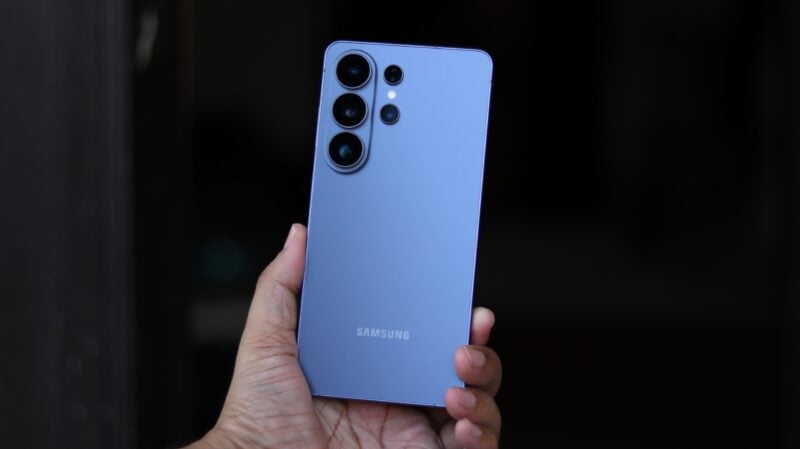
Samsung is now gearing up to launch its 2026 offering. Several rumors and reports have highlighted the changes that the company is likely going to make, including its thinner and lighter body. The device is expected to retain the 5,000mAh battery and 45W charging speed of its predecessor.
Samsung hasn't really participated in the charging speed race like many Chinese OEMs have, but whatever reasons it may have for staying away, it does influence purchase decisions.
Customers who look for a phone in this price bracket want the best value for their money. Given the dozens of options available in this range, they're spoilt for choice, and any number of comparisons can be drawn to figure out which device offers the most value.
How would the Galaxy A57 objectively stand against some of the competition, including those models that were launched last year to counter its predecessor, and have yet to be upgraded?
Take the OnePlus 13R, for example, it has a larger 6,000mAh battery with 80W wired charging support. It even supports faster UFS 4.0 storage compared to the Galaxy A56's UFS 3.1. The Vivo V60 takes things up a notch, with a 6,500mAh battery and 90W wired charging support. It has a better IP rating for dust and water resistance as well as improved camera hardware.
Several other competitors from the likes of Google, Motorola, Honor, Oppo, etc also give the Galaxy A56 a run for its money. Many of them will launch competing devices when the Galaxy A57 hits the market and will seek to retain their edge over Samsung's main mid-ranger.
There's a lot that draws people to Samsung's Galaxy A5x phones. There's brand loyalty, people who have stuck with these phones for years are likely to upgrade to a newer model. Others are drawn in by the promise of better customer support. The company's software upgrade support is in another league, while everything it has done with One UI and the AI capabilities it has introduced has also becoming a selling point.
Is it going to be enough, though? The bare minimum approach that we've seen Samsung adopt even with flagships like the Galaxy S series has evidently trickled down to the mid-ranger as well. The company appears to be in no rush to cram its devices with upgrades as it did in the past, no matter what its rivals do. It wants to extract as much as possible with whatever existing tech it has been using.
The formula has worked well so far, but that doesn't mean it will work forever. My concern is rooted in what I've witnessed recently, where multiple people in my circle who wanted a mid-range phone and weren't worried about band loyalty objectively compared the Galaxy A56 with other options in the market and bought them.
It didn't matter to them that Samsung may have better customer service, fun AI features, or even better software upgrade support. They had a checklist of things they wanted from a phone in that price and others won out.
Perhaps Samsung is fine with the Galaxy A57 being a device that sells despite its spec sheet, rather than because of it. The brand strength and ecosystem will carry it but this segment of the market is increasingly becoming less forgiving to incrementalism.
Samsung can't possibly rely on loyalty and goodwill indefinitely, because it will no longer be a test of how its devices hold their ground against the competition, rather it will be a test of how much compromise its customers are still willing to accept.

Adnan Farooqui is a long-term writer at SamMobile. Based in Pakistan, his interests include technology, finance, Swiss watches and Formula 1. His tendency to write long posts betrays his inclination to being a man of few words.