Last updated: October 12th, 2022 at 16:39 UTC+02:00
SamMobile has affiliate and sponsored partnerships, we may earn a commission.
Reading time: 3 minutes
The company looked primarily at two factors: sleep duration and sleep efficiency. For this study, Samsung refers to “sleep duration” as the amount of time people have spent in bed trying to sleep. Meanwhile, the company defines “sleep efficiency” as the percentage of time that people have spent sleeping.
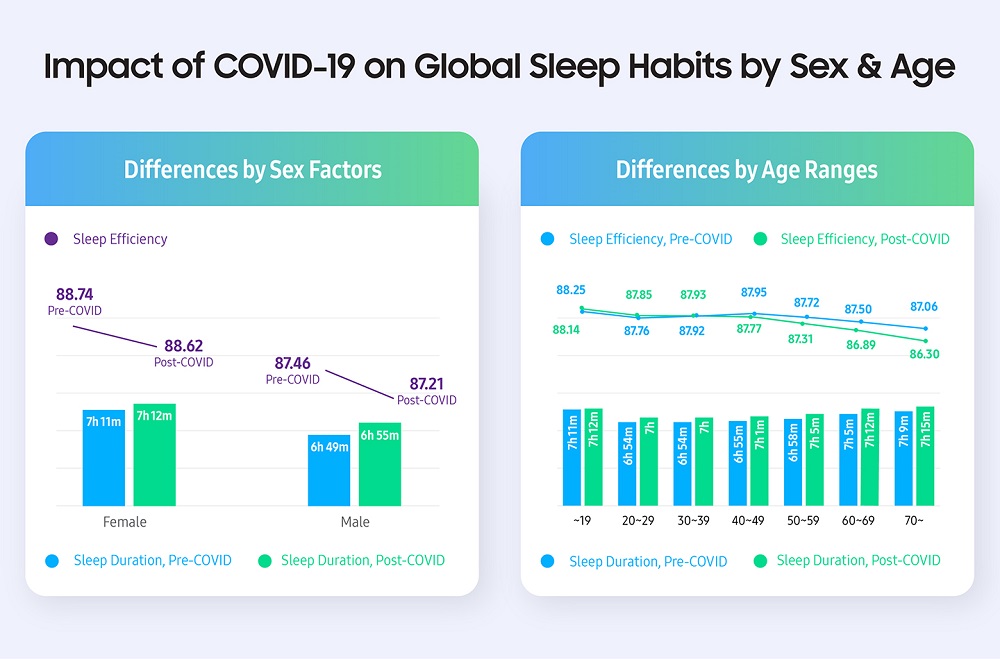
Samsung found that overall sleep efficiency has decreased, despite people in all countries exhibiting longer sleep durations during the pandemic. In other words, people have spent more time trying to sleep and less time getting their much-needed rest.
The company also found that sleeping habits were different depending on age and sex. Both males and females have spent more time resting in bed during the pandemic, but males have experienced a higher reduction in sleep efficiency than females.
Seep efficiency decreased with age, but people between the ages of 20 and 39 were found to have had an increased sleep efficiency.
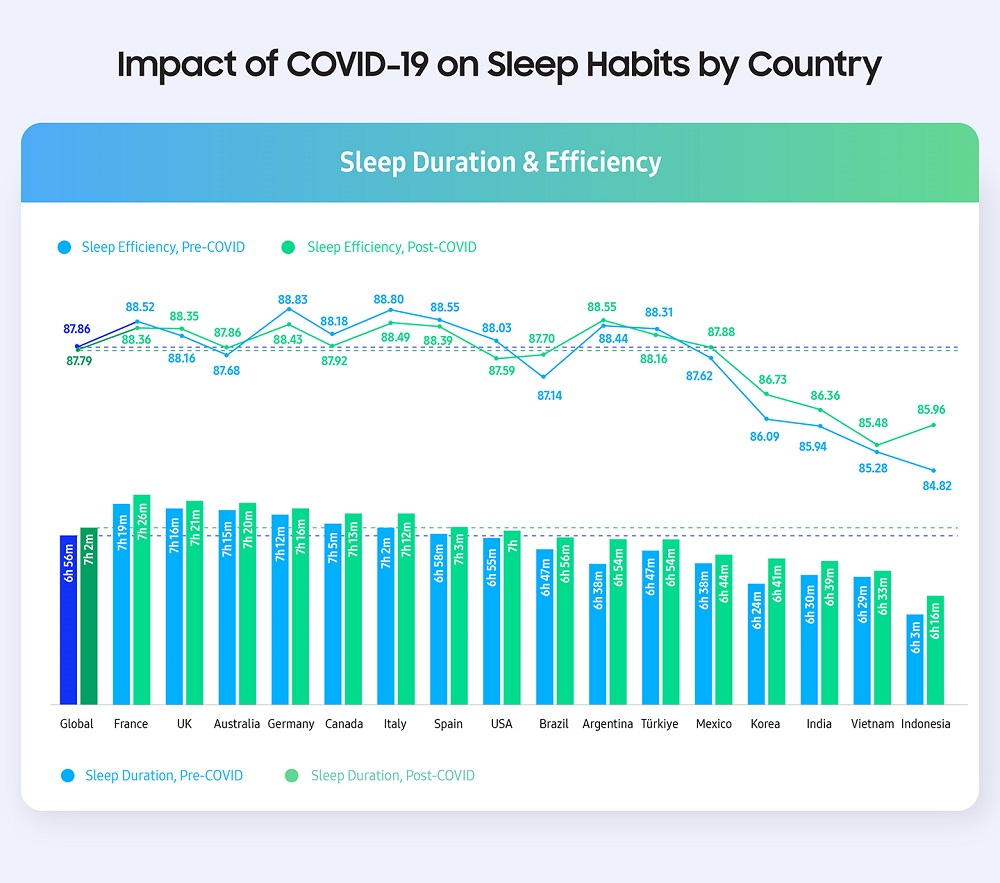
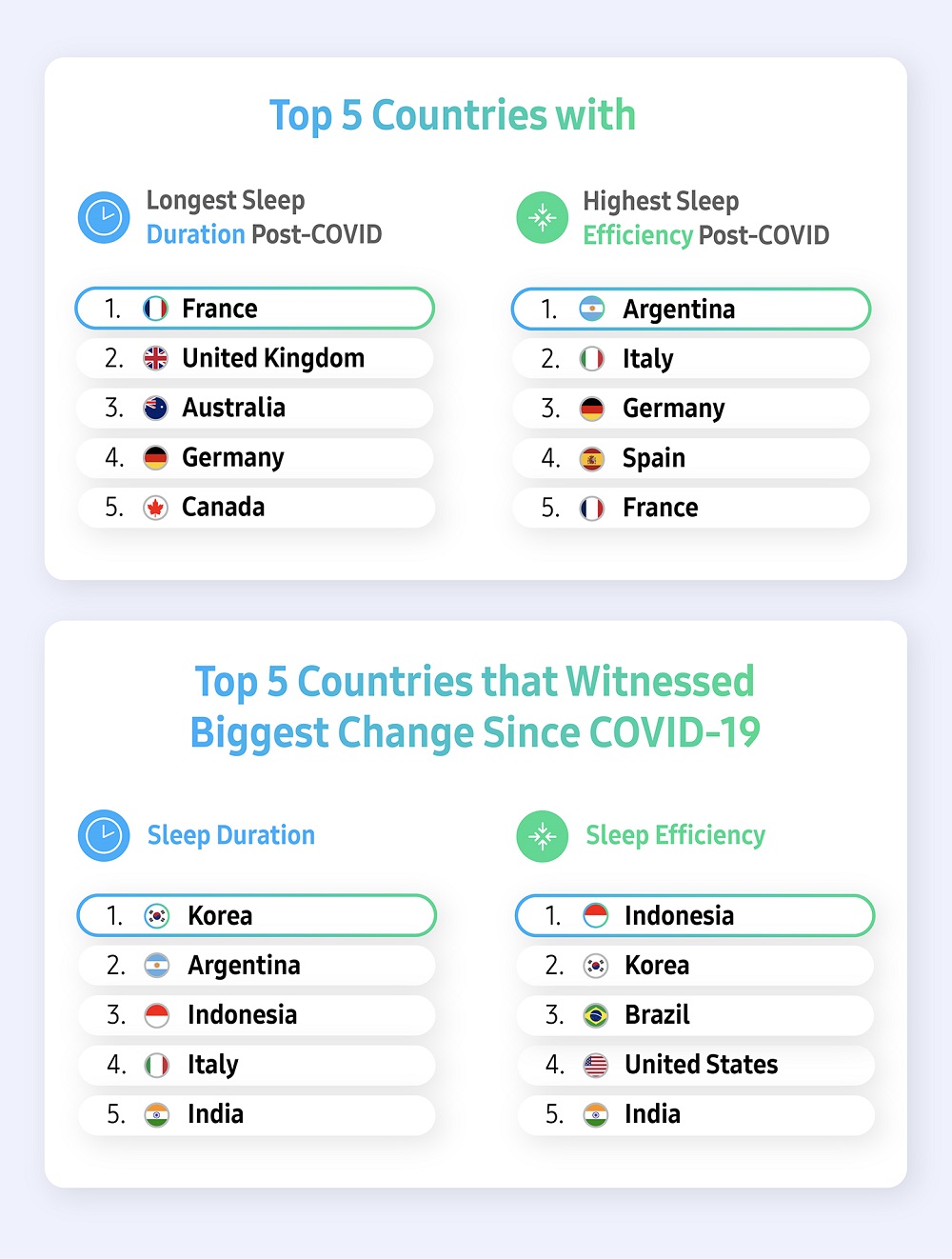
Through Samsung Health, the company said it “undertook a deep dive” into 16 countries to determine how sleep duration and efficiency changed during the COVID-19 pandemic. Countries include France, Korea, the USA, Germany, Argentina, Indonesia, Vietnam, and Mexico.
In France, sleep duration was the longest, and sleep efficiency decreased. In South Korea, the company recorded “one of the biggest increases in sleep duration and efficiency,” while people in the USA have experienced the biggest decrease in sleep efficiency out of all the regions included in the study.
Likewise, while Germany had the highest global sleep efficiency score before the pandemic, the country has since experienced the lowest dip in sleep efficiency.
Argentina recorded the highest sleep efficiency when the pandemic began, while Indonesia saw the highest increase in sleep efficiency from pre to post-pandemic. People in Mexico have experienced the biggest change in wake-up and sleep times, with bedtimes and wake-up times changing by 11 and 17 minutes on average.
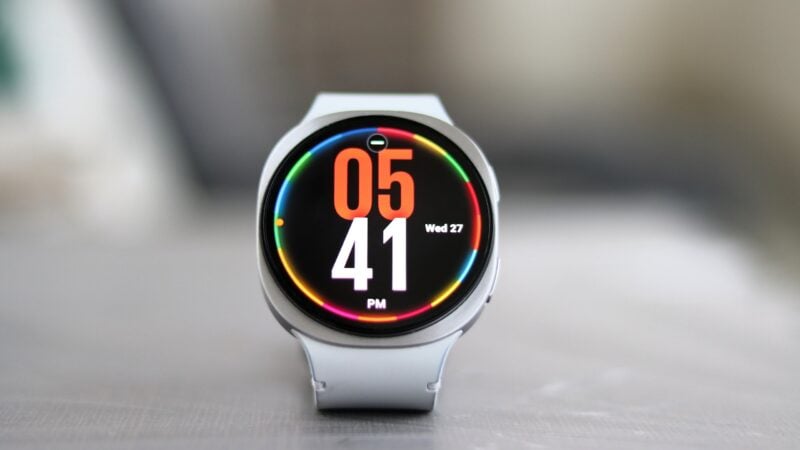
Samsung has offered a few tips on how to improve our sleep using Galaxy Watch wearables. The company advises keeping track of sleeping patterns, understanding sleep quality using Blood Oxygen monitoring and Snore Detection, leveraging Sleep Coaching to develop healthier habits, and setting up an ideal environment for resting.

Mihai is a blogger and column writer at SamMobile. His first Samsung phone was an A800 which took a lot of beating, and a part of him still misses the novelty of the clamshell design. In his free time, he enjoys watching shows, documentaries, and stand-up comedy; listening to music, taking walks, and occasionally playing old(er) video games.