


Last updated: June 24th, 2026 at 13:21 UTC+02:00


Samsung explains why a seven-year-old TV may be due for an upgrade

4K isn't the whole story.

Mihai Matei

Reading time: 2 minutes

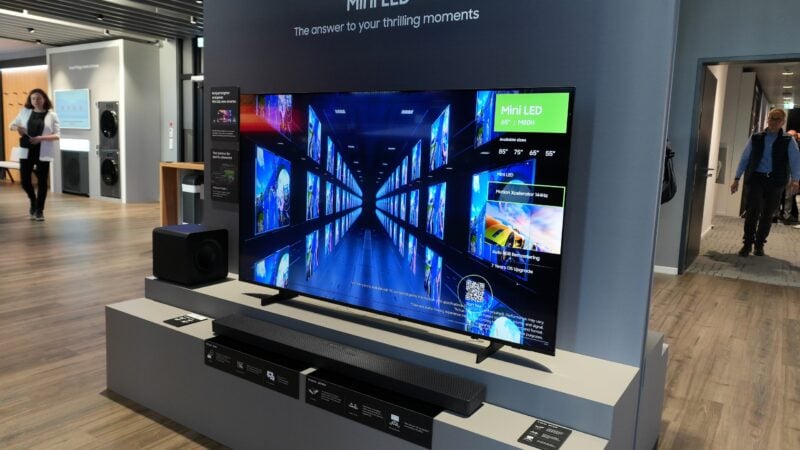
samsung m80h mini led tv

Max Jambor / SamMobile

TV

Samsung M80H Mini LED TV - Source: Max Jambor / SamMobile

Samsung refreshes its TV portfolio with updated models every year. That doesn't mean you should replace your TV every 12 months, but the launch strategy does raise an interesting question: How often should you upgrade your TV?

Assuming money isn't an object, the simplest and most sensible answer might be to upgrade your TV whenever you have to or feel like you're falling too far behind current technology.

According to Samsung, however, you may want to replace your TV if it's seven years old or older. The company explains several reasons why, and it's making a pretty good case.

Why your aging TV is falling behind

As Samsung puts it, 4K TVs were standard even seven years ago. And as we observed not long ago, 8K TVs haven't really caught on, which means 4K remains the most popular resolution.

So, if your seven-year-old TV has 4K, why bother replacing it?

Samsung explains that a TV's resolution is only one part of the equation. Over the past seven years, Samsung TVs have improved in numerous areas, including:

  • Image processing
  • Brightness
  • Contrast
  • Panel architecture
  • Backlight technology
  • Motion handling
  • OS (operating system) advancements
  • Glare-free screen treatments
  • Audio features, such as AI Soccer Mode on 2026 TVs, which can separate commentary and crowd audio tracks

Conversely, Samsung highlights some of the areas where older TVs are falling behind:

  • Limited HDR brightness
  • Lower contrast
  • Slower response times
  • Lack of AI algorithms
  • Inferior upscaling

When should you upgrade? Should you choose OLED or Micro RGB?

Trying to answer the big question, Samsung simply says you should consider replacing a seven-year-old TV when you feel like you need better, well, everything.

As for which TV model you should upgrade to, Samsung offers two alternatives: OLED and Micro RGB. According to the company:

  • Consider a Samsung OLED TV if you want cinematic picture quality and perfect blacks.
  • Consider one of the new Micro RGB TVs if you want higher brightness and, as Samsung puts it, “a spectacular effect,” presumably referring to rich and vibrant color reproduction.

Browse the latest OLED TV models

Samsung Shop

Browse the latest Micro RGB TV models

Samsung Shop

Whichever one you choose, you'll benefit from up to seven years of Tizen OS updates.

Samsung's 2026 TV lineup is gradually reaching more markets as we speak, and while the company's recent post focused mainly on OLED and Micro RGB solutions, you probably shouldn't overlook the Neo QLED lineup. It's an upper mid-range, budget-friendlier alternative to OLED.