
Exceptional gifting. Our Samsung Galaxy gift guide features smartphones and wearables.
Last updated: October 7th, 2025 at 07:24 UTC+02:00
SamMobile has affiliate and sponsored partnerships, we may earn a commission.
Unlike existing methods that require electrodes to be placed on the skull, Samsung’s new technology can pick up brainwaves from around the ears.
Reading time: 2 minutes
Samsung consistently brings newer health and fitness tracking technologies to its devices. Recently, the company announced a potentially life-saving technology for Galaxy Watches. Additionally, Samsung has developed a much sleeker device for monitoring brainwaves.
The South Korean firm recently announced that it has collaborated with Hanyang University’s Department of Biomedical Engineering to develop an around-the-ear electroencephalogram (EEG) device. It is much smaller than existing EEGs that require scalp electrodes, but can still capture high-quality signals for brain-computer interface (BCI) technology.
Due to its compact size, this Ear-EEG device can be used to monitor brainwaves outside of a laboratory-like setting, making way for several use cases. Samsung says it can be used to detect drowsiness in real time, which makes it useful in classrooms to measure learning efficiency. It can also be used to detect driver fatigue more accurately.
This device can also be used in combination with AI algorithms to identify a person's video preferences. In internal tests, it identified participants' video preferences with 92.85% accuracy. This could make it extremely useful in entertainment and neuromarketing segments.
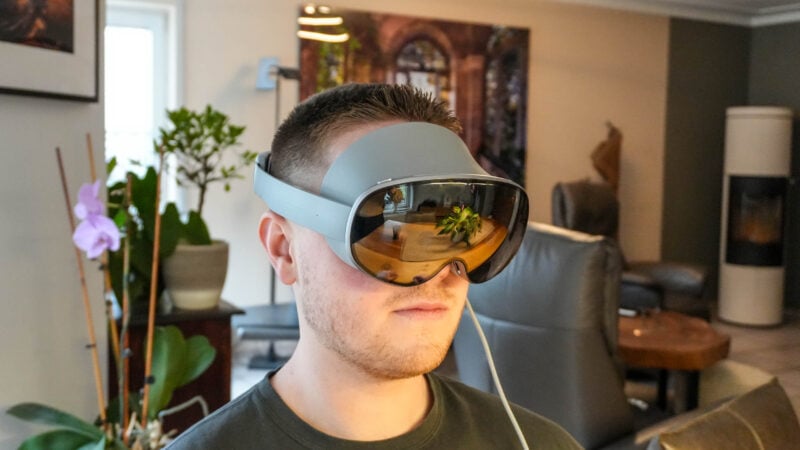
Some day, a similar device could be integrated into your AR glasses, headsets, or wireless earbuds. With AR glasses and XR headsets, it could offer a way to control the device without the need to use your hands. With wireless headphones, it may be able detect if you are feeling sleepy or if you are liking a movie that you're currently watching.
Professor Chang-Hwan Im of Hanyang University, said, “This study is a prime example of academia-industry collaboration being recognized internationally for its scholarly significance. The technology we developed is not limited to education and marketing but has the potential to expand into diverse fields such as entertainment and mental health management.“
Asif is a computer engineer turned technology journalist. He has been using Samsung phones since 2004, and his current smartphone is the Galaxy S21 Ultra. He loves headphones, mechanical keyboards, and PC hardware. When not writing about technology, he likes watching crime and science fiction movies and TV shows.