Last updated: October 6th, 2025 at 13:36 UTC+02:00
SamMobile has affiliate and sponsored partnerships, we may earn a commission.
It uses ECG and AI-powered algorithms to detect early signs of heart failure.
Reading time: 2 minutes

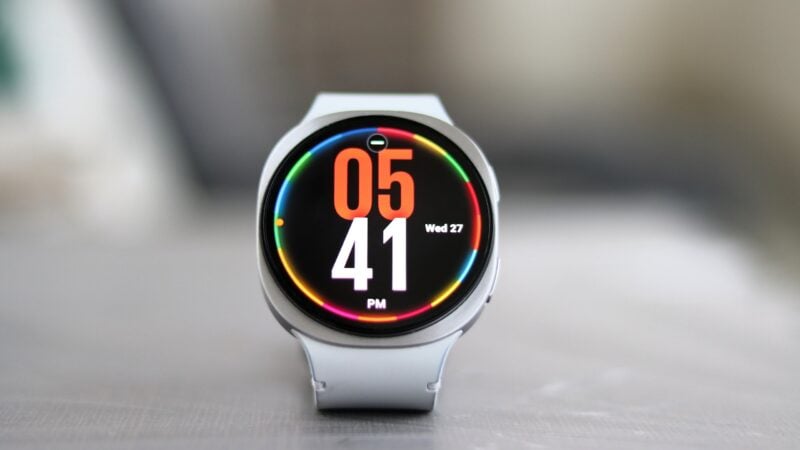
Over the past few years, Samsung has introduced several health-related features to Galaxy Watches, including antioxidant index, Atrial Fibrillation (AFib), blood pressure measurement, body composition, ECG, stress tracking, and vascular load. In the future, the company plans to add another potentially life-saving feature to the Galaxy Watches.
Samsung has announced that it has developed a way for Galaxy Watches to detect Left Ventricular Systolic Dysfunction (LVSD), a condition that indicates weakened heart muscles. This condition can restrict the heart’s ability to pump sufficient blood throughout the body. LVSD is also known as HF with reduced ejection fraction (HFrEF) and is responsible for more than half of heart failures worldwide.

The South Korean firm is using an algorithm developed by Medical AI to detect LVSD through the electrocardiogram (ECG) readings taken by a Galaxy Watch. The algorithm's validity for Galaxy Watches has been validated by 12-lead ECG analysis by Medical AI.
This feature will be offered as part of the AiTiA LVSD-1L app by Medical AI, and it has already been approved by the Ministry of Food and Drug Safety (MFDS) in South Korea. It could be integrated into the Samsung Health Monitor app in the future. Samsung hasn't clarified if all Galaxy Watches with ECG can get this feature in the future.
Samsung says that the feature will not only help save lives through early detection in asymptomatic individuals but also reduce healthcare costs. The feature can help people with signs make positive changes to their lifestyle to avoid heart failure and other heart-related risks.

Asif is a computer engineer turned technology journalist. He has been using Samsung phones since 2004, and his current smartphone is the Galaxy S23 Ultra. He loves headphones, mechanical keyboards, and PC hardware. When not writing about technology, he likes watching crime and science fiction movies and TV shows.