Last updated: February 13th, 2026 at 12:30 UTC+01:00
SamMobile has affiliate and sponsored partnerships, we may earn a commission.
Reading time: 5 minutes

Phone cameras work by capturing light through a lens, converting it into digital information using an image sensor, and processing that data with specialized software to create the photos you see on screen. Modern smartphone cameras combine physical components like lenses and sensors with advanced computational photography to produce high-quality images from remarkably small devices. Understanding the basics helps you take better photos with the device already in your pocket.
When you tap the camera button, your phone's shutter opens to let light pass through the lens onto the image sensor. The sensor converts this light into electrical signals that represent different colors and brightness levels. Your phone's processor then takes these signals, applies various adjustments and enhancements, and transforms them into a digital image file that appears on your screen within a fraction of a second.
The entire process follows these steps:
This processing stage is where phone camera technology has advanced tremendously in recent years, allowing smartphones to compete with much larger cameras.
A phone camera contains four main components working together to create your photos:
| Component | Function | Key Details |
|---|---|---|
| Lens | Focuses light onto the sensor | Multiple glass or plastic elements; includes aperture to control light |
| Image Sensor | Captures light and converts it to electrical signals | Contains millions of light-sensitive pixels; larger sensors capture more light |
| Image Processor | Transforms sensor data into finished photos | Performs billions of calculations per second for enhancements |
| Software | Controls all camera functions and features | Enables computational photography features like HDR and night mode |
The lens functions like your eye's lens, bending light rays so they focus correctly on the sensor. Phone cameras often use multiple lens elements stacked together to reduce distortion and improve image quality despite the tiny size.
The image sensor is where phone camera technology really matters. Most smartphones use either CMOS or BSI-CMOS sensors, which are grids of millions of photosites. Each photosite captures light and converts it to an electrical signal. Larger sensors with bigger photosites generally capture more light and produce better image quality, especially in dim conditions.
The image signal processor (ISP) is your phone's photography brain. It takes the raw sensor data and applies noise reduction, color correction, sharpening, and other adjustments. Modern phone processors can perform billions of calculations per second, enabling features like HDR, night mode, and portrait effects that would be impossible with hardware alone.
Phone cameras overcome their size limitations through computational photography, which uses software and processing power to enhance images beyond what the physical hardware alone could achieve. Your phone employs several advanced techniques:
The biggest advantage larger cameras have is sensor size and lens flexibility. Bigger sensors capture more light and detail, while interchangeable lenses offer versatility that fixed phone lenses can't match. However, phone cameras compensate by being smarter rather than bigger.
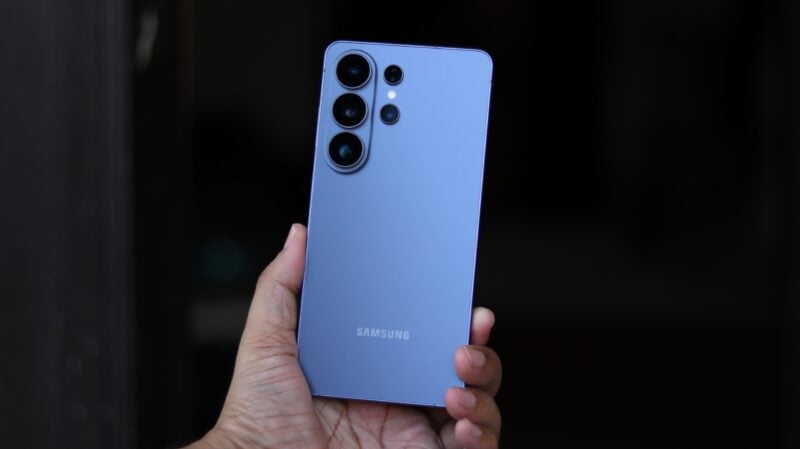
Multiple camera lenses on modern smartphones provide different perspectives without requiring you to swap lenses. A wide lens captures expansive scenes, a telephoto lens brings distant subjects closer, and an ultrawide lens fits more into the frame. Your phone seamlessly switches between these or even combines data from multiple sensors to produce a single optimized image.
Understanding camera specifications helps you make informed decisions about smartphone cameras. Here are the key terms explained:
| Term | Definition | What It Means for Your Photos |
|---|---|---|
| Megapixels | Millions of pixels the sensor contains | Determines resolution and detail level; matters most for cropping and large prints |
| Aperture | Opening size that controls light entry (f/1.8, f/2.4, etc.) | Lower f-numbers = more light and better low-light performance; creates background blur |
| ISO | Sensor's sensitivity to light | Higher ISO allows darker shooting but introduces noise; auto-adjusted by your phone |
| Focal Length | Lens's field of view and magnification | Determines how wide or zoomed your perspective is |
More megapixels don't automatically mean better photos. A 12-megapixel camera with a good sensor and lens often produces superior images to a 48-megapixel camera with lower-quality components. For social media and screen viewing, 12 megapixels provides more than enough detail.
Aperture numbers work counterintuitively: smaller f-numbers mean larger openings that let in more light. An f/1.8 aperture captures more light than f/2.4, which helps in dim conditions and creates background blur in portrait shots. Most phone cameras have fixed apertures that don't change, though some flagship models offer two aperture settings you can switch between.
Understanding phone camera basics empowers you to make better decisions when choosing a smartphone and helps you maximize the camera you already own. The technology continues advancing rapidly, with computational photography enabling capabilities that seemed impossible just a few years ago. At SamMobile, we provide detailed camera reviews and photography tips to help you get the most from your device, whether you're capturing everyday moments or pursuing mobile photography more seriously.

Daniel is the proud co-founder of SamMobile. He joined the SamMobile team in 2011. Most of his spare time is spent enjoying nature (and life in general) with his wife & dog, friends, and family.