
Last updated: March 7th, 2026 at 13:46 UTC+01:00
SamMobile has affiliate and sponsored partnerships, we may earn a commission.
The Galaxy S26 Ultra uses a new type of telephoto lens.
Reading time: 2 minutes
Abhijeet Mishra / SamMobile
While most other smartphone brands are introducing bigger and higher-resolution camera sensors almost every year, Samsung stuck with the same camera sensors as last year for the Galaxy S26 Ultra and only improved the apertures. However, there is one hidden change that the company didn’t talk about during the Galaxy Unpacked event.
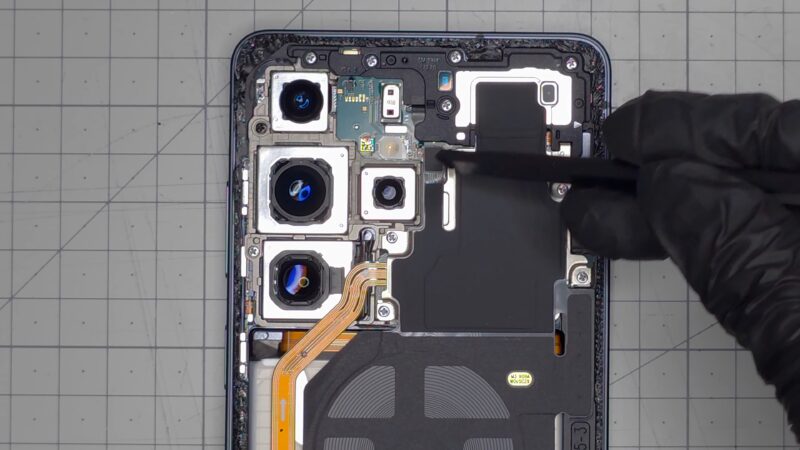
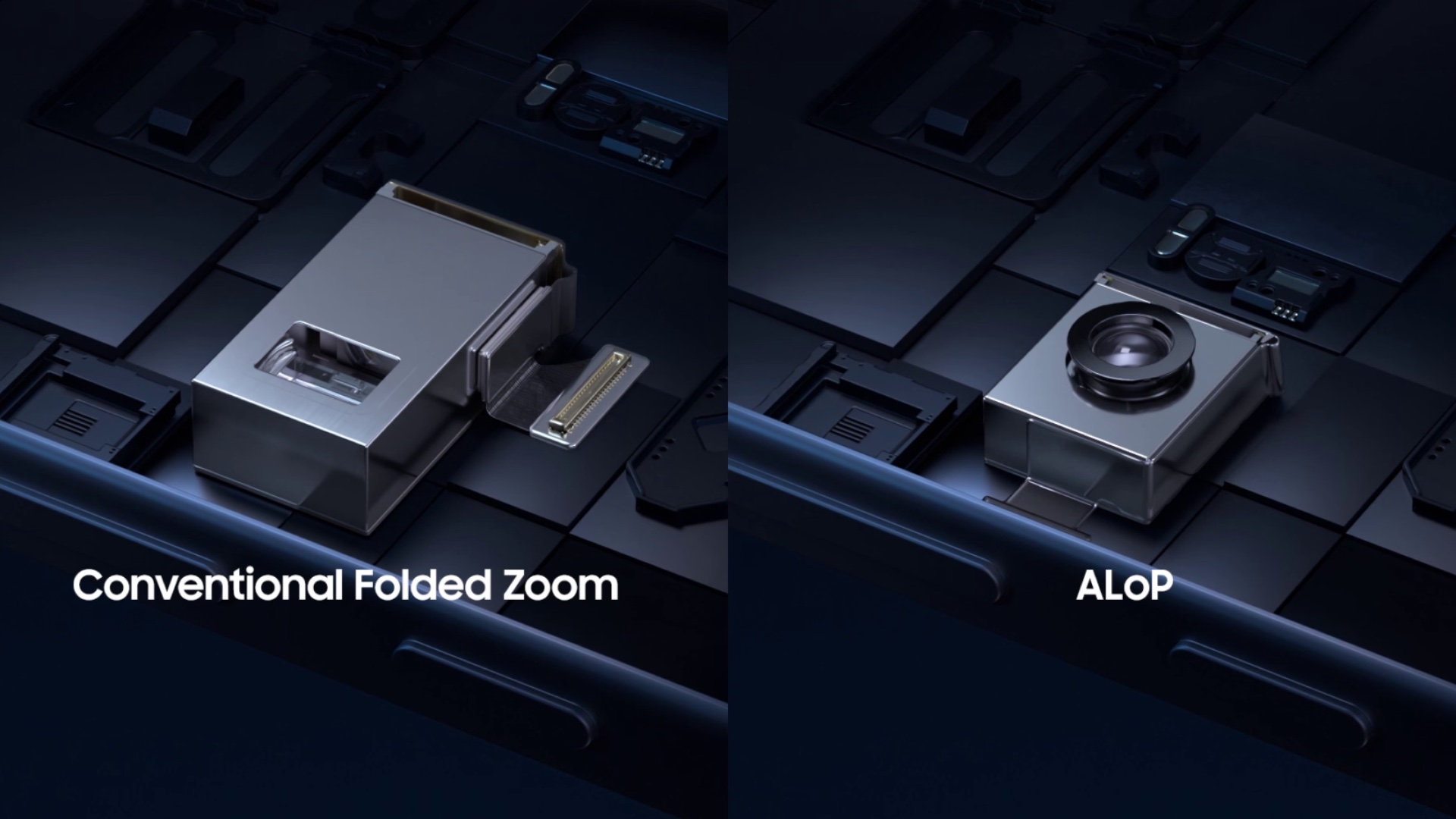
The Galaxy S26 Ultra’s 50MP telephoto camera with 5x optical zoom doesn’t use a periscope-style lens found in previous-generation Galaxy S Ultra phones. A teardown of the new phone has revealed that the company has paired the 50MP sensor with an All Lens On Prism (ALoP) lens. This is the reason why the Galaxy S26 Ultra's telephoto camera doesn't have rectangular lens opening. Instead, it has a circular lens opening.
Abhijeet Mishra / SamMobile
Samsung first announced its ALoP technology in late 2024. The company showcased its 3x optical zoom version back then. So, most people expected it to be used for the Galaxy S25 and the Galaxy S25+. However, Samsung didn’t use ALoP in 2025. Instead, it developed a 5x optical zoom version of the ALoP lens and debuted it with the Galaxy S26 Ultra.
Abhijeet Mishra / SamMobile
This change makes the telephoto camera unit physically smaller compared to all previous Galaxy S Ultra phones. It also makes the bokeh (background blur) effect appear more like that of DSLR cameras.
GSMArena notes that the shape of lights in images with background blur shot using the Galaxy S26 Ultra has a circular or oval shape, compared to the rectangular shape seen in images captured with the Galaxy S25 Ultra.
While this is a welcome change, there is one trade-off. The minimum focusing distance has increased from 26cm on the Galaxy S25 Ultra to 52cm on the Galaxy S26 Ultra. It means you can’t capture close-up shots using the telephoto camera from the same distance as before, and you have to stand at double the distance from the subject.
It’s not all bad, though. The wider aperture on the telephoto camera improves video quality in low-light conditions compared to the Galaxy S25 Ultra’s 5x telephoto camera.
Since this is one step forward and one step back, Samsung may not have discussed this change when it was announcing the Galaxy S26 Ultra a few days ago.
Asif is a computer engineer turned technology journalist. He has been using Samsung phones since 2004, and his current smartphone is the Galaxy S23 Ultra. He loves headphones, mechanical keyboards, and PC hardware. When not writing about technology, he likes watching crime and science fiction movies and TV shows.