








Last updated: June 29th, 2026 at 16:35 UTC+02:00


Galaxy A27 hides a message: Samsung stopped chasing thinner phones

Has thin peaked?

Mihai Matei

Reading time: 3 minutes

samsung galaxy a37 from side

Abhijeet Mishra / SamMobile

Opinion

Samsung Galaxy A37 - Source: Abhijeet Mishra / SamMobile

Samsung has spent the past couple of years aggressively slimming down its phones. And it is not just standout devices like the Galaxy S25 Edge or the Galaxy Z TriFold that have pushed boundaries in their categories.

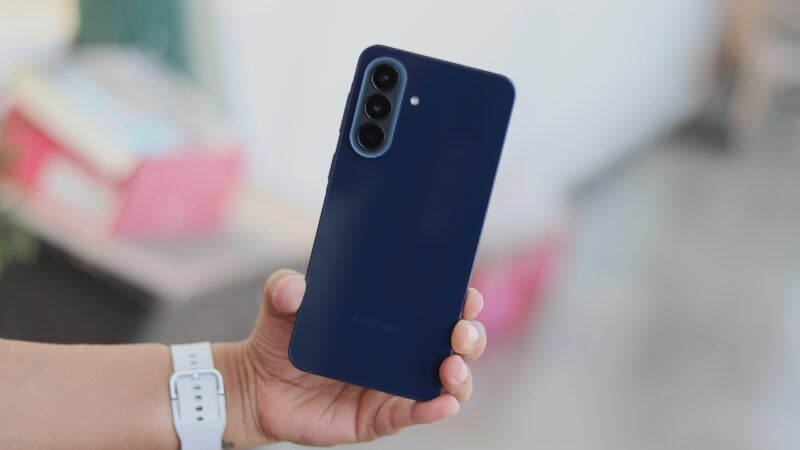
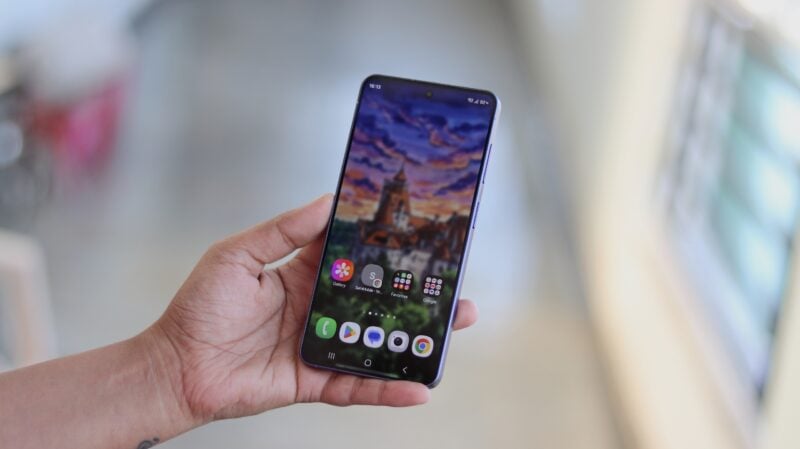
Galaxy A mid-range phones have also gradually thinned, which makes the newly announced Galaxy A27 a slightly odd entry in Samsung's 2026 lineup.

It is the first A2x phone in five years to get thicker rather than slimmer year-on-year.

The increase is only 0.1mm, but the change of direction — the shifting trend — matters more than the number itself.

A quick history of the A2x series:

  • 8.1mm: Galaxy A21
  • 8.4mm: Galaxy A22, Galaxy A23
  • 8.3mm: Galaxy A24, Galaxy A25
  • 7.7mm: Galaxy A26
  • 7.8mm: The new Galaxy A27

Browse the latest Galaxy device offers

Samsung Shop

Is this a sign Samsung is reversing course?

Possibly, but not clearly. While the Galaxy A27 is thicker, the Galaxy A57 and A37 are actually slimmer than their 2025 counterparts. So there is no obvious portfolio-wide shift (yet).

Still, devices that genuinely depend on extreme thinness, like foldables, could be moving in a similar direction. Leaks suggest the Galaxy Z Fold 8 Ultra, the successor to the Fold 7, will measure 4.5mm when unfolded, up from 4.2mm on the current Galaxy Z Fold 7.

And an early leak suggests the Galaxy Z Flip 8 will also be slightly thicker at 6.6mm instead of 6.5mm when unfolded.

That raises the possibility that the Galaxy A27 is not an exception but an early signal of a broader plateau. Samsung may have hit a practical design limit for now, and for foldables, the thickness of the USB-C port itself could be one. What we have now, give or take a few millimeters, could become the new normal for the time being.

I don't think it's a big deal

Personally, I have never cared much for the race to the thinnest phone, at least not for the past 10+ years.

Foldables are different. They had to become thinner to make TriFold designs viable. And as the Galaxy Z Fold 7 showed, a Fold feels much better in the hand when folded if it is thin enough to pass as a regular, non-folding device.

There is also the reality that modern slab phones, while highly optimized, have become a bit predictable. Thinness adds a sense of novelty back into the mix, which explains why both Samsung and Apple revisited the idea when things started to feel stale.

However, both companies may have misread demand for ultra-thin devices, and neither the Galaxy S25 Edge nor the iPhone Air appear to have met expectations last year.

Maybe that was enough for Samsung to decide it was time to slow that push. The Galaxy A27 could be an early hint of that shift. Time will tell, and the upcoming Galaxy Z Fold 8 and Flip 8 could help confirm Samsung's slight trajectory adjustment.