Last updated: May 5th, 2026 at 17:55 UTC+02:00
SamMobile has affiliate and sponsored partnerships, we may earn a commission.
It can measure your heart rate while saving your phone's screen from prying eyes.
Reading time: 2 minutes

Samsung Display
Samsung Display has developed a new smartphone OLED panel that combines impressive picture quality with built-in privacy features and health monitoring capabilities. The company calls it the Sensor OLED Display, and it is being showcased at the ongoing Society for Information Display (SID) 2026 expo.
The 6.8-inch Sensor OLED Display showcased this year features a pixel density of 500ppi. Compared to last year’s version, which had a pixel density of 374ppi, the new panel delivers a 33 percent increase in pixel density. This brings it in line with the sharpness of OLED panels used in modern flagship smartphones.
Samsung Display used a co-deposition process to integrate OLED elements and organic photodiodes (OPDs) into the same panel. These OPDs can measure a person’s heart rate and blood pressure using light emitted from the display. While the company didn't mention it specifically, the new panel may also be able to detect fingerprints, as last year's Sensor OLED Display used OPDs to detect fingerprints.

Samsung Display
Sensor OLED Display with heart rate measurement showcased at SID 2026
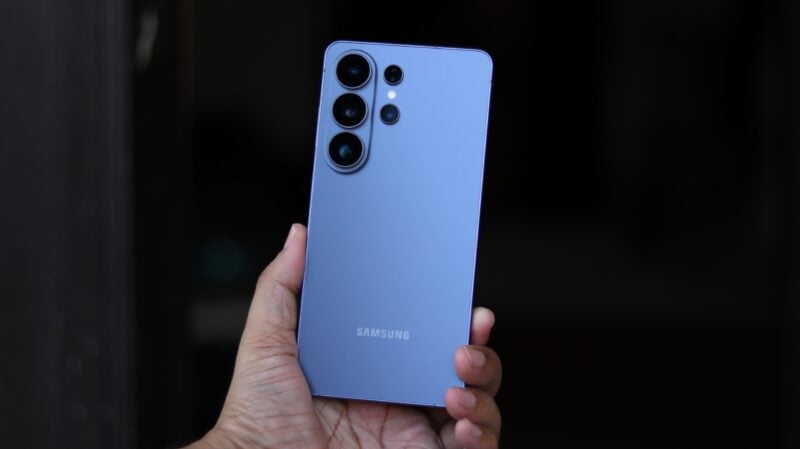
In addition to OPDs, this year’s Sensor OLED Display also incorporates the company’s Flex Magic Pixel technology. It uses a combination of narrow-angle and wide-angle pixels. When the wide-angle pixels are turned off, only the narrow-angle pixels remain active, directing light straight toward the user. This limits visibility from side angles and enhances privacy. A similar technology was used in the Galaxy S26 Ultra launched earlier this year, and it was marketed as Privacy Display.
A Samsung Display official said, “Sensor OLED Display is structurally challenging to achieve high resolution, as RGB pixels and OPD pixels must be arranged within a single layer. Samsung Display was able to realize 500 PPI resolution through advanced panel design and precise process control technologies.”

First Samsung device: T100
Asif is a computer engineer turned technology journalist. He has been using Samsung phones since 2004, and his current smartphone is the Galaxy S23 Ultra. He loves headphones, mechanical keyboards, and PC hardware. When not writing about technology, he likes watching crime and science fiction movies and TV shows.