





Epic deals Galaxy Z Fold7 and Galaxy S25 Ultra
Last updated: February 2nd, 2026 at 09:00 UTC+01:00
SamMobile has affiliate and sponsored partnerships, we may earn a commission.
LG, Sony, and TCL have left the 8K TV market.
Reading time: 3 minutes
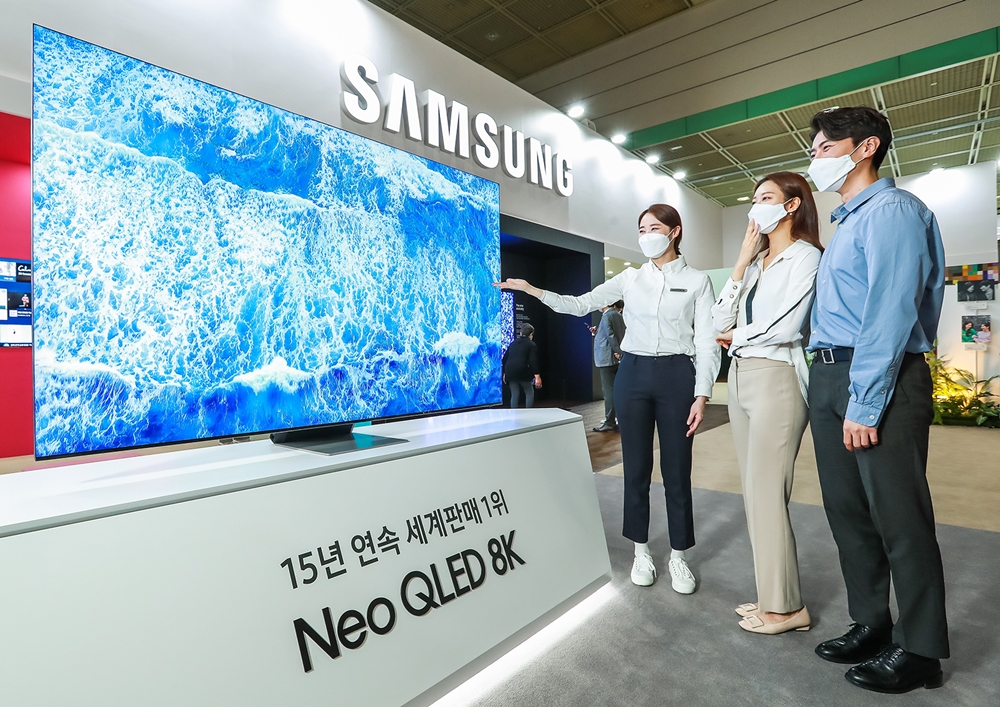
Samsung appears to be the only major TV brand that still plans to sell 8K TVs. After launching its first 8K TV in 2018, the company has not expanded the category within its lineup. Samsung offered three 8K models in 2020, but that number has fallen to just one model in 2026 (QN990H), suggesting that demand for ultra-high-resolution TVs has failed to grow meaningfully over the years.
The 8K Association, formed in 2019 by Samsung along with TCL, Hisense, and AU Optronics, had 33 member companies at the end of 2022. That figure has since dropped to 16. Of those remaining members, only two brands make TVs: Panasonic and Samsung.
With Panasonic accounting for roughly 1 percent of the global TV market, Samsung is effectively the only major brand announcing new 8K TVs for 2026.
On the supply side, LG Display is no longer producing 8K LCD or OLED panels. Samsung Display, BOE, Innolux, and TCL CSOT have also largely halted 8K panel production. As a result, AU Optronics is now the only panel maker still manufacturing 8K displays.
Early forecasts for 8K TV adoption proved wildly optimistic. In 2019, analysts predicted global sales could reach 3.72 million units by 2021. Instead, sales peaked at just 386,800 units in 2022 before falling to 214,400 units in 2023. Global 8K TV sales in 2025 are expected to fall to just 136,800 units. No wonder many TV brands and content creators have exited the 8K Association.
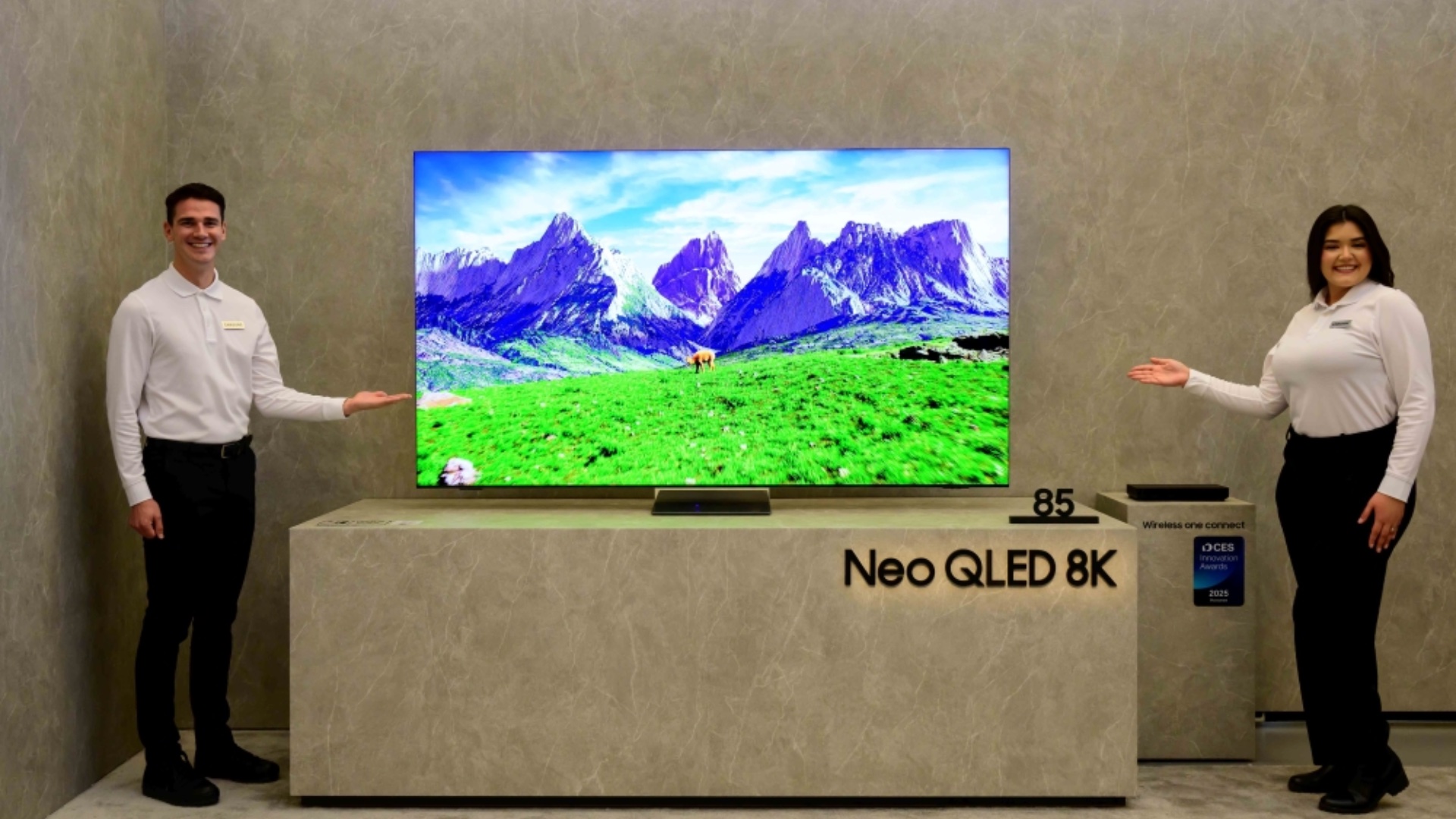
LG released its last 8K OLED TV in 2023 and its last 8K LCD model in 2024. Sony exited the segment in 2025 after it stopped selling the Z9K. At CES 2026, Samsung unveiled the QN990H, its only 8K TV for the year, featuring HDR10+ Advanced.
Samsung may continue to release one or two 8K TV models in the future in order to maintain a leadership position in a shrinking market.
Moving from Full HD resolution of 1,920 x 1,080 pixels to 4K delivers a clearly noticeable improvement at typical viewing distances. However, the jump from 4K to 8K is far less perceptible unless viewers sit extremely close to the screen.
For example, noticeable gains in sharpness appear only at a distance of around one meter for a 50-inch TV or roughly 2-3 meters for an 80-inch to 100-inch TV. This is now how most people watch TVs in their homes.
Other aspects of a TV, such as brightness, contrast, and HDR capabilities, have a far greater impact on perceived image quality than 8K resolution. As a result, most consumers do not view 8K as a must-have feature. And it doesn't help that 8K TVs are too costly to begin with.
In addition, there is a very limited amount of native 8K content available. Even in 2026, 4K content remains relatively scarce. So, the push toward 8K TVs appears to have been premature. We have a dedicated article about why 8K TVs failed, and you can read it by clicking here.
Now, companies like Hisense, TCL, and Samsung seem focussed on making ultra-large TVs, such as 98-inch and 115-inch TVs. They are also focusing on improving the peformance of LCD-based RGB LED-backlit TVs, as they offer a good balance between size, performance, and price.