Last updated: December 23rd, 2025 at 05:22 UTC+01:00
SamMobile has affiliate and sponsored partnerships, we may earn a commission.
The Galaxy A37 gets a bigger primary rear camera, while the Galaxy A57 could get a higher resolution front-facing camera.
Reading time: 2 minutes
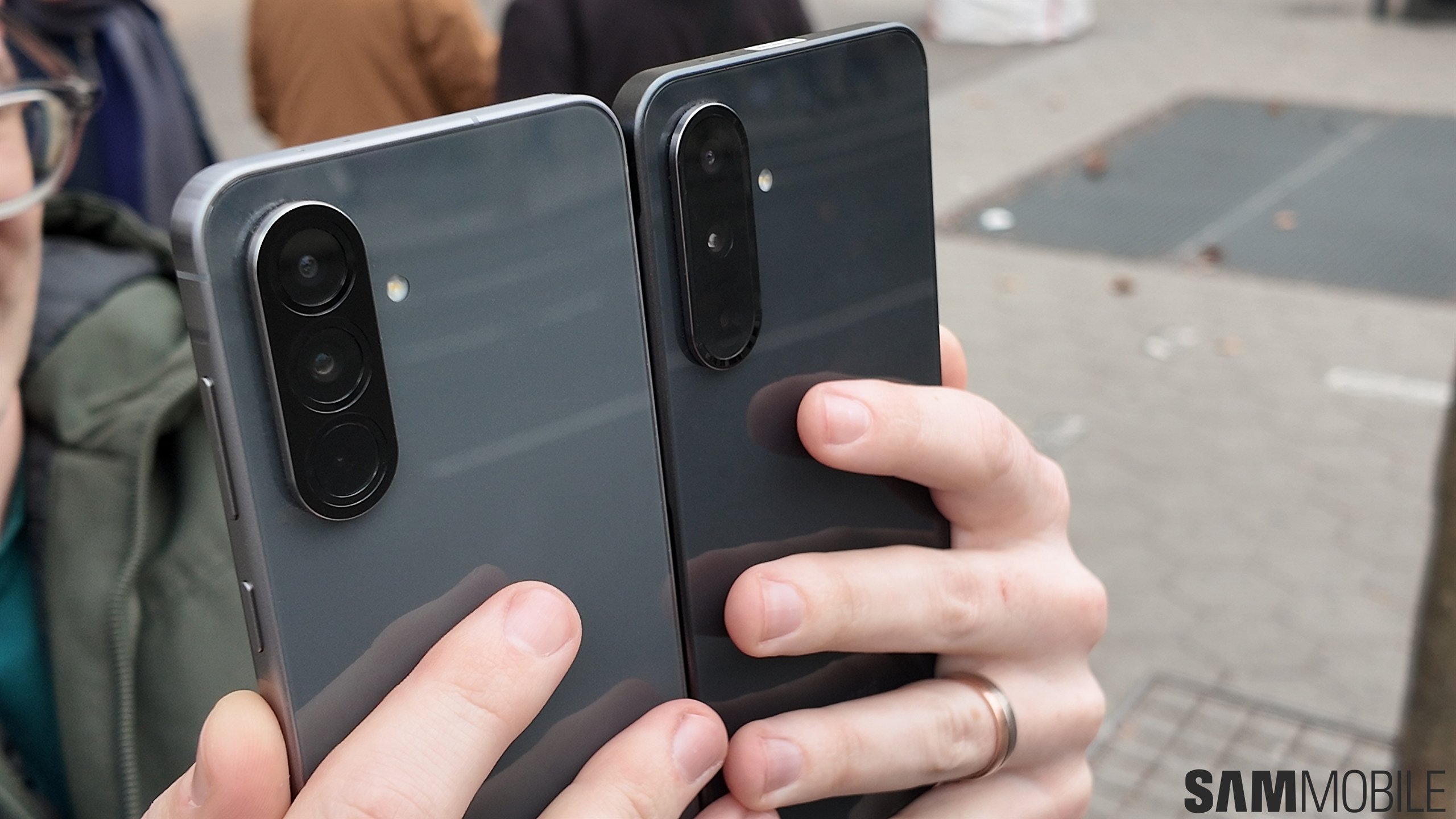
Early next year, Samsung will unveil its new mid-range phones just a few weeks after unveiling the Galaxy S26 series. Besides newer chips, the Galaxy A37 and the Galaxy A57 are also getting camera upgrades and a brand-new software with newer features.
We already knew that the Galaxy A37 and the Galaxy A57 will come with 50MP primary rear cameras and 12MP front-facing cameras. Now, more information about their camera sensors has surfaced. A new report reveals that the Galaxy A37 will have a bigger 50MP primary camera (1/1.56-inch and OIS) than the Galaxy A36 (1/1.96-inch), but it will retain the 8MP ultrawide and 5MP macro cameras found on its predecessor.
The Galaxy A57 will retain the Galaxy A56's 50MP primary camera (1/1.56-inch) with OIS, but upgrade to a 13MP ultrawide camera. In comparison, the Galaxy A56 uses a 12MP ultrawide camera. The Galaxy A57 has a 5MP macro camera and a 12MP front-facing camera. Unfortunately, it doesn't look like it will get a telephoto (zoom) camera, as we had hoped for.
Galaxy A37
Galaxy A57
The Galaxy A37 and the Galaxy A57 will likely support 4K 30fps video recording using their primary rear-facing and front-facing cameras. The Galaxy A57 might be able to record 4K 30fps videos using its ultrawide camera as well. Similar to their predecessors, they will likely support Super HDR (based on Google's Ultra HDR format) capture for still images and videos.

First Samsung device: T100
Asif is a computer engineer turned technology journalist. He has been using Samsung phones since 2004, and his current smartphone is the Galaxy S23 Ultra. He loves headphones, mechanical keyboards, and PC hardware. When not writing about technology, he likes watching crime and science fiction movies and TV shows.