
Cyber week deals! Galaxy Watch8 Classic, Fold 7, S25 Ultra. Follow us on YouTube, TikTok, or LinkedIn
Last updated: August 30th, 2016 at 08:41 UTC+02:00
SamMobile has affiliate and sponsored partnerships, we may earn a commission.
Reading time: 2 minutes
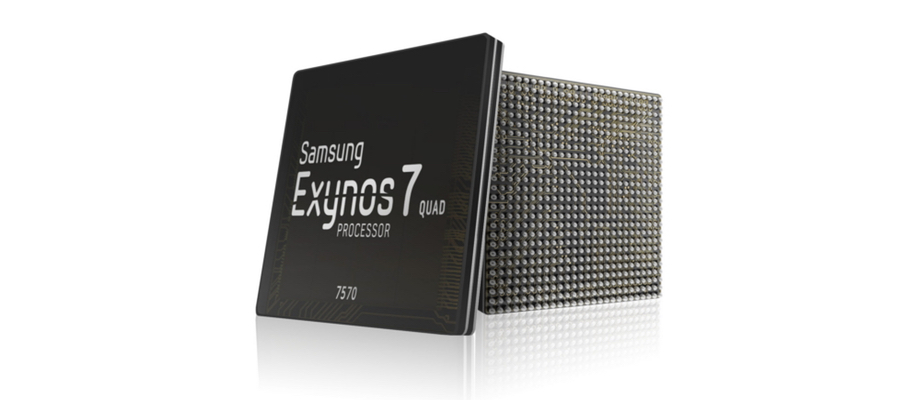
The South Korean electronics giant was the first company to release a smartphone SoC based on 14nm FinFET technology (Exynos 7420). The company later extended its 14nm SoC lineup by introducing Exynos 7870 for mid-range devices and Exynos 8890 for high-end devices. Now, with the introduction of Exynos 7570, Samsung's complete Exynos lineup is based on 14nm technology.
As for the Exynos 7570 itself, the chipset uses a quad-core ARM Cortex-A53 CPU, which is said to offer 70 percent improved performance and 30 percent improvement in power efficiency when compared to 28nm based predecessor. The SoC also fully integrates Cat. 4 LTE 2CA modem, Wi-Fi, Bluetooth, FM Radio, and GPS.
Ben K. Hur, Vice President of System LSI Marketing at Samsung Electronics, said, “With Exynos 7570, more consumers will be able to experience the performance benefits of the advanced 14nm FinFET process in affordable devices. By successfully integrating various connectivity solutions, Samsung is strengthening its competitiveness in the single chip market.”
The Exynos 7570 also integrates an improved image signal processor with support for up to 13-megapixel rear-facing, 8-megapixel front-facing cameras, and 1080p video recording. There's currently no clear information about the GPU that Samsung has used in the chipset, but it claims that it can support screen resolutions of up to 1280×800 pixels.
The new SoC integrates a better designed PMIC (power management integrated chip) and RF (radio frequency) functionalities to reduce its physical size by up to 20 percent compared to its predecessor, so that slimmer smartphones can be designed. We can soon see some new smartphones from the company that use the Exynos 7570 chipset.
Asif is a computer engineer turned technology journalist. He has been using Samsung phones since 2004, and his current smartphone is the Galaxy S21 Ultra. He loves headphones, mechanical keyboards, and PC hardware. When not writing about technology, he likes watching crime and science fiction movies and TV shows.