MASSIVE deals, Galaxy S25 FE, Fold 7, S25 Ultra. Follow us on YouTube, TikTok, or Instagram
Last updated: October 31st, 2025 at 20:34 UTC+01:00
SamMobile has affiliate and sponsored partnerships, we may earn a commission.
The dream will never come true.
Reading time: 3 minutes
Although Apple hasn't bothered with this aspect in ages, Samsung has tried to make the selfie cameras on its Galaxy phones as inconspicuous as possible. And, in 2021, Samsung released its first phone that featured the futuristic Under Display Camera technology, or UDC for short. In 2025, that tech is virtually nonexistent.
It's probably for the best, considering the lack of major UDC advancements over the years. But I am sad that the dream never truly materialized and that we never got to see UDC on a regular, slab-type phone.
Unfortunately, Under Display Camera technology debuted with the Galaxy Z Fold 3 and remained exclusive to the Z Fold series until the Fold 6. Then, with the release of the Z Fold 7 this past summer (and the limited-edition Fold Special Edition even before that), Samsung shelved the technology.
Sadly, UDC failed to improve to the point where it could replace Infinity-O selfie cameras on rigid-type Galaxy phones. And I think that's a real shame.
The idea of having a bezel-less screen and an invisible selfie camera has been a dream for many people for many years — including Samsung.
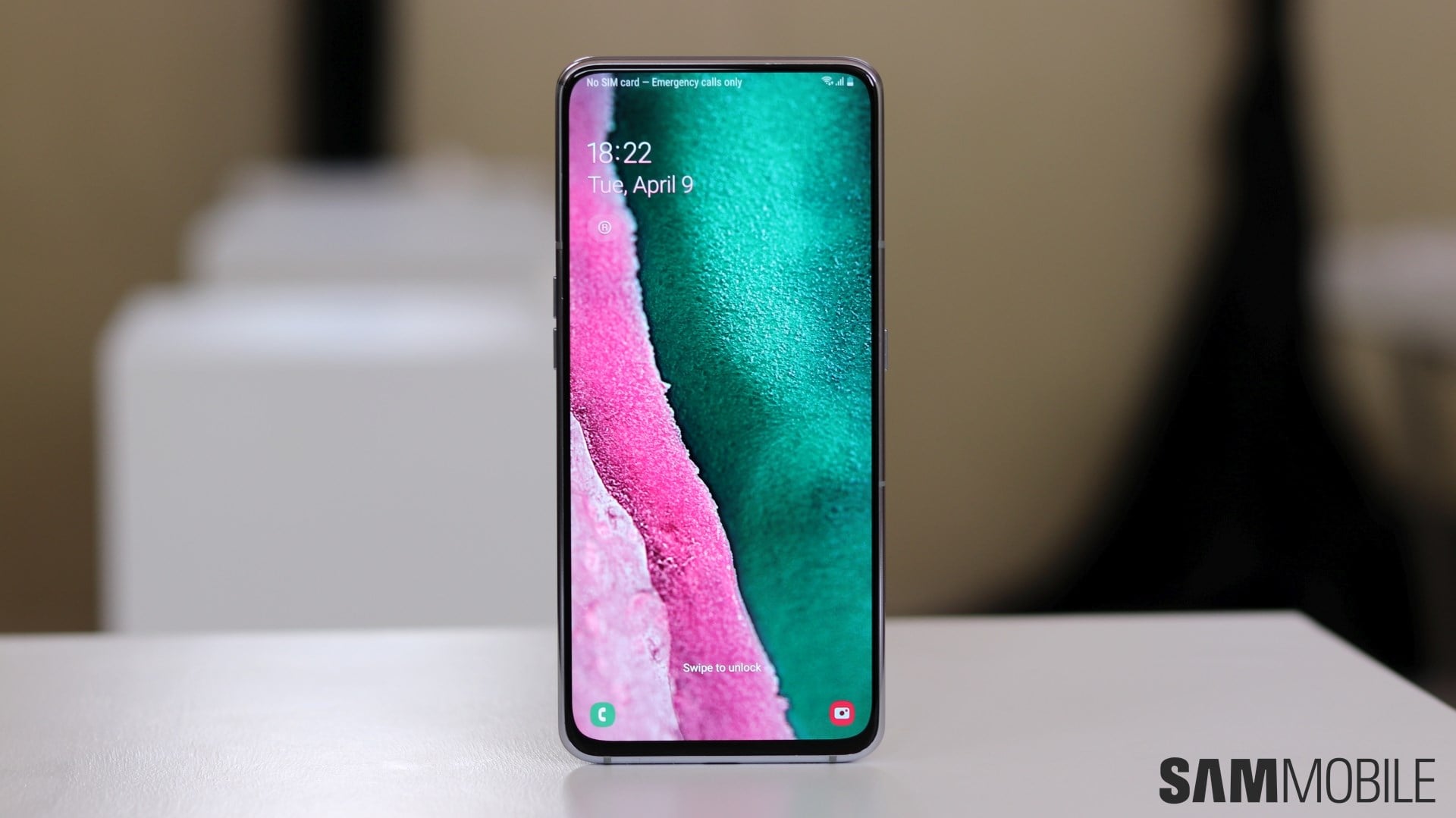
That's more or less what the Galaxy A80 from 2019 tried to achieve with its intricate rotating camera and no punch hole in the display.
Two years later, when Samsung introduced UDC in 2021, it seemed like the perfect answer. We all hoped UDC would evolve and expand to cover other phones, including slab-type flagships.
But the problem with UDC, as far as we know, is fundamental. Samsung might never address its shortcomings. The sensor needs big pixels to capture more light through the microscopic grid in the display area. This leads to a lower resolution. And the display grid area, which can't be avoided, will always hinder image quality and brightness.
In other words, conventional selfie cameras are both cheaper and better at capturing images. And UDC could never catch up, either in cost or performance. The Fold series used UDC for a few years, but the Fold was in a unique position to feature not one, but two selfie cameras. One of them was ordinary and powerful enough to offset the limitations of UDC.
Now that Samsung appears to have shelved UDC technology even for foldables, we will probably never see a slab-type Galaxy phone boasting this tech for a clean look without a display cutout. I can't help but feel a bit saddened by this.
Mihai is a blogger and column writer at SamMobile. His first Samsung phone was an A800 which took a lot of beating, and a part of him still misses the novelty of the clamshell design. In his free time, he enjoys watching shows, documentaries, and stand-up comedy; listening to music, taking walks, and occasionally playing old(er) video games.