






Last updated: May 12th, 2026 at 04:37 UTC+02:00


How secure is the Galaxy S26 Ultra? Security and privacy features explained

The Galaxy S26 Ultra comes with a range of security and privacy features built directly into the hardware and software.

Abhijeet Mishra

Reading time: 6 minutes

galaxy s26 ultra

Abhijeet Mishra / SamMobile

Sponsored

Galaxy S26 Ultra - Source: Abhijeet Mishra / SamMobile

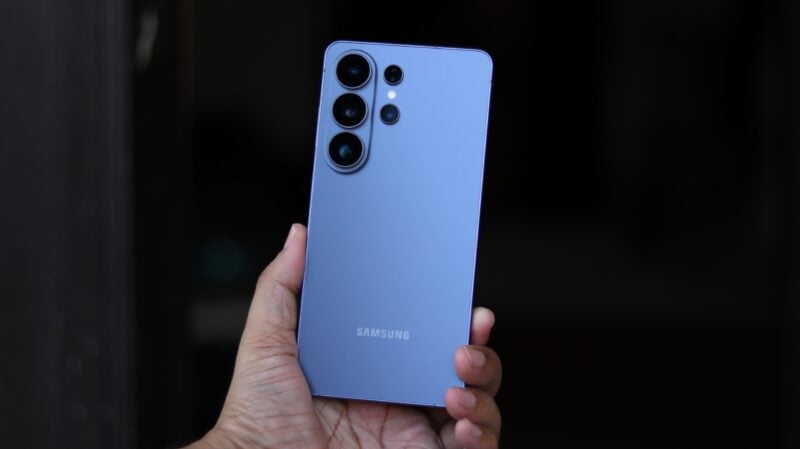
The Galaxy S26 Ultra comes with a range of security and privacy features built directly into the hardware and software. Some are easy to see and use every day, while others run quietly in the background to keep your data safe.

Here is a look at what the phone offers and how each feature works.

What is Samsung Knox?

Knox is Samsung's security platform, and it underpins almost everything else on this list. It is built into the phone at the chip level, which means protection starts the moment you turn the device on rather than being added on top of the software later.

Knox handles things like secure boot, which checks that the phone hasn't been tampered with when it starts up, and real-time monitoring that watches for suspicious activity while the phone is in use. Most of this happens in the background without you needing to do anything.

What makes Knox different from basic Android security is the depth at which it operates. It doesn't just sit at the software level, it works alongside the hardware to create what Samsung calls a layered defense. If one layer is somehow compromised, the others remain in place.

For most users this means that even in a worst-case scenario, like installing a bad app or connecting to a suspicious network, the phone has multiple lines of defense working to contain the problem before it can reach your personal data.

What is Knox Vault?

Knox Vault is a separate, physically isolated part of the phone with its own processor and storage, completely cut off from the main system.

This is where your passwords, biometric data, and encryption keys are kept. Even if the main operating system were compromised, an attacker still could not reach what’s stored in Knox Vault — it doesn’t share memory or processing resources with anything else on the device.

This matters especially for biometric data. Fingerprint and face data never leaves Knox Vault — it isn’t sent to Samsung’s servers or accessible to apps, and verification happens entirely on-device.

What is Privacy Display on the Galaxy S26 Ultra?

The Galaxy S26 Ultra boasts the world’s first built-in Privacy Display[3] on mobile, and it is one of the phone’s most visible security features. When enabled, the screen becomes much harder to read from the side, so people sitting next to you on a bus or in a café can’t easily see what’s on your display.

You can turn it on manually or set it to activate automatically — for example, when you open your banking app or enter a PIN. There's also a stronger Maximum Privacy Protection mode for situations where you want the highest level of screen privacy.

What is Auto Blocker?

Auto Blocker gives you more control over what can be installed on your phone. Its main job is to block app installations from sources outside the official app store, which is one of the most common ways malware ends up on Android devices.

It's turned off by default so it doesn't get in the way for users who install apps from other sources, but it's easy to switch on from the Security settings if you want the extra protection. You can also enable it during the initial setup when you power up the phone for the first time.

What is Secure Folder?

Secure Folder creates a completely separate, encrypted space on your phone. Apps and files inside it are fully isolated from the rest of the system, so they can't be accessed from outside.

It's useful if you want to keep certain photos, files, or apps private. You can also use it to run a second instance of an app — for example, two separate WhatsApp accounts — without them interfering with each other.

What is Private Album?

Private Album is a simpler, more lightweight option for hiding photos and videos. It's built directly into the Gallery app, so you don't need to move files into a separate folder or sign in anywhere.

If there are specific photos you want to keep out of your main gallery without setting up a full Secure Folder, Private Album is a quick and easy way to do that.

What is KEEP on the Galaxy S26 Ultra?

KEEP[1] stands for Knox Enhanced Encrypted Protection. It creates encrypted storage environments for individual apps, meaning each app can only access its own data and nothing else.

KEEP gives each app its own locked storage container. Even if an app is compromised, the damage is contained — it cannot access data from other apps on the device.

This is particularly relevant given how much the Galaxy S26 Ultra relies on Galaxy AI features. Tools like Now Brief[2] pull in information from your calendar, messages, and health data from the Samsung Health[4] App to build your daily summary.

That’s a lot of personal information being processed in one place. KEEP helps ensure that data stays contained and isn’t accessible to other apps or processes on the device, so the convenience of having AI work across your apps doesn’t cost you your privacy.

As Galaxy AI features become more capable and more deeply connected to your personal data, app-level isolation becomes increasingly important — and KEEP is Samsung’s answer to that on the Galaxy S26 Ultra.

What is post-quantum cryptography on the Galaxy S26 Ultra?

Post-quantum cryptography is a more technical feature, but worth a brief mention. Most modern encryption relies on mathematical problems so complex that current computers couldn’t crack them in thousands of years. Quantum computers, which are still in development, could potentially solve those same problems in a fraction of the time.

Post-quantum cryptography is designed to get ahead of that. It uses different mathematical approaches that are resistant to the kind of computing power quantum computers would bring. By building this into the Galaxy S26 Ultra now, Samsung is ensuring that data encrypted on the device today will remain secure even as computing technology advances over the coming years.

Samsung has applied this to key system processes including software verification and firmware protection, and Knox Matrix uses it for things like eSIM transfers. For most users this runs entirely in the background — it simply means the phone’s security is designed to hold up into the future.

How long does the Galaxy S26 Ultra receive security updates?

Samsung promises seven years of security updates for the Galaxy S26 Ultra. That's one of the longest commitments available on any Android phone, and it means the security features on the device will continue to be patched and updated well into the future.

[1] KEEP: Valid Samsung Knox Account required.

[2] Now Brief: Samsung account login and network connection required.

[3] Privacy Display: Requires manual activation in settings to function. Privacy Display feature is not AI-powered.

[4] Samsung Health: Samsung account login is required.