The Galaxy S26 Ultra has received something of a mixed response in online discussions even as Samsung has reported record pre-order numbers.
Judging by some of the criticism, you might assume this phone has nothing special to offer and is unworthy of the Ultra title. But is that accurate? Find out in our official Galaxy S26 Ultra review.
Display and sound
Asif Iqbal Shaik / SamMobile
Samsung Galaxy S26 Ultra
I want to start with the most controversial part of this phone: the display. The display is actually amazing. It’s plenty bright outdoors and also very pleasing to look at overall.
Have things changed since last year? Yes. The screen is slightly more reflective when it is off, or when there’s a strong light source behind the display while it’s on. However, these are minor compromises, especially considering you get a feature like Privacy Display (more on that later).
You may have also heard that the screen resolution appears slightly lower even though the S26 Ultra uses the same Quad HD+ panel as the S24 Ultra, particularly when running at the default Full HD+ resolution. That observation isn’t entirely inaccurate.
Asif Shaik – SamMobile
S26 Ultra
From certain angles, text can occasionally have a slightly oily look. However, only one person on the SamMobile team has said they notice this during regular use, and even then it tends to happen indoors rather than outdoors.
The other debate surrounding the display concerns the 10-bit versus 8-bit color depth. Samsung did say the display shows 10-bit color depth, but what got lost in much of the discussion is that Samsung never explicitly said the panel itself was 10-bit. Instead, the company talked about a custom processor with MNDIE processing working behind the scenes to upscale everything to 10-bit color depth.
Personally, I remember being told 10-bit, and so do my colleagues, but it’s possible we missed the part where Samsung explained the role of MNDIE and the custom processor driving all of that.
Samsung has a display capable of showing 10-bit color depth, even though the panel itself is natively 8-bit.
Will you notice it? Probably not. The only thing you will notice is that the 10-bit processing does work, as color banding is considerably reduced on the Galaxy S26 Ultra display compared to its predecessors.
In practice, you simply end up enjoying the display. You’re not going to look at the screen and think, “That looks like 8-bit to 10-bit emulation.” You’ll just be looking at it and enjoying it because it’s a great display.
Sound quality from the phone’s speakers has also improved. The Galaxy S25 Ultra had Samsung’s best smartphone speakers ever, with excellent bass and volume. While the S26 Ultra’s speakers are a little quieter, Samsung has tuned them to sound even punchier and less shrill.
Privacy Display
Asif Shaik – SamMobile
Samsung Galaxy S26 Ultra Privacy Display
The other big talking point is the new feature, Privacy Display. The feature works as advertised and as intended, and it goes beyond what you might expect from a first-generation implementation.
With a first-generation feature, you might expect a simple toggle that turns it on or off. But Samsung has built in several conditions from the start. When you long-press the toggle, you can see options that control when the feature activates, along with an additional toggle for maximum privacy protection (which makes the screen much harder to read).
Privacy Display works as advertised and as intended, and it goes beyond what you might expect from a first-generation implementation.
There are also app-specific conditions. Any app you choose can automatically activate Privacy Display when opened. You can also enable it for PIN, pattern, and password entry, so every time you unlock the phone or enter a password, the privacy display activates and prevents others from seeing what’s on the screen.
Asif Shaik – SamMobile
Privacy display customization
Samsung has also thought about smaller details. For example, when a notification pops up, the privacy display shuts off the pixels in that part of the screen so only the notification can’t be seen from an angle.
You can also set up custom routines in the Modes and Routines app to enable Privacy Display based on many more conditions. For example, you can have it turn on automatically when you leave the house and disconnect from your Wi-Fi, or when you arrive at a specific location.
It’s the kind of feature that originally made me enjoy using Samsung phones. It reflects the company’s willingness to add small creative ideas that may initially seem like gimmicks but gradually find their way into real-world usage and sometimes even become industry standards.
From a personal perspective, I attend a lot of press briefings, many of them before announcements. I take plenty of notes and often review them while traveling, such as on planes or at airports.
Being able to open Samsung Notes and activate Privacy Display means that anyone looking over my shoulder can’t see what I’m reading. I can still view everything clearly, while the person next to me sees nothing.
It’s genuinely useful, and I think it deserves praise instead of people simply dismissing it as not very good. Hopefully, with the Galaxy S27 Ultra, Samsung will address the minor compromises mentioned in the previous section and make the display even harder to read from an angle when Privacy Display is active (right now, it’s still readable at small angles, even on the maximum setting).
Design
Asif Shaik – SamMobile
Samsung Galaxy S26 Ultra
Next is the design, which is less innovative but still deserves praise. Samsung has managed to slim the design down from last year’s S25 Ultra and make it four grams lighter while maintaining all of the core internals and even improving them.
The phone has a bigger vapor chamber, a better processor, and still manages to fit Samsung’s multi-camera system despite the slimmer and lighter body. There are no magnets inside the phone, but even so, the engineering effort here is impressive.
Asif Shaik – SamMobile
Galaxy S26 Ultra frame
Asif Shaik – SamMobile
Galaxy S26 Ultra ports
Asif Shaik – SamMobile
Galaxy S26 Ultra frame
Samsung has also finally adopted curved corners for the Galaxy S Ultra line. Sure, the Ultra model has lost some of its unique identity as a result, but in the real world, rounded corners simply make more sense. You no longer feel the edges digging into your palm during one-handed use, especially when reaching for something on the opposite corner of the display.
Samsung has slimmed the design down from the S25 Ultra and made it four grams lighter while maintaining all of the core internals.
Samsung has also ditched the titanium frame in favor of a traditional aluminum one. The timing of this change — Apple also moved away from titanium with the iPhone 17 — is interesting. However, it may actually be the better decision given titanium’s poorer heat dissipation and the fact that each new Snapdragon chip tends to generate more heat than the last.
S Pen
Asif Shaik – SamMobile
Galaxy S26 Ultra S Pen
For the second year in a row, Samsung has released a Galaxy S Ultra phone with an S Pen that lacks Bluetooth functionality. If that’s a feature you can’t live without, the Galaxy S24 Ultra will likely remain the only option for you. Samsung says it is working on a new S Pen, but it remains to be seen whether the new stylus will bring back Bluetooth functionality.
If you want the pen to sit completely flush in the slot, you have to insert it the correct way.
Functionally, the S Pen remains unchanged in other areas as well, which means it is still the best stylus experience available on a smartphone. The only thing that has changed is the design. The S Pen body is now thinner by around 0.8mm, which could make it slightly less ergonomic for some users.
Asif Shaik – SamMobile
Galaxy S26 Ultra S Pen
The clicker has also been redesigned with a curved shape to match the curves of the phone. If you want the pen to sit completely flush in the slot, you have to insert it the correct way. Thankfully, it doesn’t stick out much even if you don’t, so this is something most people likely won’t worry about.
Cameras
Asif Shaik / SamMobile
Samsung Galaxy S26 Ultra's rear-facing cameras
If you enjoy capturing the world around you with your phone, you’re not going to be bored with the Galaxy S26 Ultra. It has pretty much everything a creator using a smartphone would want or need.
The camera experience isn’t just about the hardware on the back. It’s also about the features that surround it.
If you enjoy capturing the world around you with your phone, you’re not going to be bored with the Galaxy S26 Ultra.
Starting with the output, Samsung has nailed it. The photos are bright and contrasty with plenty of dynamic range, allowing you to clearly see what is happening in the scene. They are also detailed enough, except when there’s too little light.
Another big change is the new f/1.4 aperture on the main camera. Not only does it allow better low-light photos, especially when compared to phones like the iPhone 17 Pro Max or the Galaxy S25 Ultra from last year, but it also allows the camera to adjust how the rest of the system behaves.
Because the camera can take in more light, the shutter speed and ISO can be adjusted accordingly. The shutter doesn’t need to stay open as long, which helps with action shots.
Max Jambor
1x photo
Max Jambor
1x
Max Jambor
1x
Max Jambor
1x
Max Jambor
1x
Max Jambor
1x
Max Jambor
1x
Max Jambor
1x
Max Jambor
1x
Max Jambor
1x
Max Jambor
1x
Max Jambor
1x
Max Jambor
1x
Max Jambor
1x
Max Jambor
5x
Max Jambor
5x
If you’re taking photos of kids playing sports or just people moving in general, there will be less motion blur because the camera can capture the image faster. In fact, this is arguably the bigger advantage of the wider apertures on the main and 5x zoom cameras. It also helps reduce noise in photos, as the wider aperture allows the ISO value to remain lower.
There is one disappointing aspect to the camera hardware. The 5x camera loses the minimum focus distance that the S25 Ultra had. On paper that is disappointing, and in practice it doesn’t work quite as well. However, the rest of the camera system largely makes up for it.
The 5x camera loses the minimum focus distance that the S25 Ultra had, which is disappointing.
You just need to be aware of this change if you used the feature on the S24 Ultra or S25 Ultra. There is also some disappointment from a functional perspective, as the 3x camera is still essentially the same type of camera Samsung has been using since the S21 Ultra.
That said, hardware is only one part of the story. Where I enjoyed most of my time with the S26 Ultra’s cameras was with the software.
I previously made a video breaking down ten upgrades to the S26 Ultra cameras, and many of them are covered there. Here, I’ll focus on the ones I used the most.
The first thing I did was enable the 24-megapixel mode in Camera Assistant. You could argue that this option should be part of the default camera settings rather than hidden inside a separate module. Fortunately, you can set the camera to default to 24MP using the Settings to keep option in the camera settings menu.
Unlike when switching to the 50MP or 200MP modes, enabling 24MP doesn’t remove access to the 10x crop, 2x crop, or 3x crop options. Those zoom levels remain available because the software recognizes that the corresponding cameras don’t support 24-megapixel output and automatically scales the images down to 12 megapixels instead.
The main advantage of 24MP photos is that they give you more leeway when cropping an image without sacrificing dynamic range. Shooting at 50MP or 200MP can sometimes lead to noticeable overexposure in bright areas, such as the sky.
The 5x camera also has a wider aperture (F2.9 instead of F3.4), and like the main camera, the advantage here is that 5x and higher zoom shots have less blur when you shoot something that isn’t standing or sitting still.
Max Jambor
0.6x (ultrawide)
Max Jambor
1x
Max Jambor
3x
Max Jambor
5x
Max Jambor
10x
Max Jambor
30x
The features I enjoyed using the most are the video features. For me, the Horizontal Lock feature has completely changed how I capture videos, particularly videos of my son during football training.
The ability to follow a subject without worrying about keeping your hand steady is impressive. You could rotate the phone 180 degrees during filming but not notice anything amiss in the final video.
One thing is irritating, however: horizontal lock also activates Super Steady mode. Since Super Steady mode uses the ultrawide camera by default, you have to manually switch to the main camera after enabling horizontal lock. Samsung also doesn’t allow the feature to be used at zoom levels above 2x.
If you’re interested in video creation, the APV video codec allows you to capture true lossless video directly on your smartphone. Samsung doesn’t limit this to specific resolutions or frame rates. You can record 8K at 30 frames per second with APV log video and also in 4K at 120 fps.
If you’re interested in video creation, the APV video codec allows you to capture true lossless video directly on your smartphone.
APV files are huge, with a 22-second clip easily reaching around 1.7GB in size. Thankfully, Samsung gives you the option to record video directly to connected external storage.
Samsung also includes built-in editing tools. When editing log footage, you can color-correct it directly inside the Gallery without paying extra.
The phone processes these edits very quickly. Once you save the edited clip, the phone compresses the video into a format that is easier to share while maintaining quality.
You still retain the detail and dynamic range because the video starts from a higher-fidelity source. It’s video quality we haven’t really seen on an Android phone before, let alone on a Samsung device.
Max Jambor
S26 Ultra selfie
Max Jambor
S26 Ultra selfie
Daniel Scuteri
S26 Ultra selfie
Daniel Scuteri
S26 Ultra selfie
Max Jambor
S26 Ultra portrait selfie
Max Jambor
S26 Ultra selfie
As for selfies, you can get great results when the lighting is right. Samsung says the AI-powered ISP inside the phone’s chip now applies to the front camera as well. Compared to the S25 Ultra, however, the main advantage is that the S26 Ultra’s front camera has a slightly wider field of view, allowing more people to fit in the frame.
The overall user experience is enhanced by One UI 8.5 (based on Android 16). The software is fast, responsive, and packed with customization options. The new Quick Panel is extremely customizable, with the ability to delete or move any toggle anywhere, and the redesigned apps give the interface a fresh look.
Over the past year, One UI has taken on a new life of its own. Since the launch of One UI 7, Samsung has shifted its focus toward smoother animations, better interactions, and new customization options.
Much of this shift likely comes from Samsung wanting Galaxy AI features to feel more seamless rather than something you have to search for.
For example, the new call screening feature lets you screen calls automatically. It can also convert typed responses into voice replies during a call.
There are also useful features like Now Nudge and notification highlights. Now Nudge suggests various actions based on context. For example, if it detects dates in a message, it can suggest adding that date to the calendar. It didn’t seem to work in other apps during our testing, though that may have been because our review unit was running older software than retail units.
Notification highlights include priority and summary options. Priority notifications appear at the top of the notification shade and are color-coded so they’re easier to spot, while summaries show up when the AI thinks they’re useful (to see the actual message, you just need to expand the notification to make the summary disappear).
Asif Iqbal Shaik – SamMobile
Notification summaries on the Galaxy S26 Ultra
Samsung has also made Audio Eraser, introduced with One UI 8.0, far more useful. While you can still edit videos to remove noises and sounds, the feature can now also be enabled from the Quick Panel for any app that plays videos. You can adjust how strongly Audio Eraser works and even tell it to focus on voices by reducing music and other background noise.
If you enjoy editing existing pictures using AI, you’ll love the new addition to Photo Assist. It doesn’t just let you move or delete objects from existing photos. You can also ask it to make changes using a text prompt.
For example, you can ask it to change the time from night to day (or vice versa), or add a pet to the photo. It works surprisingly well. Previously, you had to manually draw on the image for Galaxy AI to add objects.
Samsung has also made upgrades to Bixby with One UI 8.5. Bixby can now answer questions directly within the assistant instead of sending you to a web browser, thanks to integration with Perplexity.
It is also better at changing various system settings when you ask it. Previously, for many settings it would simply show instructions instead of changing them for you.
Performance
Asif Shaik – SamMobile
Galaxy S26 Ultra's Snapdragon 8 Elite Gen 5 for Galaxy processor
At this point, smartphone hardware has become powerful enough that most modern phones can handle everyday tasks without issue. Yearly increases in processor and GPU performance feel more like a flex than a requirement, and the Snapdragon 8 Elite Gen 5 flexes hard.
In everyday use, the Galaxy S26 Ultra feels extremely responsive. It also handles intensive tasks like gaming and video editing like a champ.
Asif Shaik – SamMobile
Samsung Galaxy S26 Ultra gaming
Thanks to the larger vapor chamber, it can sustain higher frame rates for longer as heat builds up more slowly. Realistically, very few games will ever push the phone hard enough for frame rate drops to come into play (no pun intended).
It also works well with productivity features like Samsung DeX, allowing you to turn the phone into a desktop-style experience and even edit videos on it. AI tasks are processed quickly as well, aside from the occasional delay when Galaxy AI needs to connect to its servers to send or receive data for processing.
Battery and charging
Asif Iqbal Shaik / SamMobile
Galaxy S26 Ultra's battery section in Settings menu
Even though Samsung hasn’t increased the battery capacity for six generations and the phone still uses a 5,000mAh battery, real-world performance is excellent.
I consistently get about a day and a half of usage before needing to recharge. Standby performance is particularly impressive. With mixed usage, you can easily get a full day’s worth of battery life.
Charging has also improved thanks to Samsung’s 60W fast charging, though perhaps not as much as you might expect. Regardless of the battery percentage you start from, the S26 Ultra charges about 4–5% more than the Galaxy S25 Ultra in the same amount of time.
A 20-minute charge brings the battery to nearly 60%, and you get around 80% in 30 minutes. A full 0–100% charge takes about 50 minutes, compared to roughly 56–57 minutes on the Galaxy S25 Ultra.
A 20-minute charge brings the battery to nearly 60%, and you get around 80% in 30 minutes.
After seven years of Samsung sticking to 45W as the maximum charging speed on Galaxy smartphones, any improvement is welcome. It’s also nice to see Samsung now allowing even 3A cables to charge its flagships at maximum speed. Before the Galaxy S25 series, a 5A cable was required to achieve speeds above 25W.
Samsung has also upgraded wireless charging from 15W to 25W, and it’s a much needed bump that makes a serious difference. The phone reaches 40% charge in half an hour, and 60 minutes of charging takes it up to almost 80%. A full charge requires around an hour and 25 minutes.
Verdict
Asif Shaik – SamMobile
SamMobile on Galaxy S26 Ultra
Spec sheets don’t always tell the full story of a smartphone. If you read discussions online, you might think no one should buy this phone. People point out that it doesn’t have built-in magnets, that the S Pen no longer has Bluetooth, that the 3x camera hasn’t been upgraded, and that the main camera doesn’t use a 1-inch sensor.
Those criticisms mean the phone isn’t perfect. But no smartphone ever is. Phones with the best hardware don’t always have the best software, and phones with great software don’t always have the most impressive hardware.
It’s impossible to please everyone, and one thing is clear: the Galaxy S Ultra line no longer represents ultra specs. Instead, it represents an ultra experience, and on that front Samsung is doing enough to justify the Galaxy S26 Ultra, even with its higher price tag in many markets.
Samsung Galaxy S26 Ultra
What we like
Privacy Display is a game changer
Excellent display despite 8-bit panel
Thinner, rounder design for better handling
Fast and smooth, excellent thermal management
Fantastic battery life
Fastest wired and wireless charging of any Samsung phone
Meaningful camera video features
Galaxy AI continues to get better
One UI 8.5 out of the box, seven years of updates
What we don’t
3x zoom camera feels outdated
S Pen lacks Bluetooth functionality
Higher minimum focus distance prevents close-ups with 5x camera


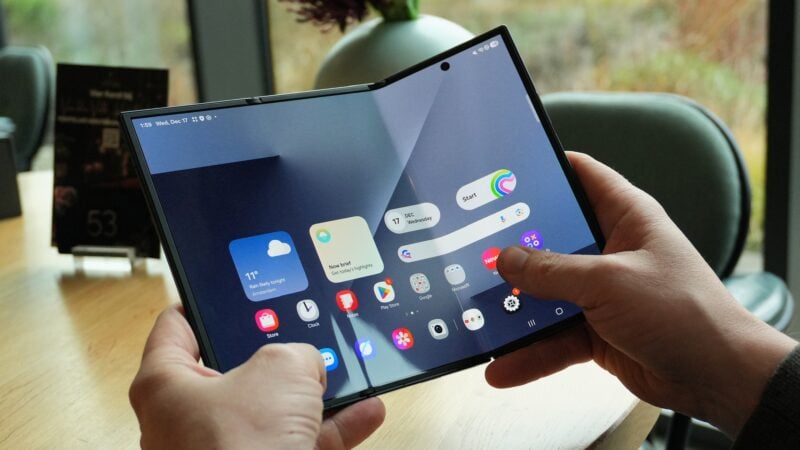





 The Galaxy Z Fold 8 may hold the answer to the only viable compact phone formula
 Apple named its foldable the iPhone Duo, there's a lesson in there for Samsung
 Apple surprised Samsung on its own home turf
 iPhone Duo's Apple Pencil support makes Z Fold 8’s missing S Pen harder to excuse
 The iPhone Duo didn’t make me jealous as a Samsung fan, the iOS 27 release date did
 Samsung used variable aperture to improve night shots, but Apple is taking a different approach
 I thought Samsung's Galaxy AI Call Brief feature doesn't work, until it did
 Samsung made history with foldables, Apple rewrites it tomorrow
 Why I miss when Samsung made weird Galaxy phones


