






Last updated: February 27th, 2026 at 09:37 UTC+01:00
SamMobile has affiliate and sponsored partnerships, we may earn a commission.
The feature will be available in three markets globally.
Reading time: 2 minutes
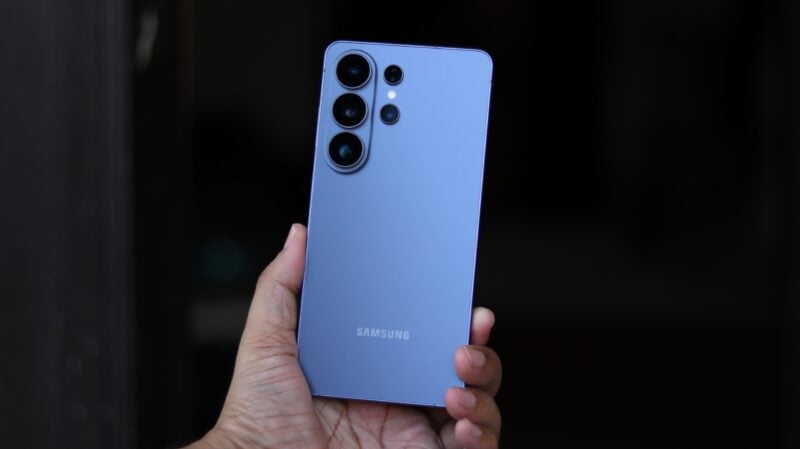
When Samsung unveiled the Galaxy S26 series two days ago, it did not make it clear whether its new phones support satellite communication for emergency situations. The South Korean firm has now confirmed that the Galaxy S26 lineup will offer satellite connectivity in three major global markets.
The Galaxy S26, Galaxy S26+, and Galaxy S26 Ultra offer satellite-based messaging and data services in Europe, Japan, and North America.
In Europe, Samsung has partnered with Virgin Media O2 and is already working with MasOrange in Spain and Vodafone to enable satellite communications.
In Japan, the company has collaborated with Docomo, KDDI, and SoftBank. It is also working with Rakuten Mobile to expand satellite connectivity to more Galaxy users in Japan. Satellite-based data, texting, and tsunamic warning (ETWS) has been available on Galaxy S22 (and newer) and select Galaxy A phones on KDDI's network since 2025.
In North America, Samsung has partnered with AT&T to support satellite communication features on Galaxy smartphones. T-Mobile’s T-Satellite service (T911), powered by Starlink, has supported text and data services on select Galaxy A and Galaxy S phones since 2025. A similar satellite-based feature (eSOS and texting) is already available on Galay S25 and newer phones on Verizon's network.
Samsung said it is working with more cellular operators globally to bring satellite communication support “across Galaxy product categories” globally. This could hint at satellite communication support coming to select future Galaxy Watch models.
AT&T, Rakuten, Verizon, and Vodafone use AST SpaceMobile's solution for satellite connectivity for compatible smartphones.
Won-Joon Choi, Chief Operating Officer of Samsung Mobile Experience, said, “Samsung has a rich legacy in wireless communication technologies, and we strive to be at the forefront of innovation in this space through open collaboration with global partners. As satellite connectivity becomes an important part of the mobile landscape, we are committed to ensuring Galaxy users have reliable access to communication, especially when they need it most.”
Asif is a computer engineer turned technology journalist. He has been using Samsung phones since 2004, and his current smartphone is the Galaxy S23 Ultra. He loves headphones, mechanical keyboards, and PC hardware. When not writing about technology, he likes watching crime and science fiction movies and TV shows.